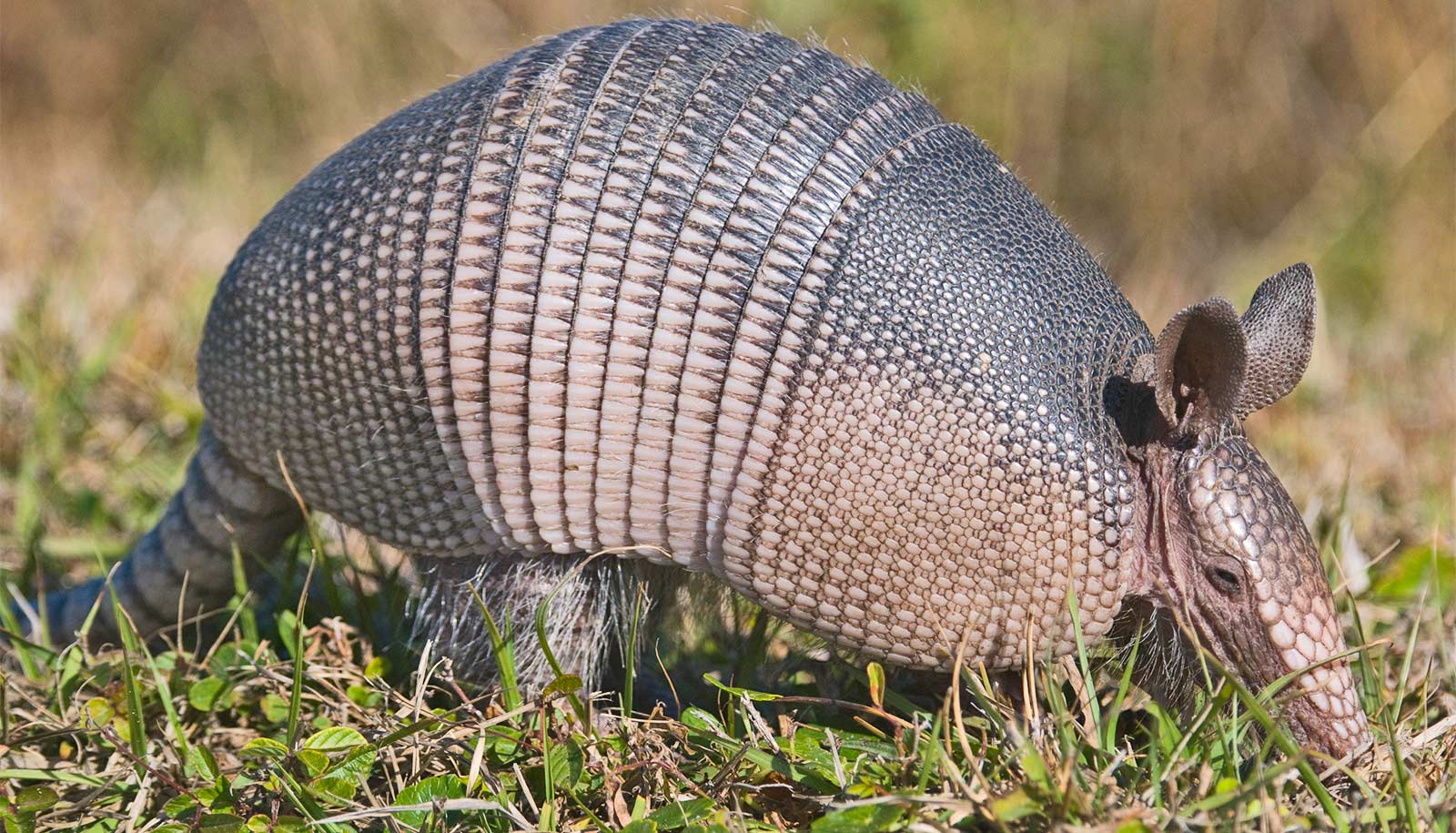
Armadillo-Inspired Technology Protects Soft Machines and Flexible Electronics
The morpho-interlocking protective module (MIPM), a bio-inspired technology designed to shield delicate electronics and medical devices by curling into a protective ball like an armadillo, represents a breakthrough in soft robotics and flexible electronics. Developed by researchers at North Carolina State University and published in Science Advances, this innovation addresses a critical gap in protecting fragile technologies—from wearable medical sensors to robotic surgical tools—while maintaining functionality. The system leverages a multi-layered design incorporating liquid-crystal elastomers, strain sensors, and segmented scales to transform from flexible to rigid under threat detection.
Key Clinical and Technical Takeaways:
- Mechanism: The MIPM uses a three-layer architecture (exoskeleton, sensing/actuation, and endoskeleton) to detect strain and automatically curl into a protective shell, mimicking the defensive behavior of armadillos.
- Applications: Potential uses span medical devices (e.g., flexible endoscopes), soft robotics, and even protective packaging for delicate payloads in aerospace or logistics.
- Expert Validation: Researchers demonstrated the system’s efficacy in lab tests, with 10 segmental scales capable of withstanding ~10 newtons of force—a threshold relevant to many medical and industrial applications.
Why This Tech Matters: The Fragility Crisis in Soft Robotics and Medical Devices
The rise of soft robotics and flexible electronics—critical for applications like wearable health monitors and minimally invasive surgical tools—has been hindered by a fundamental trade-off: flexibility enables adaptability, but fragility limits durability. Traditional protective measures, such as rigid casings, compromise the very properties that make these technologies valuable. The MIPM resolves this paradox by integrating adaptive mechanical protection with functional flexibility, a solution directly inspired by nature’s own engineering.
According to the study’s lead author, Jianyu Zhou, a postdoctoral researcher at NC State, the technology’s design draws from Tolypeutes species—the only armadillos capable of curling into a complete ball for defense. “The key was translating that biological behavior into a synthetic system that could respond to external stimuli with precision,” Zhou explains. The result is a structure that remains pliable in its default state but can be triggered to form a rigid, interlocking shell upon detecting mechanical stress.
How the MIPM Works: A Three-Layer Defense System
The MIPM’s innovation lies in its multi-material, multi-functional architecture, which the researchers describe as a “mechanics-guided design.” Each layer serves a distinct purpose:
- Exoskeleton: Composed of 3D-printed resin scales arranged in segmented curves, this outer layer provides the protective surface once the structure curls. The segmentation allows for controlled curvature, ensuring the payload remains enclosed without crushing.
-
Sensing and Actuation Layer: This core layer is the “brain” of the system, consisting of:
- A liquid-crystal elastomer (LCE) that contracts when heated, driving the curling motion.
- A strain sensor made of elastic polymer embedded with silver nanowires, capable of detecting forces ranging from a gentle touch to high-impact collisions.
- Kapton tape that expands upon heating, amplifying the curling effect.
- A conductive fabric heater layer that powers the transformation.
- Endoskeleton: Heavy-duty paper folded into ridges holds rigid polymer segmental scales in place. When the structure curls, these scales interlock, creating an internal “skeleton” that distributes force evenly. The researchers found that increasing the number of segmental scales from 5 to 10 improved rigidity by ~50%, a critical finding for scaling the technology.
The system’s responsiveness is triggered by the strain sensor, which signals a control unit to activate the heater. Within milliseconds, the LCE contracts and the kapton tape expands, causing the entire module to curl. Proof-of-concept tests confirmed the MIPM’s ability to detect and respond to forces as low as 1 newton—equivalent to the weight of a small apple—while withstanding up to 10 newtons in its protective state. This range aligns with the forces encountered in FDA-regulated flexible medical devices, such as catheters or robotic grippers.
Clinical and Industrial Applications: Where Could This Tech Be Deployed?
The MIPM’s adaptability positions it as a game-changer for fields where fragility and functionality must coexist. Here’s where experts see immediate impact:
-
Medical Devices:
The most promising near-term application may be in minimally invasive surgical tools, where delicate instruments must navigate complex anatomical paths without compromising structural integrity. “Imagine an endoscope that can traverse tortuous gastrointestinal tracts but instantly hardens if it encounters an obstruction or unexpected resistance,” says Dr. Elena Vasilescu, a biomedical engineer at Johns Hopkins University. “This could drastically reduce procedural risks.”
[Relevant Clinic/Professional: Johns Hopkins Biomedical Engineering Lab – Specializing in adaptive medical device design and FDA pre-market consultation.]
Highly Compliant, Flexible, Soft Actuators -
Soft Robotics:
Robotic systems designed for search-and-rescue or disaster response often rely on flexible materials to navigate rubble or uneven terrain. The MIPM could provide on-demand protection against collapse or impact, extending operational lifespans. The National Science Foundation, which funded the research, has already expressed interest in exploring applications for bio-inspired robotic exoskeletons.
-
Aerospace and Logistics:
Delicate payloads—such as satellite components or pharmaceutical shipments—could benefit from the MIPM’s lightweight yet robust protection. The Department of Defense, a co-funding partner, has signaled potential use in defense logistics, where conventional packaging fails to safeguard sensitive electronics during transport.
Expert Perspectives: What’s Next for Armadillo-Inspired Tech?
The MIPM’s development marks a milestone in bio-inspired engineering, but challenges remain before widespread adoption. Dr. Yong Zhu, corresponding author and professor of mechanical and aerospace engineering at NC State, emphasizes the need for further refinement:
“Our current prototype demonstrates the core concept, but real-world deployment will require optimizing the materials for specific use cases. For medical applications, we’ll need to ensure biocompatibility and sterilization compatibility. For industrial uses, scaling up production while maintaining precision will be key.”
Zhu’s team is already collaborating with NC State’s Textile Engineering Department to explore alternative materials for the endoskeleton, such as biodegradable polymers or shape-memory alloys. Meanwhile, Dr. Rachel Goldman, a materials scientist at Carnegie Mellon University, highlights the broader implications:
“This work exemplifies how nature’s solutions can address engineering limitations. The next frontier is integrating such adaptive systems into existing technologies without adding significant weight or cost. For healthcare, this could mean rethinking how we design prosthetics or wearable diagnostics.”
[Relevant Professional: Carnegie Mellon Materials Science Lab – Specializing in bio-compatible polymers and adaptive structures for medical applications.]
Regulatory and Ethical Considerations: Navigating the Path to Clinical Use
For medical applications, the MIPM’s journey to clinical use will require navigating regulatory hurdles similar to those faced by other adaptive technologies. The FDA’s Center for Devices and Radiological Health (CDRH) has established guidelines for soft medical devices, emphasizing biocompatibility, mechanical performance, and risk assessment. The MIPM’s adaptive nature may necessitate novel testing protocols to validate its protective capabilities under dynamic conditions.
Ethically, the technology raises questions about autonomy in medical devices. If a protective module autonomously activates during a procedure, how would clinicians interpret the response? Would it be perceived as a failure or a safeguard? These considerations will require interdisciplinary collaboration between engineers, clinicians, and ethicists.
[Relevant Service: FDA-Registered Medical Device Consultants – Specializing in pre-market submissions for adaptive and bio-inspired technologies.]
The Future Trajectory: From Lab to Market
The MIPM’s potential extends beyond its immediate applications. Researchers envision a future where such adaptive protective systems become standard in:
- Personalized Medicine: Wearable devices that harden during falls or impacts, reducing injury risks for elderly patients or athletes.
- Space Exploration: Flexible habitats or tools for Mars missions, where durability and adaptability are paramount.
- Disaster Response: Robotic systems that can morph to navigate collapsed structures while protecting their own components.
The technology’s scalability and material versatility suggest it could be tailored to a wide range of industries. However, the path forward will depend on:
- Securing additional funding for large-scale testing (potential sources include DARPA or NIH’s National Institute of Biomedical Imaging and Bioengineering).
- Establishing partnerships with manufacturers to integrate the MIPM into existing products.
- Addressing cost and production challenges to ensure accessibility across sectors.
The armadillo’s defensive strategy has inspired a technological leap that could redefine protection in both medical and industrial contexts. As the research progresses, the MIPM may become a cornerstone of adaptive engineering, proving that nature’s solutions are not just elegant but also highly functional.
For healthcare providers, engineers, and clinicians exploring the integration of bio-inspired technologies into medical devices or robotic systems, the time to engage with experts in this field is now. Whether you’re designing the next generation of surgical tools or seeking to enhance patient safety through innovative materials, the resources below can guide you:
- [North Carolina State University – Mechanical and Aerospace Engineering]: Leading the MIPM research; open to industry collaborations.
- [Johns Hopkins Biomedical Engineering]: Specializes in adaptive medical device design and FDA compliance.
- [Carnegie Mellon Materials Science]: Focuses on bio-compatible and adaptive materials for healthcare applications.
Disclaimer: The information provided in this article is for educational and scientific communication purposes only and does not constitute medical advice. Always consult with a qualified healthcare provider regarding any medical condition, diagnosis, or treatment plan.