
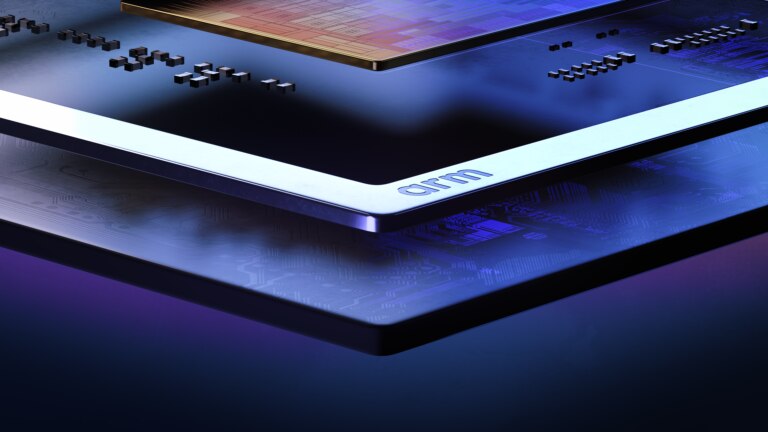
Arm Launches AGI CPU for Next-Gen AI Infrastructure | Neoverse Platform
Arm Holdings today unveiled the Arm AGI CPU, a production-ready silicon platform designed to power the burgeoning agentic AI cloud era. This marks Arm’s first foray into designing and selling its own silicon, extending beyond its traditional IP licensing model to address escalating demand for scalable, efficient AI infrastructure. The move positions Arm to capitalize on the projected $300 billion AI chip market by 2030, but too introduces new competitive pressures and supply chain considerations.
The shift to agentic AI – where software agents autonomously coordinate tasks and craft decisions – fundamentally alters the CPU’s role. No longer merely a task executor, the CPU becomes the central orchestrator of distributed AI systems, managing accelerators, memory, and data flow at unprecedented scale. This necessitates a processor architecture optimized for sustained performance across thousands of cores, a challenge Arm aims to meet with the AGI CPU. The implications for businesses are significant, demanding a reassessment of infrastructure investment and a proactive approach to managing the complexities of AI deployment. Companies unprepared for this transition risk falling behind in operational efficiency and innovation. This is where specialized cloud infrastructure management providers become essential, offering expertise in optimizing AI workloads and ensuring seamless integration.
The CPU Bottleneck and the Rise of Rack-Scale Efficiency
Historically, CPU performance scaled linearly with core count. However, as AI workloads grow in complexity, this relationship breaks down. Contention for memory bandwidth and I/O resources limits the effectiveness of adding more cores. Arm’s AGI CPU tackles this challenge through a holistic system design, prioritizing memory bandwidth, single-threaded performance, and efficient power consumption. The reference server configuration – a 1OU, 2-node design delivering 272 cores per blade, scalable to 8160 cores per rack – demonstrates a commitment to rack-scale density and performance. According to Arm’s internal testing, this configuration delivers over 2x the performance per rack compared to current x86 systems. This isn’t simply about raw processing power; it’s about maximizing the utilization of every resource within the data center.
The economic impact of this efficiency gain is substantial. Reduced power consumption translates directly into lower operating costs, a critical consideration for hyperscale cloud providers and enterprises alike. The ability to achieve higher performance within existing power and cooling constraints delays the need for costly infrastructure upgrades. “The move to agentic AI isn’t just a technological shift; it’s a fundamental economic one,” notes Dr. Emily Carter, Principal Analyst at Forrester Research. “Companies that can efficiently manage the computational demands of these systems will have a significant competitive advantage.”
Early Adoption and Ecosystem Momentum
Arm isn’t entering this market alone. Meta is leading the charge as the initial customer and co-developer of the AGI CPU, aiming to optimize its gigawatt-scale infrastructure for the Meta family of apps. Other launch partners include Cerebras, Cloudflare, F5, OpenAI, Positron, Rebellions, SAP, and SK Telecom, signaling broad industry validation. Commercial systems are now available from ASRockRack, Lenovo, and Supermicro. This rapid ecosystem adoption is crucial for establishing Arm as a viable alternative to established x86 dominance.
The partnership with Meta is particularly noteworthy. According to Meta’s Q4 2025 Earnings Call transcript, the company is projecting a 15% reduction in infrastructure costs by 2027 through the deployment of Arm-based servers. This demonstrates the tangible financial benefits of Arm’s approach. However, the success of this partnership hinges on seamless integration with Meta’s existing MTIA accelerators and the ability to scale production to meet demand. Supply chain resilience will be paramount, and companies will increasingly rely on supply chain risk management consultants to navigate potential disruptions.
Financial Implications and Competitive Landscape
Arm’s decision to enter the silicon market represents a significant strategic shift. While licensing IP remains a lucrative business – generating $2.4 billion in revenue in fiscal year 2024, according to their latest SEC 10-K filing – direct silicon sales offer higher margins and greater control over the value chain. However, it also introduces new risks, including capital expenditure, manufacturing complexity, and direct competition with existing chip vendors like Intel and AMD. The initial investment in the AGI CPU is estimated at $500 million, a substantial commitment that will impact Arm’s EBITDA margins in the short term.
“Arm’s move into silicon is a bold one, but it’s a necessary step to remain relevant in the evolving AI landscape,” says Michael Dell, CEO of Dell Technologies, in a recent interview with Bloomberg. “The demand for specialized AI infrastructure is only going to increase, and Arm is well-positioned to capitalize on that trend.”
The competitive landscape is intensifying. Intel is aggressively pursuing AI-specific silicon with its Gaudi and Ponte Vecchio accelerators, while AMD is leveraging its x86 expertise to develop AI-optimized CPUs. Nvidia remains the dominant player in the AI accelerator market, but Arm’s AGI CPU offers a compelling alternative for workloads that benefit from high core counts and efficient power consumption. The success of Arm’s strategy will depend on its ability to differentiate its offering and build a robust ecosystem of partners.
Navigating the Legal and Regulatory Landscape
As Arm expands its silicon business, it will face increased scrutiny from regulatory bodies. Antitrust concerns, particularly regarding its dominant position in the mobile processor market, could lead to investigations and potential restrictions on its business practices. Export controls and geopolitical tensions could disrupt supply chains and limit access to key markets. Companies operating in this space must proactively address these risks by engaging with legal counsel specializing in international trade and antitrust law. Expert guidance from international trade law firms is crucial for ensuring compliance and mitigating potential liabilities.
The launch of the Arm AGI CPU is a pivotal moment for the company and the broader AI industry. It signals a shift towards a more diversified and competitive landscape, where efficiency, scalability, and ecosystem collaboration are paramount. The coming fiscal quarters will be critical in determining whether Arm can successfully navigate the challenges and capitalize on the opportunities presented by the agentic AI revolution. For businesses seeking to leverage the power of AI, understanding these dynamics and partnering with the right B2B providers is no longer optional – it’s essential for survival.
The World Today News Directory remains committed to providing in-depth analysis and connecting businesses with the vetted partners they need to thrive in this rapidly evolving market. Explore our directory today to find leading providers of cloud infrastructure management, supply chain risk management, and international trade law services.