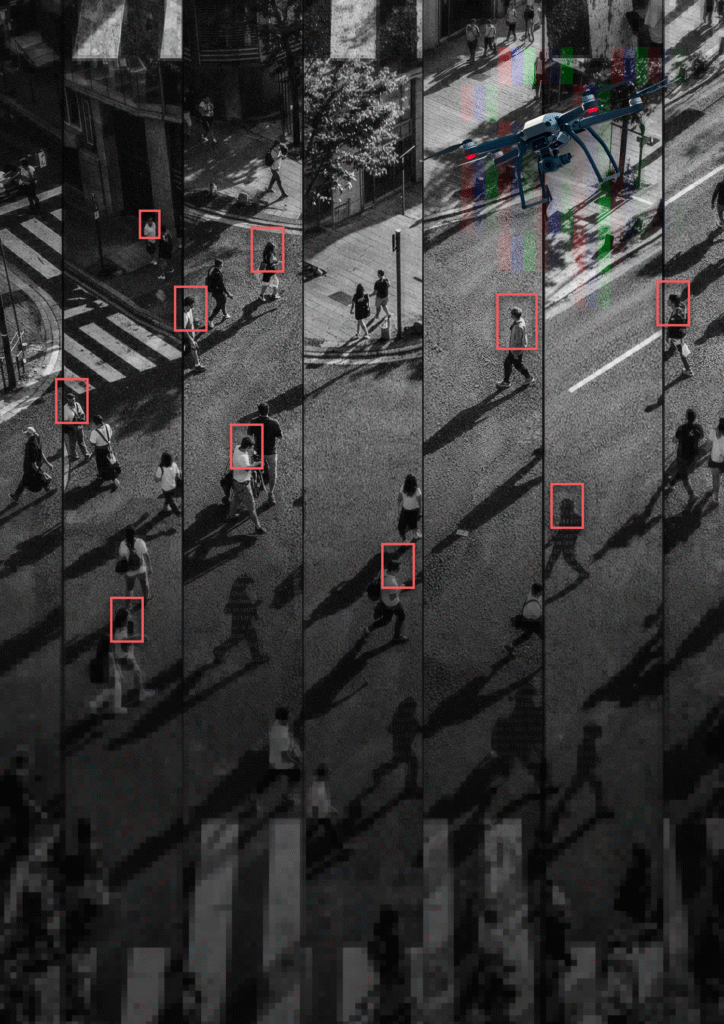
Argentina: Unchecked Deployment of AI-Driven Surveillance Reinforces Techno-Authoritarian Social Control
Between 2024 and 2025, the administration of Javier Milei acquired at least US$1.2 million in surveillance technologies, including social media monitoring tools, facial recognition, and aerial surveillance tools. According to a report by Amnesty International titled Sensing the Surveillance State, these sweeping institutional reforms and technological acquisitions have expanded state surveillance capabilities, creating a chilling effect on the rights to privacy, freedom of expression, and peaceful assembly across Argentina.
Institutional Reforms and the Expansion of State Surveillance Capabilities
The Argentine government implemented sweeping institutional reforms to expand its intelligence capabilities through a series of executive decrees and resolutions enacted during the first two years of the Milei administration. According to Amnesty International’s findings, these legal shifts directly enabled the deployment of mass surveillance mechanisms in both digital and physical environments. Procurement documents and data obtained through freedom of information requests confirm that the state systematically acquired technologies designed for broad population monitoring.
Among the acquisitions are open-source intelligence platforms engineered to collect, cross-check, and visualize large volumes of data sourced from social media, websites, personal data, technical infrastructure, and the dark web. Additionally, the government obtained licenses for facial recognition software supplied by vendors known for illicitly harvesting biometric data on a mass scale without adequate legal justification. Ground control stations and drones equipped with thermal cameras, automated tracking capabilities, and real-time transmission of images complete the physical monitoring apparatus.
Targeting Dissent and Deterring Peaceful Protests in Buenos Aires
Pensioners, journalists, activists, and human rights defenders report feeling constantly watched. Members of the Insurgent Pensioners, known locally as the Jubilados Insurgentes, march every Wednesday to the National Congress to protest government pension cuts. Participants have documented drones hovering feet above their heads during these demonstrations.
“We’ve all been fully identified for a long time now… Sometimes as you’re walking you get to [where you were going] and suddenly you see the drone hovering just above your head. Sometimes within six feet. Why so close? Why is it so invasive?” said Ana Tapia, a member of the Insurgent Pensioners collective, in testimony recorded by Amnesty International.
Paola Garcia Ray, Deputy Director, Amnesty International Argentina, emphasized the overarching objective of these measures. Pervasive surveillance is being deployed against Argentinians in both physical and digital spaces to devastating effect, serving as an integral part of the infrastructure of state control that targets dissent, deters protest movements, and harasses marginalized groups. When powerful figures seek to avoid accountability, they routinely target inquirers and deploy every available instrument to track, dominate, and suppress them.
The resulting chilling effect has forced journalists, migrants, and activists to self-censor on social media. Many have reduced their participation in protests out of fear of being identified and targeted, altering how they plan public activities.
Global Context and Demands for Regulatory Oversight
The expansion of AI-driven surveillance in Argentina mirrors a broader international wave of techno-authoritarianism. Matt Mahmoudi, Researcher and Advisor, Artificial Intelligence and Human Rights, Amnesty International, noted that states engaged in authoritarian practices worldwide are ramping up their use of surveillance technologies against human rights defenders, young people, migrants, marginalized and displaced groups, and dissidents in environments lacking adequate oversight, transparency, and accountability.

In response to these developments, Amnesty International has called on Argentine authorities to enact an explicit ban on the development, production, sale, and use of remote biometric recognition technologies for mass and targeted discriminatory surveillance. Furthermore, the organization calls upon the government to implement proper regulatory controls over the acquisition, creation, manufacturing, commercialization, importation, and exportation of surveillance gear, alongside dedicated public policy frameworks governing their deployment.
Concluding his remarks, Mahmoudi stated that Argentina must prove its dedication to human rights by keeping AI-based surveillance under strict control and ensuring that any parties responsible for human rights violations driven by these technologies face consequences.