
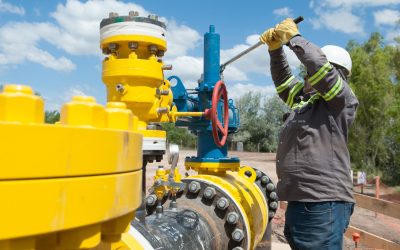
Argentina’s TGS Advances $560M Gas Compression Project to Boost Domestic Supply
Buenos Aires – Argentina’s Transportadora Gas del sur (TGS) has filed a Rigi submission for a $560 million gas compression project aimed at increasing the capacity of the Perito Moreno pipeline and reducing the country’s reliance on costly liquefied natural gas (LNG) imports. The initiative,announced today,will involve the construction of three new compression plants and upgrades to existing infrastructure in Tratayén,Neuquén province,adding 90,000 horsepower (HP) of new capacity.
The project is a key component of broader reforms to Argentina’s energy market, as the government seeks to return fuel procurement responsibilities to power generators, currently handled primarily by wholesale market administrator Cammesa. TGS is authorized to charge nonregulated, dollar-denominated transport rates for 15 years before the asset is returned to state-run energy firm Energía Argentina, which is currently undergoing privatization.
TGS will operate the new and upgraded infrastructure.An additional $220 million will be allocated to associated works on the TGS network, including a 15,000HP expansion and 20km of new pipelines, for which the company will receive regulated, peso-denominated rates.
Approximately $150 million – covering advance payments and initial works – is expected to be disbursed this year, with another $450 million slated for 2026 and the remainder in 2027, according to company officials. TGS has already secured around $70 million in bank loans to finance imported components and is actively pursuing additional funding sources.
The company reported cash, cash equivalents and financial assets totaling approximately $640 million as of 3Q25. Shares in TGS experienced double-digit gains following the midterm election victory last month of President Javier Milei’s libertarian-right alliance, signaling investor confidence in the direction of the country’s energy policy.
