Archaeologists Unearth WWII Car Wrecks as Runway Barricades at Soesterberg Airfield
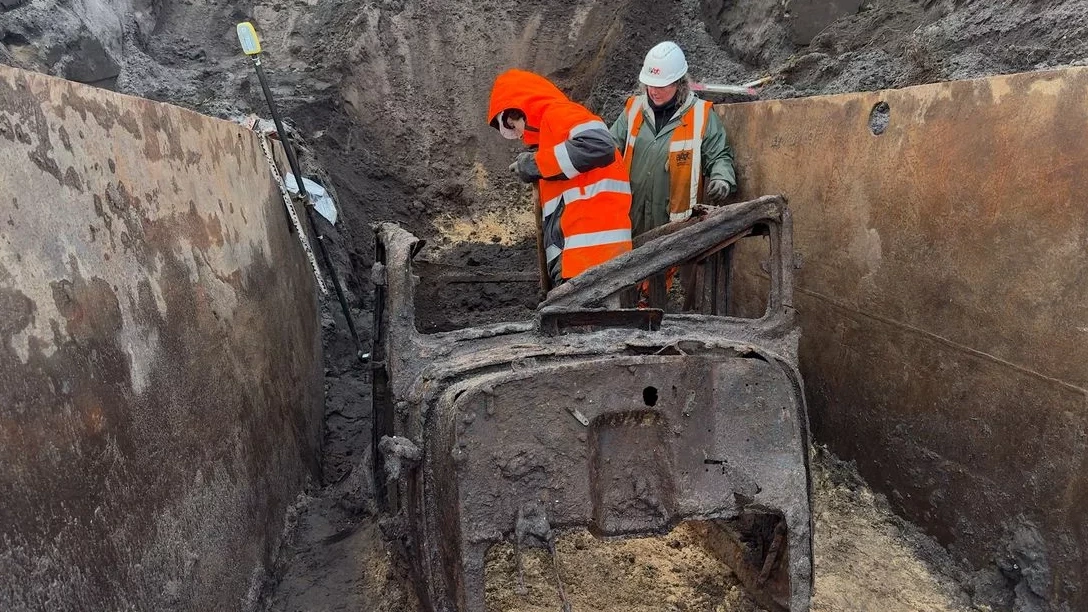
Archeologists unearthed two World War II car wrecks at the former Soesterberg air base on Friday to clear land for housing construction.
The vehicles were likely placed on the runway in 1940 to prevent German aircraft from landing, according to reports by NOS. Developers are preparing the old military airfield for the construction of approximately 500 to 550 new homes in the natural-inclusive residential area known as De Vliegbasis.
Excavation teams found the wrecks earlier this year, but had to temporarily suspend their work due to the breeding season of the protected woodlark, NU.nl reported. Archaeologists returned to the site once restrictions lifted, successfully unearthing two vehicles with a third scheduled to follow shortly.
“This is unique,” archaeologist Sebastiaan van der Gaag told RTV Utrecht.

Investigators have not yet identified all the makes and models, though one of the uncovered vehicles is suspected to be a Mercedes-Benz 630, a luxury automobile from a century ago. The cars were stripped of their wheels, motors, seats, and interiors before being positioned on the tarmac.
Local residents likely placed the stripped frames on the runway in 1940 to protect their territory before German forces occupied the base. When the German military took over and expanded the airfield for their own use, they dug large pits for sand extraction to level the ground, presumably dumping the runway blockades into those hollows.
The discovery of the automobile wrecks follows months of intensive groundwork and munitions clearance on the former air base. Earlier this year, explosive experts discovered unexploded American bombs intended to destroy the airfield, which have since been safely detonated.
Workers also uncovered a waste pit near a former tea house known as Soesterdal, which popular day-trippers visited before the war to order pea soup or the Soesterdal ice cream sundae. Items retrieved from that site include metal menu plates, pans, porcelain cups, and plates.

A fourth automobile wreck remains buried outside the designated housing construction zone and will stay in the ground, StadIndex.nl reported.
| Milestone | Year |
|---|---|
| Wartime airfield obstruction and German occupation | 1940 |
| German forces abandon and destroy base infrastructure | 1945 |
| Royal Netherlands Air Force ends base operations | 2008 |
| Construction of De Vliegbasis residential area begins | 2028 |
| First new homes scheduled for completion | 2029 |
In addition to residential construction, the province of Utrecht is overseeing soil remediation and ecosystem restoration to connect small natural areas across the former military zone. The Nationaal Militair Museum currently operates on the grounds, with a retired C-130 Hercules transport aircraft scheduled to join its collection later in the year, according to NU.
Soesterberg air base, 14 kilometres east-northeast of Utrecht, began as an airfield in 1911 and became the Dutch Army Aviation Division’s home in 1913. For nearly 40 years during the Cold War, its United States Air Force facilities, named Camp New Amsterdam, served as a major front-line USAFE base. The base closed on 31 December 2008 after the Royal Netherlands Air Force ended flying operations on 12 November 2008.
Archaeologists continue to evaluate whether the remaining buried vehicle will require documentation before the broader municipal development moves forward.