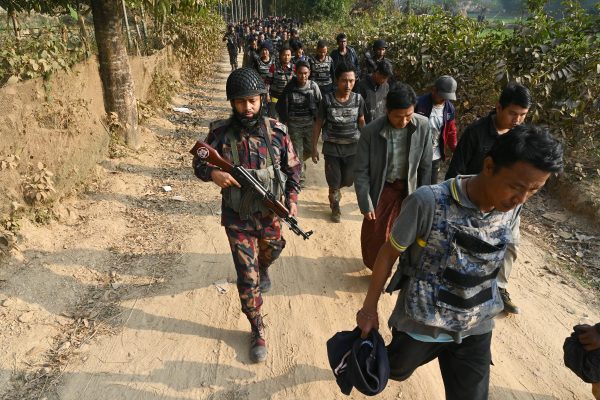
Arakan Army’s Border Control Forces Bangladesh into Unilateral Security Measures
Bangladesh is accelerating the construction of a comprehensive border fence along its 271-kilometer frontier with Myanmar to mitigate security risks stemming from the collapse of central authority in Rakhine State. As the Arakan Army consolidates control over border crossings, Dhaka has shifted toward unilateral fortification to manage illegal migration, arms trafficking, and the spillover of armed conflict.
The Shift to Unilateral Border Management
The strategic environment along the Naf River and the surrounding land border has fundamentally changed. As of June 19, 2026, the Myanmar military’s presence has been largely supplanted by the Arakan Army, a non-state armed group currently governing significant swaths of territory directly adjacent to Bangladesh. This power vacuum renders traditional diplomatic border protocols—which relied on coordinated patrols with the Myanmar military—effectively obsolete.

According to The Irrawaddy, a regional news outlet monitoring the conflict, the loss of state control in Rakhine has led to an uptick in unauthorized movement across the border. For Bangladesh, this necessitates a move toward “hard” security. The government is no longer negotiating joint security operations; it is building a physical barrier to define its territorial integrity in an era of decentralized, fragmented governance across the border.
“We are no longer dealing with a state actor that adheres to international border norms. When the entity on the other side of the wire changes every month, the only reliable security strategy is a physical one.”
— Dr. Abul Kalam, Senior Fellow at the Bangladesh Institute of International and Strategic Studies.
Geopolitical Implications of the Arakan Army’s Rise
The rise of the Arakan Army (AA) creates a complex logistical challenge for Dhaka. Unlike a sovereign state, the AA operates under its own administrative logic, focusing on the solidification of a “Rakhine State” that is increasingly autonomous. This creates a friction point with Bangladesh’s domestic policy, which prioritizes the repatriation of refugees and the cessation of cross-border violence.
Historically, border disputes in this region were managed through the Ministry of Foreign Affairs via formal diplomatic channels. Today, those channels are strained. The border is now a zone of active, low-intensity conflict, requiring local commanders to make real-time decisions without federal oversight. This environment has created a surge in demand for regional risk assessment. Businesses operating in border-adjacent districts like Cox’s Bazar are now seeking support from private security risk firms to navigate the volatility of supply chains and labor stability.
Infrastructure and Economic Impact on Border Districts
The construction of the fence is not merely a military endeavor; it is a massive public works project that alters the local economy of the Chittagong Division. The physical barrier disrupts traditional trade routes that have existed for generations. Small-scale merchants, who previously moved goods across the porous border with relative ease, are now facing strict enforcement.
The economic displacement is significant. As the government prioritizes the physical fortification of the border, local businesses are forced to adapt to a new regulatory reality. This transition often requires legal intervention to ensure compliance with emerging federal directives regarding trade and movement. For many small-to-medium enterprises in the region, engaging international trade law specialists has become a prerequisite for maintaining operational continuity.
| Security Factor | Pre-2024 Status | 2026 Status |
|---|---|---|
| Border Governance | Myanmar Military (Tatmadaw) | Arakan Army/Fragmented |
| Diplomatic Protocol | Bilateral Joint Committees | Unilateral Fencing |
| Primary Threat | Refugee Management | Cross-border Armed Conflict |
Managing the Humanitarian and Legal Fallout
The humanitarian dimension of the border fence remains a point of contention for international observers. Organizations such as Human Rights Watch have raised concerns regarding the restriction of movement for displaced persons fleeing the conflict in Myanmar. The fence, while providing a sense of national security to Dhaka, effectively creates a bottleneck for those seeking refuge.

This creates a complex legal minefield for humanitarian organizations and municipal leaders who must balance national security mandates with international obligations. The pressure on local infrastructure—already strained by the presence of refugee camps—is reaching a critical threshold. Municipalities are increasingly relying on non-profit humanitarian support networks to bridge the gap between state-mandated border policies and the immediate needs of vulnerable populations on the ground.
The long-term success of this fencing initiative depends on the stability of the Arakan Army’s administration. If the AA can maintain a cohesive internal security apparatus, the border may eventually stabilize. However, if the region continues to fracture into competing insurgent factions, the border fence will serve as the only line of defense for the Bangladeshi state.
Security planners expect the fence to be completed in phases over the next 24 months, with heavy surveillance equipment integrated into the structure. As the landscape continues to shift, the reliance on professional services—ranging from civil engineering firms to specialized legal counsel—will remain high. Those tasked with maintaining the stability of the border region must continue to consult with vetted technical and legal advisors to ensure that their response to this crisis remains both lawful and effective.
The fence is more than a wall; it is a manifestation of the end of the post-colonial border order in Southeast Asia. Whether it provides lasting security or merely creates a new geography of conflict remains to be seen, but for now, the construction continues as the new baseline for regional stability.