
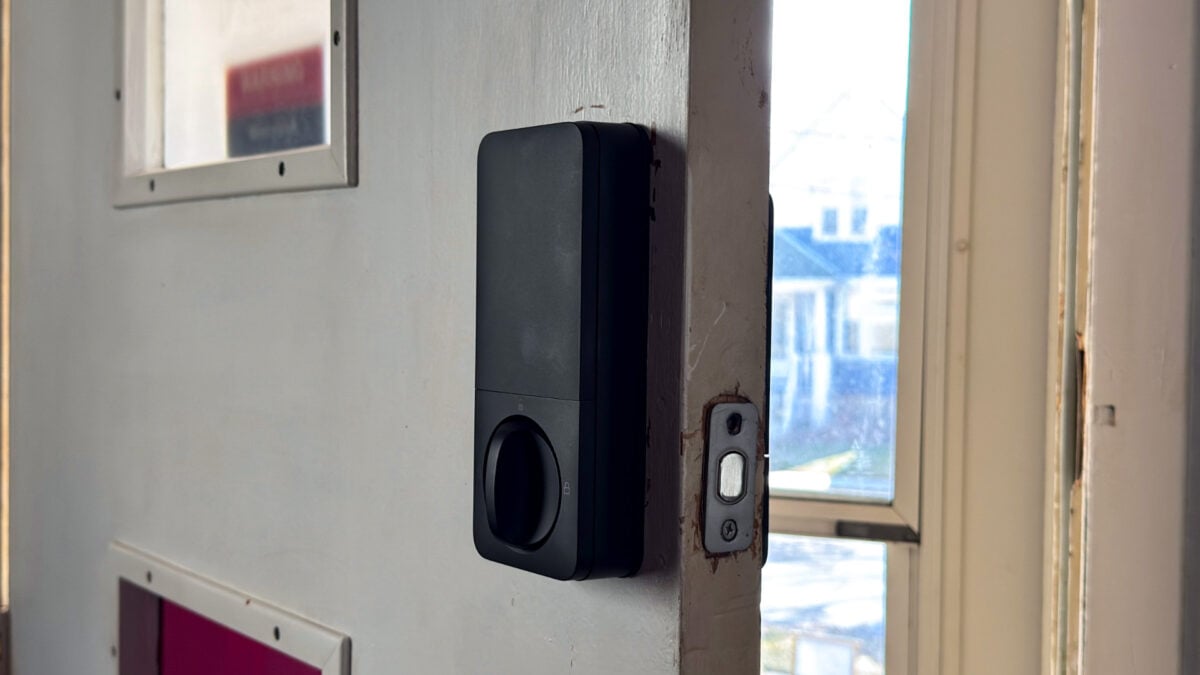
Aqara Smart Lock U400 Review: Hands-Free Unlocking is a Game Changer for iPhone Users
The Aqara U400 Review: UWB Precision Meets the Reality of Signal Attenuation
The promise of the “smart home” has always been frictionless entry, yet for years, we’ve traded physical keys for the latency of Bluetooth handshakes and the battery drain of constant location polling. The Aqara Smart Lock U400 attempts to solve this by leveraging Apple’s Ultra Wideband (UWB) implementation within the Home Key ecosystem. On paper, it’s the end of fumbling for phones. In practice, it’s a lesson in radio frequency physics and the current fragmentation of the Matter protocol.
- The Tech TL;DR:
- UWB Superiority: Ultra Wideband offers centimeter-level ranging accuracy, significantly reducing the “phantom unlock” issues common in BLE-based locks, though signal attenuation through clothing remains a variable.
- Ecosystem Fragmentation: While Apple Home Key Express Mode works near-flawlessly with Watch integration, Android support via Aliro is currently limited to NFC tap-to-unlock, lacking true hands-free UWB capabilities.
- Infrastructure Dependency: The lock relies on a Thread border router (e.g., HomePod mini) for remote access and automation, shifting the single point of failure from the lock to the network hub.
The Physics of Hands-Free: UWB vs. BLE Latency
The core differentiator here isn’t the mechanical build—the U400 is a standard motorized deadbolt—but the radio stack. Previous generations of “auto-unlock” relied on Bluetooth Low Energy (BLE) combined with GPS geofencing. This architecture is notoriously unreliable; GPS drifts, and BLE signal strength (RSSI) is a poor proxy for distance, often triggering unlocks while the user is still inside a car or down the street.
The U400 utilizes the U1 or U2 chip found in modern iPhones and Apple Watches to perform Two-Way Ranging (TWR). According to the Apple Core Location documentation, UWB allows for precise distance measurement by calculating the time of flight of radio pulses. In our testing, this translated to a trigger zone of approximately 1.5 meters, contingent on line-of-sight. When the iPhone was in a pocket, the human body acted as a Faraday cage, absorbing the 6.5 GHz signal and forcing the user to be nearly touching the door before the handshake completed. This isn’t a bug; it’s a security feature to prevent relay attacks, but it degrades the “magic” of the user experience.
“UWB solves the distance problem, but it introduces an attenuation problem. If your threat model includes signal jamming or relay attacks, UWB is superior to BLE, but physical obstruction remains the enemy of convenience.” — Elena Rostova, Senior IoT Security Researcher at OpenSecurity Labs
The Matter and Thread Architecture
From a network topology perspective, the U400 is a Thread end device. It does not connect directly to your Wi-Fi router. Instead, it meshes with other Thread devices and relies on a Border Router to translate Thread traffic to IP traffic for your home network. This is a critical distinction for IT administrators. If your HomePod mini or Apple TV goes offline, your remote access and automation capabilities vanish, even if the local UWB unlock still functions.
The implementation of Matter here is robust. Unlike proprietary Zigbee hubs that require specific bridges, the U400 speaks the universal language of the Connectivity Standards Alliance. However, the setup process reveals the complexity hidden beneath the “easy install” marketing. Commissioning a Matter device requires a secure exchange of credentials (DACs – Device Attestation Certificates). For the average consumer, scanning a QR code is simple. For a property manager deploying fifty of these units, the lack of bulk provisioning tools in the current Matter spec is a bottleneck.
For organizations looking to deploy smart access at scale without managing the underlying mesh network complexity, partnering with a specialized smart home systems integrator is advisable to ensure Thread border routers are strategically placed for optimal mesh coverage.
Android and the Aliro Gap
The most glaring issue in the current deployment landscape is the asymmetry between iOS and Android. While the U400 supports the new Aliro standard (the CSA’s branding for Matter-based digital keys), the UWB stack for hands-free unlocking on Android is not yet feature-parity with Apple’s Home Key. Currently, Samsung Galaxy users are relegated to NFC tap-to-unlock. This introduces friction; the user must actively present the device to the reader, negating the “hands-free” value proposition.
This fragmentation forces CTOs and security leads to question the viability of heterogeneous device environments. If your executive team uses a mix of Pixel, Galaxy, and iPhone devices, the access control policy becomes inconsistent. Until the Android UWB stack matures to support background ranging with the same fidelity as iOS, this lock is effectively an Apple-first peripheral.
Implementation and Security Hardening
For developers looking to integrate this lock into a broader home automation workflow via Home Assistant or a custom bridge, understanding the Matter cluster attributes is essential. Below is a theoretical CLI interaction using the matter-tool to read the lock state, demonstrating how the device exposes its status over the fabric.
# Read the LockState cluster attribute from the Aqara U400 # Requires the Node ID and Fabric ID from the commissioning process matter-tool read 0x0000000000000001 0x0000000A 0x00000000 --fabric-id 0x0000000000000001 --endpoint 1 # Expected Response: # LockState: 1 (Locked) # LockType: 1 (Deadbolt) # ActuationSource: 2 (Remote/Network) From a physical security standpoint, the U400 carries a low ANSI grade. While the digital encryption (AES-CCM) securing the Thread packets is robust, the physical bolt throw is susceptible to standard bypass techniques if the door frame isn’t reinforced. Security auditors recommend pairing digital locks with physical hardening measures. Enterprises concerned with physical perimeter security should engage physical-digital security auditors to validate that the smart lock implementation doesn’t weaken the overall building envelope.
Battery Architecture and Power Management
The shift to a rechargeable lithium-ion pack is a double-edged sword. It eliminates the waste of AA batteries, but the charging curve observed during testing was suboptimal. Drawing 35% charge in two hours via USB-C suggests a standard 1C charge rate, which generates heat. In a metal enclosure mounted on a door exposed to direct sunlight, thermal throttling could become an issue in summer months. The lack of a hot-swappable battery means the door is inaccessible during the charging window unless a physical key or external power bank is used.

Verdict: A Niche High-Fidelity Solution
The Aqara U400 is not a universal solution; it is a high-fidelity peripheral for the Apple ecosystem. The UWB implementation is the best we’ve seen in the consumer space, offering a latency and precision profile that finally mimics the passive nature of a physical key. However, the reliance on specific hardware (Apple Watch/U1 iPhone) and the current lag in Android UWB support limits its deployment in mixed-OS environments.
For the tech-forward homeowner with a homogeneous Apple setup, this is the current state-of-the-art. For everyone else, the friction of NFC tapping or the waiting game for Android UWB updates makes cheaper, fingerprint-based alternatives a more logical choice for now. As the Matter protocol evolves, we expect the Aliro specification to close this gap, but until then, the “smart lock dream” remains partially walled.
Disclaimer: The technical analyses and security protocols detailed in this article are for informational purposes only. Always consult with certified IT and cybersecurity professionals before altering enterprise networks or handling sensitive data.