
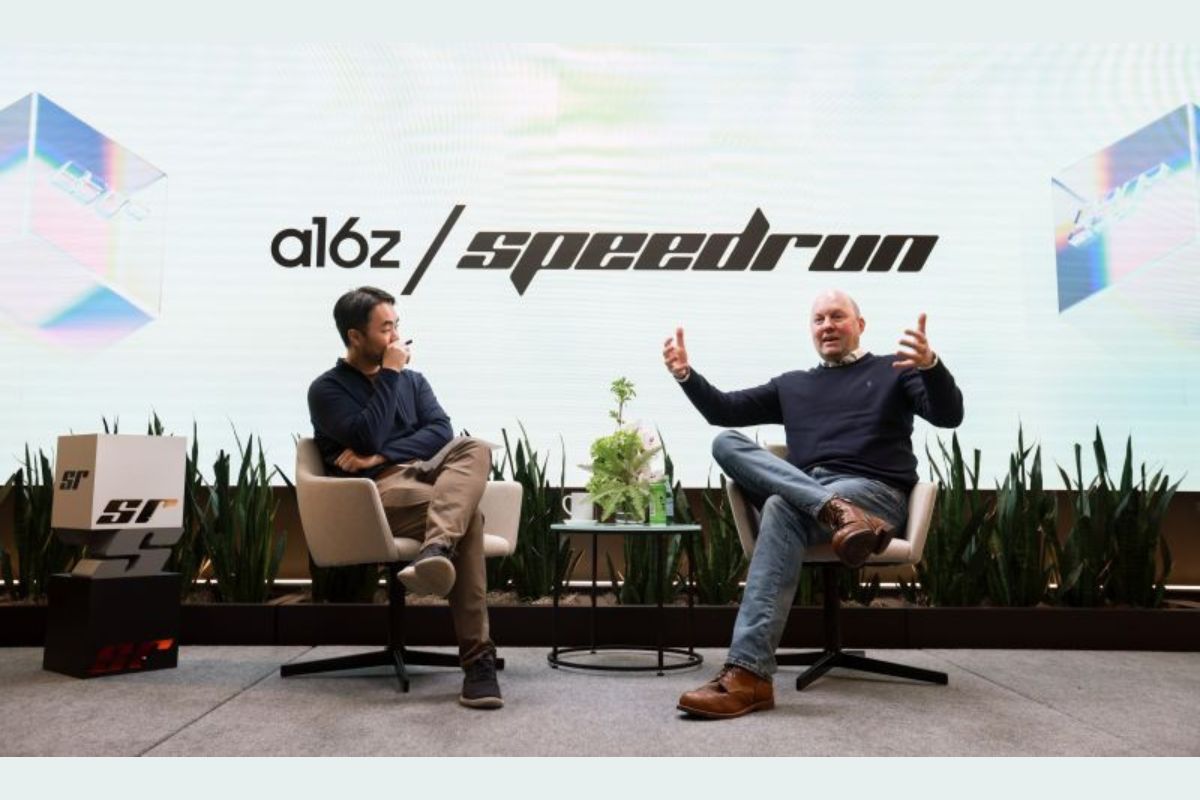
Apply to a16z Speedrun: Join Andrew Chen’s Zoom Office Hours
Andrew Chen is currently running Zoom office hours for a16z Speedrun, signaling a pre-application window for founders aiming to hit the 12-week accelerator cycle. For those operating in the noise of the current venture landscape, this is less about the “magical” pitch and more about the structural alignment of a startup’s growth engine with a16z’s investment thesis.
The Tech TL;DR:
- The Program: a16z Speedrun is a 12-week accelerator investing up to $1M in modern startups.
- Immediate Action: Zoom office hours are active now; formal applications open in “a few weeks.”
- The Focus: High-growth potential centered on network effects and consumer-led scaling.
The friction in early-stage funding often stems from an information asymmetry between the General Partner (GP) and the founder. By deploying “office hours” via Zoom, Chen is essentially reducing the latency of the vetting process. This isn’t just a PR move; it’s a filter for founders who can articulate their technical roadmap and growth metrics without the polish of a formal slide deck. For a senior developer or CTO, the real challenge isn’t the pitch—it’s the underlying architecture. If your MVP is a monolithic disaster that can’t scale, a $1M check only accelerates the rate at which you hit a performance ceiling.
The Architecture of a Growth-Led Startup
Andrew Chen’s focus on “The Cold Start Problem” and network effects suggests that a16z Speedrun isn’t looking for feature-complete products. They are looking for a “virtuous cycle”—a system where each new user increases the value of the product for all existing users. From an engineering perspective, this requires a stack optimized for rapid iteration and high concurrency. Startups entering this 12-week sprint must prioritize continuous integration and containerization via Kubernetes to ensure that the pivot from 100 to 100,000 users doesn’t result in a total system collapse.
Many founders fail here because they over-engineer for a scale they haven’t reached, or conversely, ignore SOC 2 compliance and security protocols until the first enterprise pilot. To avoid this bottleneck, teams are increasingly leveraging professional software development agencies to harden their initial codebase before the accelerator pressure kicks in.
The Accelerator Matrix: a16z Speedrun vs. Traditional Paths
When evaluating the “Speedrun” model against traditional seed funding or legacy incubators, the trade-offs center on velocity and capital efficiency.
| Metric | a16z Speedrun | Traditional Seed Round | Legacy Incubator |
|---|---|---|---|
| Capital Injection | Up to $1M | Variable ($500k – $2M+) | Small stipends/equity |
| Time-to-Value | 12 Weeks | 3-6 Months (Closing) | 3-6 Months |
| Primary Focus | Growth/Network Effects | Product-Market Fit | Ideation/Validation |
| Support Level | High (GP Access) | Board-level oversight | Mentor-led |
Implementation Mandate: Calculating the Growth Magic Number
Chen’s published work emphasizes the “red flags and magic numbers” that investors scrutinize. For a CTO, this means translating raw telemetry into growth metrics. The “Magic Number” typically measures the efficiency of sales and marketing spend in driving new recurring revenue. If the number is below 0.75, the growth engine is leaking; above 1.0, it’s time to scale.
Below is a Python implementation to track this efficiency, which should be integrated into your internal monitoring dashboard before any AMA with a GP.
def calculate_growth_magic_number(new_mrr, sales_marketing_spend): """ Calculates the Growth Magic Number to evaluate S&M efficiency for venture scaling. Formula: (Current Quarter MRR - Previous Quarter MRR) * 4 / S&M Spend """ if sales_marketing_spend == 0: return float('inf') magic_number = (new_mrr * 4) / sales_marketing_spend return round(magic_number, 2) # Example: New MRR added this quarter: $25k, S&M Spend: $80k efficiency = calculate_growth_magic_number(25000, 80000) print(f"Growth Magic Number: {efficiency}") # Output: 1.25 (Strong efficiency, ready for a16z Speedrun scaling) The Security Debt Trap
The urgency of a 12-week program often leads to “security debt.” In the rush to ship features that demonstrate growth, founders frequently bypass essential encryption and identity management. However, once a startup attracts the attention of a firm like Andreessen Horowitz, the due diligence process becomes rigorous. A lack of end-to-end encryption or a porous API can derail a deal during the final audit.
To mitigate this, sophisticated teams are deploying cybersecurity auditors and penetration testers to conduct rapid vulnerability assessments. This ensures that the “speed” in Speedrun doesn’t lead to a catastrophic data breach that kills the company’s reputation before the first check clears.
“Love how accessible you’re making this process for early founders, sharing real-time insights can produce all the difference at the start.” — Jim Barnish, via LinkedIn
This accessibility is a double-edged sword. While it lowers the barrier to entry, it increases the volume of noise. To stand out, founders must move beyond the “Uber for X” mentality—which Chen himself has critiqued as failing due to supply-side issues—and instead prove they have solved a fundamental architectural or market friction. For those building in the AI space, this means moving past simple wrapper APIs and demonstrating a proprietary data loop or a unique implementation of an NPU-optimized workflow.
For technical documentation on scaling these types of architectures, developers should reference the official GitHub Actions documentation for CI/CD automation or explore Stack Overflow for solving specific concurrency bottlenecks in high-growth environments. For those tracking the broader trend of venture-backed AI, Ars Technica provides critical analysis on the hardware constraints affecting these startups.
The trajectory of a16z Speedrun reflects a broader shift toward “venture-studio” dynamics, where the GP provides not just capital, but a prescriptive growth framework. For the founder, the goal is to utilize the $1M to bridge the gap between a working prototype and a scalable system. Those who treat the 12-week program as a sprint toward a stable, secure, and growth-efficient architecture—rather than just a fundraising exercise—will be the ones to survive the “Trough of Sorrow.” As these startups scale, they will inevitably require managed IT services to handle the operational overhead of a rapidly expanding team.
Disclaimer: The technical analyses and security protocols detailed in this article are for informational purposes only. Always consult with certified IT and cybersecurity professionals before altering enterprise networks or handling sensitive data.