
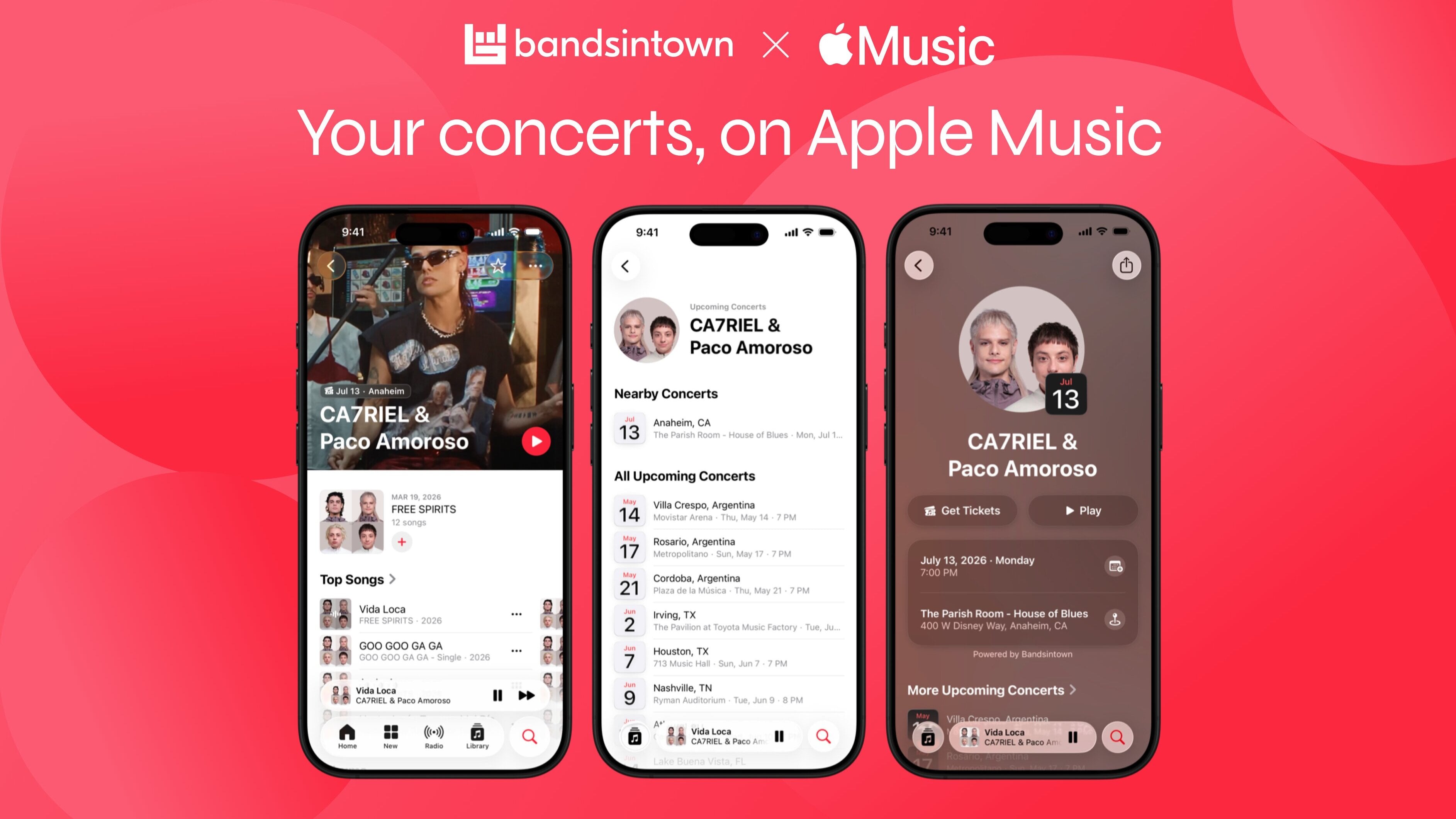
Apple Music Integrates Bandsintown and Ticketmaster for Concert Discovery and Ticketing
Apple Music’s latest iOS 26.4 update integrates direct ticketing via Bandsintown and Ticketmaster, effectively collapsing the funnel between streaming and live attendance. By embedding tour dates and purchase links directly into artist pages and personalized carousels, Apple aims to capture the “impulse buy” market, leveraging its 100 million-user ecosystem to bypass third-party discovery friction and drive immediate revenue for the Live Nation monopoly.
The music industry has spent the last decade fighting a war on two fronts: the devaluation of recorded music and the skyrocketing cost of live production. As we head into the spring festival circuit of 2026, the battlefield has shifted. It is no longer about how many times a track is streamed; it is about how efficiently that stream converts into a seat in a stadium. Apple’s aggressive move to fuse its streaming interface with the ticketing infrastructure of Ticketmaster and Bandsintown isn’t just a feature update—it is a strategic annexation of the live music economy.
For the uninitiated, the mechanics seem simple. A user listens to a track, taps the artist profile, and sees a “Concerts” tab populated by real-time inventory. But look closer at the architecture. This is the “walled garden” maturing into a “walled arena.” By removing the need to switch apps, Apple is attacking the drop-off rate that has plagued digital marketing for years. Every second a fan spends navigating away from Apple Music to a browser to find a Ticketmaster link is a second where interest cools and conversion dies. This update effectively monetizes the micro-moment of fandom.
The financial implications are staggering when viewed through the lens of recent industry data. Live Nation’s dominance is already absolute, with 2025 revenues topping $25 billion and attendance hitting a record 159 million. Yet, the friction of discovery remained a bottleneck. Independent promoters and mid-tier artists often struggled to gain their tour dates in front of the right ears without burning cash on social media ads. This integration levels the playing field for data-rich artists while potentially squeezing out smaller, data-poor operators who cannot optimize their metadata for Apple’s algorithm.
To understand the scale of this shift, we must look at the conversion metrics. Traditional discovery funnels—social media posts leading to link-in-bio sites leading to ticketing platforms—suffer from significant leakage. Apple’s native integration promises to plug those leaks.
| Metric | Traditional Social Discovery (2024-2025 Avg) | Native In-App Integration (Projected 2026) |
|---|---|---|
| Click-Through Rate (CTR) | 1.2% – 1.8% | 4.5% – 6.0% |
| Time-to-Purchase | 3-5 Minutes (Multi-app) | < 30 Seconds (Single-app) |
| Cart Abandonment | 68% | Estimated 45% |
| Data Attribution | Fragmented (Pixel/UTM) | First-Party (Apple ID) |
The data suggests a seismic shift in how tours are marketed. When the path to purchase is this short, the margin for error vanishes. This creates a high-stakes environment for event management and logistics firms. If an artist’s listing goes live and the algorithm pushes it to a million users in an hour, the backend infrastructure must hold. We are seeing a surge in demand for scalable ticketing solutions and real-time inventory management that can handle these “flash mob” style demand spikes without crashing.
However, centralization brings its own risks. When a single ecosystem controls the discovery, the promotion, and the transaction, the leverage shifts entirely to the platform. This dynamic often leads to intense scrutiny regarding antitrust implications and market fairness. For artists, the danger lies in becoming dependent on Apple’s curation algorithms. If your tour dates don’t appear in the personalized carousel, do you effectively not exist?
Industry veterans spot this as the natural evolution of the “super-app” strategy. “We are moving past the era of passive listening,” notes Sarah Jenkins, a senior media analyst at Variety. “The value proposition for a streaming service in 2026 isn’t just the catalog; it’s the access. Apple is essentially becoming the primary box office for the digital age. For labels, this means renegotiating how they view ‘marketing spend.’ You aren’t just buying ads; you are buying placement in the utility layer of the user’s phone.”
This consolidation of power also highlights the critical need for robust crisis communication and reputation management. In an ecosystem where news travels instantly and tickets sell in seconds, a PR misstep—a controversial lyric, a cancelled reveal, a scandal—can tank sales before a press release is even drafted. The speed of this latest integrated model requires PR teams to be reactive in real-time, monitoring sentiment not just on social platforms, but within the streaming data itself.
the integration underscores the importance of accurate metadata and intellectual property management. With Bandsintown requiring artists to link profiles via their dashboards, the synchronization of tour data with streaming rights becomes paramount. Errors in venue listings or date conflicts can lead to consumer frustration and brand damage. This is where specialized intellectual property and entertainment lawyers become essential, ensuring that the digital representation of a tour aligns perfectly with the contractual realities of the live performance.
As we move deeper into 2026, expect other players to respond. Spotify cannot afford to cede this ground, and we will likely see similar aggressive integrations from their camp, perhaps leveraging their existing partnerships with Songkick or direct ticketing ventures. The war for the live music dollar is no longer fought in the arena; it is fought in the code.
For the industry professional, the message is clear: The silos between recorded music and live events have been demolished. Success now depends on a holistic strategy that treats a stream and a ticket sale as part of the same revenue stream. Whether you are an artist manager, a promoter, or a label exec, the ability to navigate this integrated landscape—leveraging the right legal protections, the right PR agility, and the right logistical partners—will define the next era of music business success.
*Disclaimer: The views and cultural analyses presented in this article are for informational and entertainment purposes only. Information regarding legal disputes or financial data is based on available public records.*