
Apple iPhone 17 Air: Thinnest & Most Eco-Friendly Model Yet
Apple unveiled its thinnest iPhone to date, the iPhone 17 Air, alongside new AirPods and an updated Apple Watch on Tuesday, marking a significant shift in the company’s design priorities. The iPhone 17 Air measures just 5.5 millimeters thick, a move Apple hopes will attract consumers prioritizing portability and aesthetics.
The launch, announced on September 9, 2025, represents a departure from previous models that emphasized processing power and camera capabilities, according to Reuters. Apple is positioning the iPhone 17 Air as a premium device that balances lightweight design with performance and photographic quality. The company is also releasing a standard iPhone 17 and 17 Pro alongside the Air model.
To achieve the slim profile, Apple employed an aerospace-grade titanium and aluminum alloy for the chassis, ensuring structural integrity despite the reduced thickness. Internally, the device features a compacted motherboard, reorganized processors and memory modules, and a miniaturized vapor chamber thermal dissipation system utilizing graphite sheets. This combination is designed to maintain stable performance even under heavy workloads.
Innovations extend to the battery, which utilizes a wider, thinner cell with high-density energy compounds to deliver competitive battery life without increasing the device’s volume. The iPhone 17 Air incorporates a liquid crystal glass display, eliminating intermediate layers to bring pixels closer to the touch surface, enhancing immersion and responsiveness. An anti-reflective coating improves readability in direct sunlight, and the display’s adaptive refresh rate optimizes energy consumption.
Apple has also enhanced security features. Physical protection is bolstered by cryptographic identifiers linked to the motherboard on key components like batteries, cameras, and screens, rendering them unusable if installed in unauthorized devices. The secure enclave within the processor has been expanded to store personal and financial identification data with end-to-end encryption, and the digital wallet can now operate even with a low battery or when the phone is powered off.
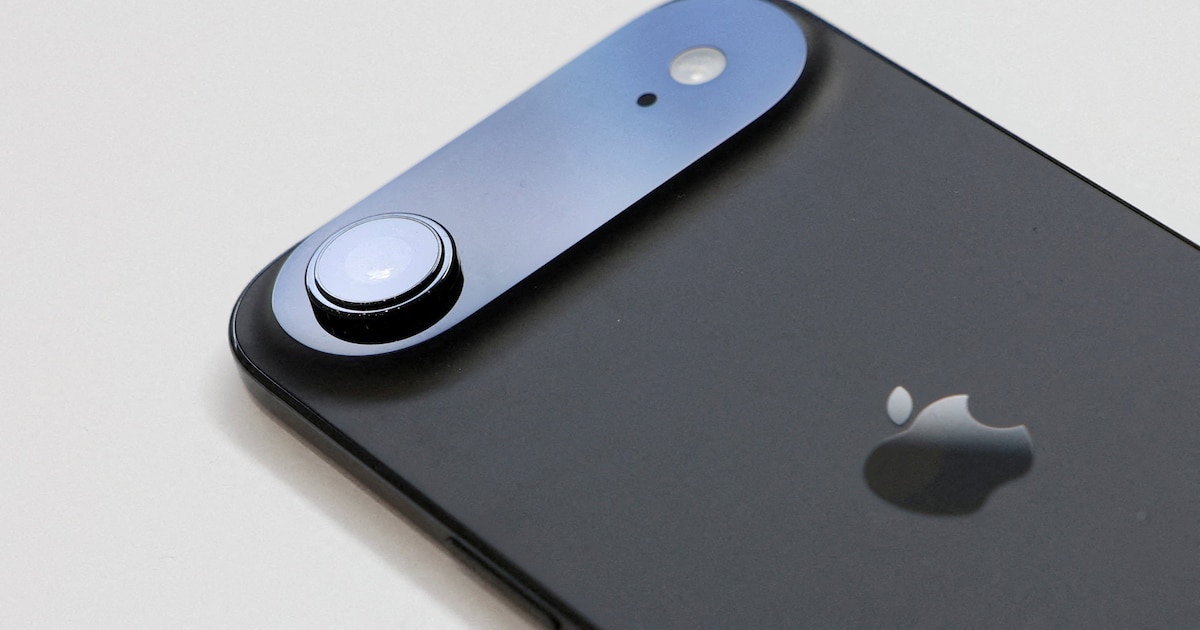
The rear camera configuration has been redesigned to accommodate the ultra-thin profile. Sensors are grouped at the top of the device to improve balance and prevent wobbling on flat surfaces. The main lens features an enlarged sensor with increased light absorption, compensating for the limited space for complex optics. Image processing, powered by artificial intelligence, corrects distortions and applies depth effects computationally, prioritizing intelligent photography over multiple lenses.
The iPhone Air, iPhone 17, and 17 Pro were launched alongside the AirPods Pro 3, featuring live translation capabilities, and a new Apple Watch with a blood pressure monitor. Apple largely held prices steady across the product line, according to a YouTube broadcast of the launch event.
Apple’s decision to prioritize a slim design comes as the market increasingly values aesthetics and innovative materials. The price of the iPhone 17 Air reflects the complexity of its manufacturing and miniaturization innovations, positioning it above the base iPhone 17 models.