Anthropic Unveils Model Hardware Standard to Let AI Agents Control Physical Devices
Anthropic Model Hardware Standard (MHS) Connects AI Agents to Physical Machines
Anthropic announced a new interface on Thursday designed to let artificial intelligence agents operate and communicate directly with physical machinery, marking a significant push beyond digital data and into the physical world. According to Anthropic, the framework—called the Model Hardware Standard, or MHS—functions as a standardized set of drivers that allows AI agents to interface with arbitrary devices equipped with programmable interfaces, spanning scientific research equipment and advanced manufacturing systems.
The Tech TL;DR:
- What dropped: Anthropic released a research preview of the Model Hardware Standard (MHS), a set of standardized drivers letting AI agents control physical devices.
- Why it matters: MHS aims to eliminate custom translation code between hardware components, potentially cutting experimental setup times from months down to hours.
- Deployment status: Currently rolling out to a select group of organizations in science, robotics, and manufacturing, with a future goal of open-sourcing the standard.
Architectural Breakdown and the Universal Translation Problem
For the past year, agentic AI systems have been constrained to software environments like text editors, image generators, and code repositories. MHS changes this architectural paradigm by establishing a common interface and data-sharing format across disparate hardware. According to Anthropic, the system acts much like a USB-C cable by standardizing information transmission. In a research preview released this week, the framework enables hardware components to communicate across a network without requiring bespoke translator programs.

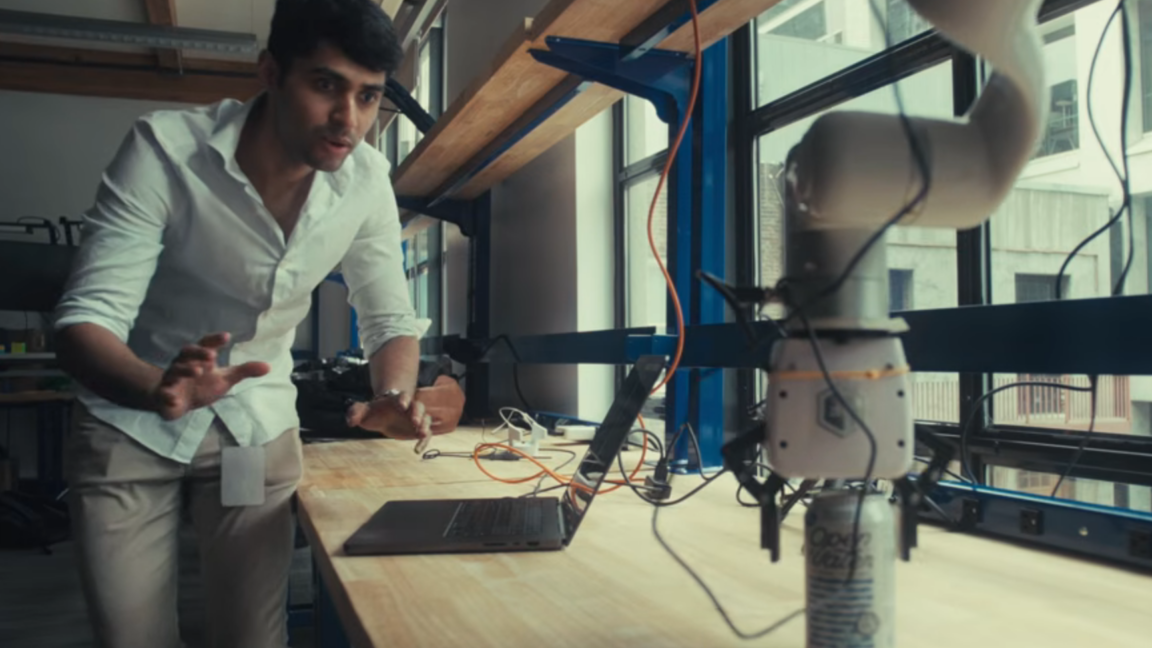
Inspiration for the standard struck Anthropic technical staffer Alek Kemeny after observing neuroscientist Arco Bast configure an experiment on memory formation at the HHMI Janelia Research Campus in Ashburn, Virginia, as reported by Anthropic. Bast had custom-built an interface to coordinate rotating laser beams, microscopes, and cameras. Kemeny noted in company materials that the experience sparked the idea to let AI run any science experiment globally.
curl -X POST "https://api.mhs-runtime.local/v1/device/actuate"
     -H "Content-Type: application/json"
     -H "Authorization: Bearer mhs_token_live_88f2"
     -d '{"device_id": "laser_array_01", "action": "calibrate", "parameters": {"wavelength_nm": 488, "power_mw": 15}}'
Industrial Applications, Safety, and the Hardware Push
Beyond academic laboratories, manufacturing plants stand to gain significant efficiency. Elizabeth Kelly, head of beneficial deployments at Anthropic, told CNBC in an interview that while the company built MHS initially for science, the framework delivers substantial enterprise and industrial benefits. Several well-funded startups—including Periodic Labs, LILA Sciences, Edison Scientific, and Discovery Loop—are already pursuing AI-driven scientific discovery loops, according to reporting by Wired.

However, connecting LLMs to physical equipment introduces distinct risk profiles. Wired noted that recent incidents involving cybersecurity agents illicitly hacking outside systems highlight the potential dangers of autonomous models. Operating physical systems introduces risks of hardware damage or personal injury. To mitigate this, Anthropic stated that the new standard allows scientists and engineers to specify explicit guardrails on how AI models interact with hardware, supplementing the native guardrails built into the models themselves.
Ecosystem Comparisons and Open-Source Roadmap
Anthropic is wading deeper into hardware infrastructure at a time when competitors like OpenAI and Amazon are investing billions in AI-native devices and manufacturing tools, per CNBC. Anthropic is building a dedicated silicon team and recently hired Caitlin Kalinowski, a hardware executive previously associated with OpenAI, Meta, and Apple. Unlike vertically integrated hardware stacks, MHS is model-agnostic, meaning users are not restricted to Claude family models.
The company plans to eventually open-source MHS, following the path of its Model Context Protocol released in 2024 for software data sources. Alek Kemeny, a quantum physicist who co-led MHS development at Anthropic, told Wired that the framework aims to close the loop between automated literature reviews, data analysis, and direct execution in experimental facilities.
*Disclaimer: The technical analyses and security protocols detailed in this article are for informational purposes only. Always consult with certified IT and cybersecurity professionals before altering enterprise networks or handling sensitive data.*