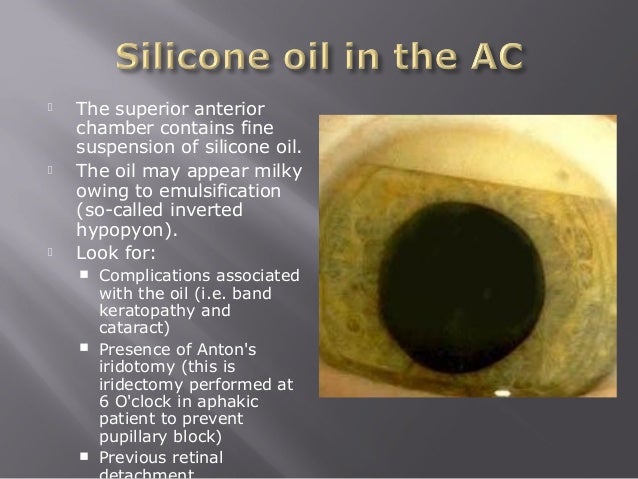
Anterior Chamber Silicone Oil Migration After Retinal Detachment Repair
Anterior segment neovascularization and oil migration can develop years after complex retinal detachment repair, posing significant long-term management challenges for vitreoretinal specialists and comprehensive ophthalmologists. According to a case report published in Cureus, the retention of liquid silicone oil as an internal tamponade agent carries risks of late anatomical complications, including anterior chamber invasion, elevated intraocular pressure, and subsequent neovascularization of ocular structures.
- Silicone oil, while widely utilized as a temporary or prolonged internal tamponade in complex retinal detachment surgery, can migrate into the anterior chamber years after the initial procedure.
- Prolonged retention of intraocular silicone oil significantly elevates the risk of mechanical and biochemical complications, including corneal keratopathy, glaucoma, and anterior segment neovascularization.
- Patients experiencing persistent ocular pain, visual changes, or inflammatory signs following vitreoretinal surgery require immediate evaluation by an ophthalmologist.
Pathophysiology of Long-Term Silicone Oil Tamponade and Migration
Liquid silicone oil has served as a cornerstone in vitreoretinal surgery since its introduction by Cibis et al. in 1962, particularly for managing proliferative vitreoretinopathy and giant retinal tears. However, the material is generally intended for temporary use. When clinical situations necessitate prolonged retention, the risk profile changes substantially. Per findings detailed in the Retina, migration of silicone oil into the anterior chamber often occurs due to compromised zonular integrity, large iridectomy size, or progressive emulsification over time. Once the oil droplets enter the anterior segment, direct physical contact with delicate corneal endothelium and iris tissue can trigger severe localized inflammation, ischemia, and subsequent neovascularization.
Diagnostic Challenges and Complications in Vitreoretinal Practice
Identifying anterior segment complications requires rigorous slit-lamp biomicroscopy and intraocular pressure monitoring. According to longitudinal assessments published in Retina, retained silicone oil can lead to viscosity-dependent anterior migration, wherein lower-viscosity agents or degraded emulsified droplets slip past the pupillary axis. This physical barrier blocks normal aqueous humor outflow, frequently resulting in secondary glaucoma and corneal decompensation, as outlined in studies from the American Academy of Ophthalmology.
Clinical Management and Prevention Strategies
Addressing anterior segment neovascularization secondary to migrated silicone oil demands a tailored surgical approach. Intervention typically involves the prompt removal of the offending silicone oil, thorough anterior chamber washouts, and targeted anti-angiogenic therapies if iris neovascularization is actively progressing. As noted in research from Eye (Lond), strict adherence to optimal timing for silicone oil extraction minimizes the cumulative incidence of keratopathy and secondary angle-closure events. For ongoing post-operative monitoring and specialized intervention, patients should be seamlessly triaged to a fully equipped comprehensive eye care and diagnostic center capable of handling advanced post-surgical complications.
*Disclaimer: The information provided in this article is for educational and scientific communication purposes only and does not constitute medical advice. Always consult with a qualified healthcare provider regarding any medical condition, diagnosis, or treatment plan.*