
Unearthing the Polar DinosaurS forest Home in Ancient Australia
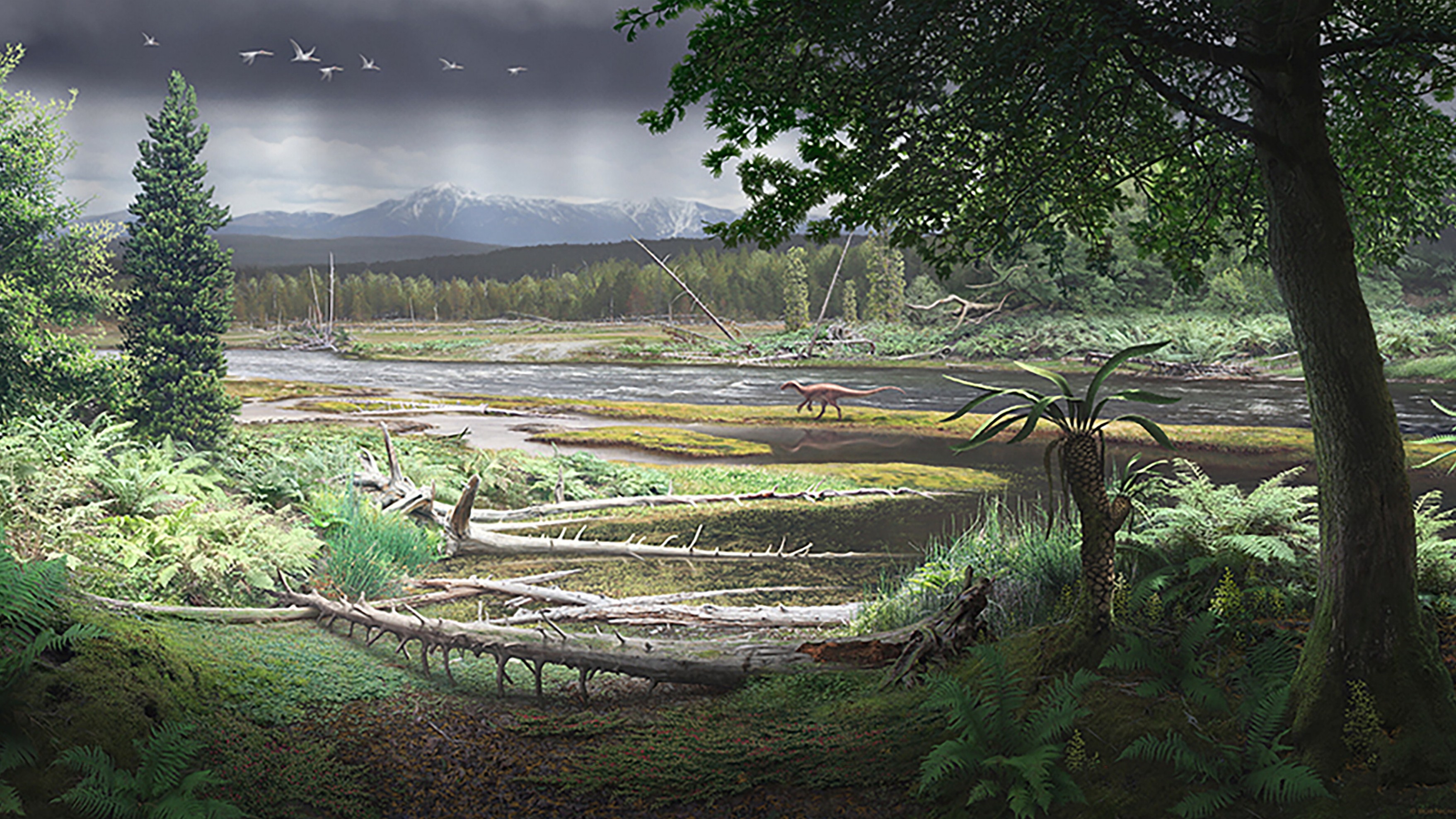
Imagine a world where dinosaurs roamed beneath the polar circle, not in a frozen wasteland, but in a cool-temperate forest. Around 120 million years ago, Australia was connected to Antarctica, forming a massive landmass that extended into the polar regions. New research sheds light on the habitat of these “polar dinosaurs,” revealing a vibrant ecosystem far removed from today’s icy landscapes.
A Glimpse into the cretaceous Period
During the Cretaceous period, specifically the Early Cretaceous (140 million to 110 million years ago), the climate was considerably warmer than it is indeed today.Temperatures averaged between 11 and 25 degrees Fahrenheit (6 to 14 degrees Celsius) warmer, eliminating polar ice caps.This balmier climate allowed dinosaurs to thrive in regions that are now characterized by extreme cold.
The Polar Dinosaur Ecosystem
Illustrations based on recent findings depict “polar dinosaurs” inhabiting cool-temperate forests,a landscape interwoven with rivers and covered in large ferns. These dinosaurs included:
- Small ornithopods: Herbivorous dinosaurs with beaks and cheeks full of teeth.
- Small theropods: Mostly carnivorous dinosaurs that walked on two legs and ofen had feathers.
These creatures left behind evidence of their existence at various paleontological sites, providing valuable insights into their lives and habitat.
Victoria’s Ancient Forests
for decades, paleontologists have studied rocks containing dinosaur fossils from Victoria, Australia. Recent analysis has focused on microscopic spores and pollen grains, offering clues about the plant life that flourished near the South Pole during the Early Cretaceous.
Researchers examined nearly 300 pollen and spore samples from 48 sites along the Victoria coast, dating back 130 million to 110 million years. These samples illuminate the evolution of forests and floodplains where dinosaurs roamed.
The Forest Composition
The study reveals that ancient conifers dominated the forest canopy, while ferns thrived in the understory. Specific types of ferns included:
- Scaly tree ferns (Cyatheaceae)
- Forked ferns (Gleicheniaceae)
- Primitive ferns (Schizaeaceae)
Around 113 million years ago, flowering plants began to appear, leading to critically important changes in the vegetation.
The Rise of Flowering Plants
The introduction of flowering plants had a profound impact on the ecosystem. The appearance of flowering plants in the landscape resulted in the extinction of numerous understorey plants.
By 100 million years ago, Victoria’s forests featured an open conifer-dominated canopy, with flowering plants and ferns in the understory, alongside liverworts, hornworts, lycophytes, and sphagnum-like mosses.
Impact on Dinosaurs
The changing vegetation likely influenced the diets of dinosaurs. Many dinosaurs expanded their diet to include flowering plants by the end of the Cretaceous period.
Life in the Polar Circle
Despite the harsh conditions of being within the polar circle, up to 80 degrees south of the equator and shrouded in darkness for months at a time, dinosaurs thrived. What is now Victoria was onc within the polar circle, up to 80 degrees south of the equator and shrouded in darkness for months at a time.
According to Vera Korasidis, a lecturer in environmental geoscience at the University of melbourne and a research associate at the Smithsonian’s National Museum of Natural History, Despite these harsh conditions, dinosaurs thrived here, leaving behind evidence of their existence at various palaeontological sites.
frequently Asked Questions
- Q: Where were these polar dinosaurs found?
A: In what is now the southern Australian state of Victoria. - Q: What did the polar dinosaur habitat look like?
A: Cool-temperate forests crisscrossed by rivers and carpeted with large ferns. - Q: When did flowering plants appear in this ecosystem?
A: Around 113 million years ago. - Q: How much warmer was the climate during the early Cretaceous?
A: Temperatures were between 11 and 25 degrees Fahrenheit (6 to 14 degrees Celsius) warmer than current temperatures.
