Antarctic Peninsula: Early Warning of Climate Change & Irreversible Impacts
The Antarctic Peninsula is undergoing rapid transformation, with potentially irreversible consequences for the region’s ecosystems and global sea levels, according to a novel study published February 20 in Frontiers in Environmental Science. Researchers modeling potential climate scenarios warn that the future of the peninsula – and, by extension, the wider Antarctic continent – hinges on decisions made today regarding greenhouse gas emissions.
The study, led by Professor Bethan Davies of Newcastle University, assessed the impact of three potential warming scenarios by 2100: 1.8, 3.6 and 4.4 degrees Celsius above pre-industrial levels. The findings indicate that even a relatively modest increase of 1.8 degrees Celsius will trigger significant changes, while higher warming levels could lead to catastrophic ice loss and ecosystem collapse.
“The Antarctic Peninsula is really the alarm bell for the continent,” Davies said. “It’s a relatively tiny piece of the continent in area, but is disproportionately visible due to fisheries, tourism and scientific research.” Changes occurring on the peninsula, she explained, are not isolated events. Retreating glaciers in the southern portion of the peninsula can destabilize glaciers in West Antarctica, increasing their vulnerability to melting. Decreased sea ice also contributes to warming in the Southern Ocean, potentially disrupting global ocean circulation patterns.
Observations dating back decades reveal a clear trend of accelerating change. Professor Peter Convey, whose photographs of the McCloud Glacier from 1989-91 and 2024 were included in the study, noted the dramatic retreat of ice. A rock formation, dubbed “Manhaul Rock,” that was barely visible in the late 1980s is now fully exposed. This visible change underscores the accelerating pace of glacial melt.
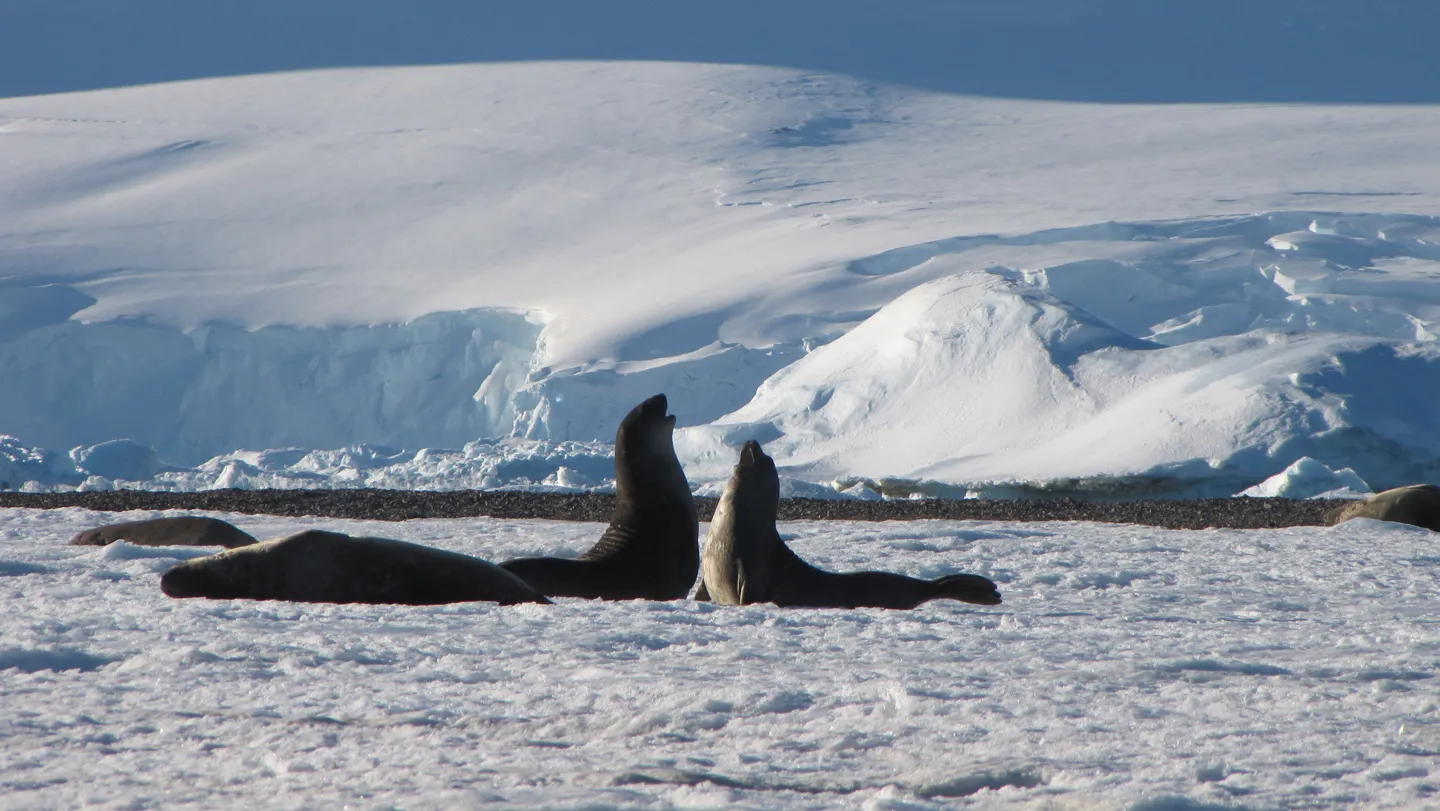
Under the most optimistic scenario – limiting warming to 1.8 degrees Celsius – the study predicts a shrinking ocean food web as winter sea ice diminishes and ocean temperatures rise. While some species, such as fur seals, elephant seals, and gentoo penguins, may become more abundant, the overall impact on the ecosystem would be substantial.
A medium-high emissions scenario, resulting in 3.6 degrees Celsius of warming, would dramatically reduce sea ice concentration and increase the influx of warm Circumpolar Deep Water, accelerating the melting of ice shelves. The frequency and intensity of extreme weather events, including ocean heat waves and atmospheric rivers, would also increase significantly.
The most dire scenario, with 4.4 degrees Celsius of warming, projects a 20 percent reduction in sea ice coverage, devastating krill populations and impacting species that rely on them, such as whales and penguins. The Larsen C ice shelf, which calved a massive iceberg in 2017, is predicted to fully collapse by 2100. Further into the future, by 2300, the George VI ice shelf could also collapse, potentially raising global sea levels by as much as 116 millimeters.
Researchers emphasize that many of these changes could be irreversible. “Once you start to retreat glaciers, you trigger marine ice sheet instability, and that process is essentially irreversible,” Davies explained. The loss of sea ice is also difficult to reverse, as darker open ocean waters absorb more heat, hindering the reformation of ice.
Glaciologist Peter Neff, of the University of Minnesota, who was not involved in the study, underscored the importance of the findings. “All of this illustrates what decision makers worldwide should understand: Every decision we produce to reduce carbon emissions today makes the challenges of the future more manageable,” he said. Neff added that the Antarctic Peninsula serves as a warning for the larger Antarctic Ice Sheet, and that proposed geoengineering solutions focus on West Antarctica, offering no protection for the peninsula.