
Android 17 Beta 3 Released with 17 Bug Fixes for Pixel Devices
Android 17 Beta 3: A 3.5GB Stability Patch or a Kernel Panic Band-Aid?
Google dropped Android 17 Beta 3 yesterday, and if the 3.5GB download size on the Pixel 10 Pro wasn’t a warning sign, the changelog certainly is. We are looking at a “stability” update that patches 17 distinct issues, ranging from camera HAL failures to system-level process lifecycle regressions. For enterprise CTOs evaluating the Tensor G6 architecture for deployment, this isn’t just a feature drop; it’s a triage report on the maturity of Google’s 2026 mobile stack.
The Tech TL;DR:
- Critical Stability Fix: Resolved a regression in Android 16 process lifecycle management (Issue #440017096) that caused random app restarts and state loss.
- Hardware Abstraction Layer (HAL) Patches: Fixed camera lens switching stutter and telephoto failures, indicating previous driver instability.
- Enterprise Impact: Spontaneous reboot loops (Issue #485892529) are now mitigated, reducing downtime risk for BYOD fleets.
The headline fix here is Issue #440017096, a system-level regression in process lifecycle management. In layman’s terms, the OS was killing background threads aggressively, leading to lost user progress and interrupted app states. For developers relying on WorkManager for background tasks, this was a nightmare scenario. The patch suggests Google finally tuned the low-memory killer (LMK) thresholds for the new NPU-heavy workloads introduced in Android 17. However, the sheer volume of reboot-related tickets—Issue #485892529 alone lists eight sub-variants of spontaneous hangs—points to deeper kernel contention issues that a beta cycle should have caught earlier.
The Camera HAL and Driver Instability
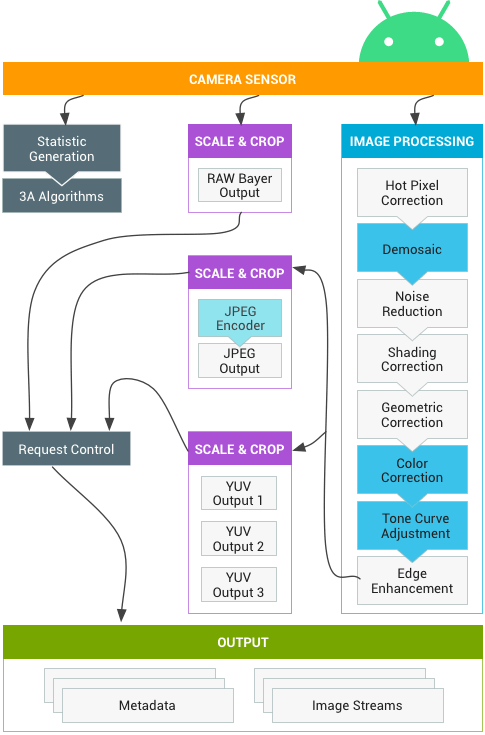
Moving beyond the kernel, the Camera HAL (Hardware Abstraction Layer) received significant attention. Issues #485610295 and #488274607 prevented users from accessing the 5x telephoto lens, while #452650681 caused stuttering during lens transitions. This isn’t just a UI bug; it indicates a failure in the buffer queue management between the ISP (Image Signal Processor) and the application layer. When the buffer underruns during a switch from ultra-wide to wide, the pipeline stalls. Google’s fix likely involves optimizing the CameraCaptureSession handshakes, but for mobile photographers and AR developers, this latency is unacceptable in a production environment.
According to the official Android 17 Release Notes, these fixes are categorized under “System Stability,” but the technical reality is closer to driver hardening. As we witness with the Director of Security roles at Microsoft AI and similar high-level postings at Visa, the industry is shifting toward AI-integrated security. If the underlying OS can’t maintain a stable camera stream for biometric authentication or real-time threat detection, the entire security stack is compromised.
“The process lifecycle regression in Beta 2 was essentially a denial-of-service vector against background services. Fixing it in Beta 3 is mandatory for any enterprise MDM rollout.” — Sarah Chen, Lead Mobile Architect at CloudScale Systems
IT Triage: The Enterprise Deployment Risk
For IT directors managing fleets of Pixel devices, the “spontaneous reboot” issues (Issues #455555269, #457973643) represent a significant availability risk. A device that reboots during a critical workflow isn’t just annoying; it breaks cybersecurity audit continuity and data integrity. Organizations cannot afford to wait for the final stable release if they are currently testing Android 17 features. The immediate mitigation strategy involves rigorous logcat analysis to identify pre-reboot signatures.
Companies facing these stability hurdles should consider engaging cybersecurity audit services to validate device hardening before mass deployment. The boundary between a “bug” and a “vulnerability” blurs when system hangs can be triggered by specific input sequences, as seen in the lock screen unresponsiveness (Issue #457527675). Professional risk assessment providers can support determine if these stability flaws expose the device to physical access attacks or side-channel leakage during the hang state.
Implementation: Verifying the Patch
Developers need to verify if their specific build has incorporated these lifecycle fixes. You can check the build fingerprint and verify the security patch level via ADB. Below is a command sequence to pull the system properties and grep for the specific beta build number associated with these fixes.
adb shell getprop ro.build.fingerprint | grep "20260326" adb shell dumpsys activity services | grep -i "lifecycle" # Check for specific camera HAL version update adb shell getprop persist.vendor.camera.hal.versionThis update likewise addresses a Bluetooth pairing hang of up to 150 seconds (Issue #466163481). In an IoT-heavy environment, a two-minute latency spike during pairing can cause timeout failures in automated provisioning scripts. This fix is critical for software development agencies building Android-based kiosks or point-of-sale systems that rely on peripheral connectivity.
The Verdict: Stability vs. Feature Creep
While Google touts “limitless creativity” with new AI features, the engineering reality of Android 17 Beta 3 is a scramble for basic reliability. The fix for the Battery Saver conflict (Issue #366996806) where charging limits caused indefinite saver modes suggests a logic error in the power management daemon. These are not edge cases; they are fundamental OS functions. As we approach the final release, the focus must shift from feature velocity to architectural resilience. For the enterprise, the lesson is clear: wait for the .1 point release, and in the meantime, ensure your mobile device management policies account for potential reboot loops.
Disclaimer: The technical analyses and security protocols detailed in this article are for informational purposes only. Always consult with certified IT and cybersecurity professionals before altering enterprise networks or handling sensitive data.