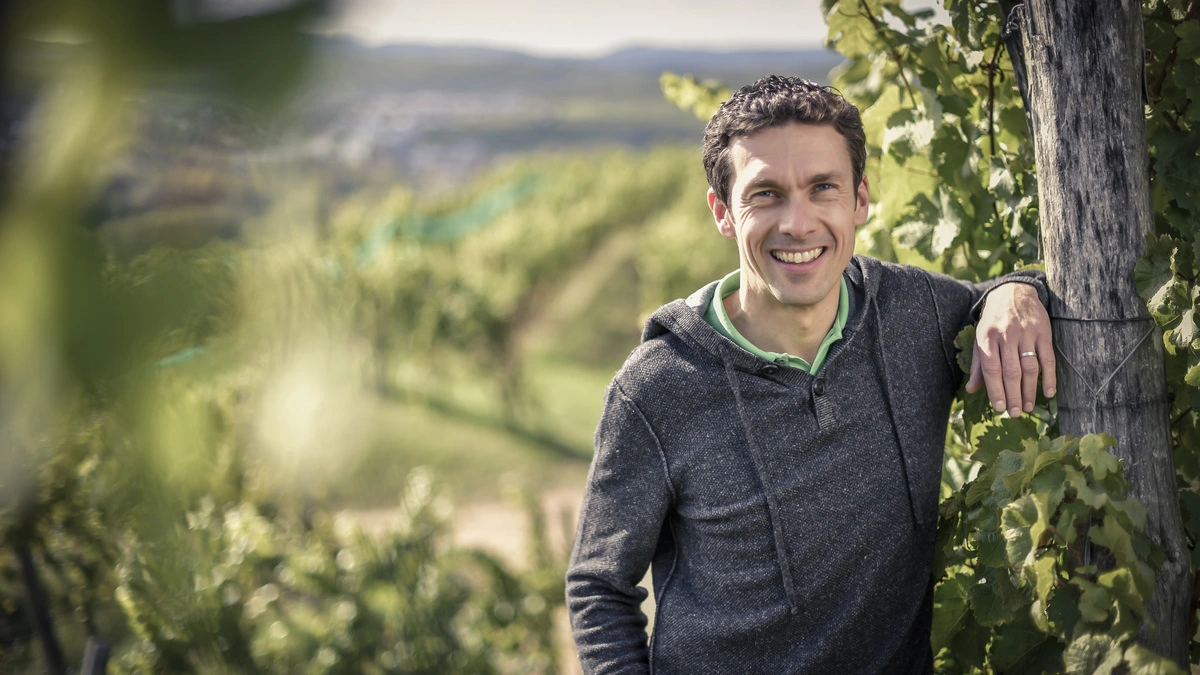
Andreas Wickhoff Unter 427 Master of Wine Weltweit
Andreas Wickhoff is one of only 427 individuals worldwide to hold the title of Master of Wine, a designation spanning 31 countries.
The theory block covered viticulture, cellar management and international trade, as well as current topics such as climate change and consumption habits. His research paper examined the opportunities and risks of switching from the Germanic variety-based system to the Romance origin-based system.
“Whoever orders a Riesling names a grape variety. Whoever orders a Kamptaler names an origin. One associates a style with an origin,” he said. That makes the wine more distinctive. In Austria, the DAC system has gradually established this approach.
* Wickhoff graduated from the Weinakademie Österreich in 2005 with a Diploma in Wines and Spirits.
* Per-capita wine consumption in Austria fell from 26.7 liters in the 2022/23 fiscal year to 25.5 liters in 2024/25, according to Statistik Austria.
* The Bründlmayer winery, where Wickhoff has served as managing director since 2016, is now producing non-alcoholic proxies like Fizz Blanc and Fizz Rosé to address market shifts.
Wickhoff’s path to the qualification began after he read Jancis Robinson’s book “Weinkurs,” which detailed her experience as the first financial expert to pass the Master of Wine exam in 1984. Originally, he aimed to run a five-star hotel, inspired by his older brother who had succeeded in the hotel business. After graduating from the tourism college in Bad Gleichenberg, he entered food and beverage studies. He started at the Weinakademie in Rust in 2001, completed parts of his studies in Canada, and finished the diploma in Austria in 2005. “One must already know quite a bit about all the wines of the world,” he said.
Yet the diploma was merely the entry ticket to the Institute of Masters of Wine in London, a city not famous for quality wines, though “trade on the Thames reaches back to the Middle Ages, to the 12th century.” While he acknowledged that the title brings attention within the international wine industry, he characterized the obsession with such credentials as “an Austrian disease,” according to Die Presse.
He earned it nonetheless after the three-day blind tasting of 36 wines. For the subsequent move to Bründlmayer, he said the diploma and his professional experience would likely have sufficed. “Here it is very much about the local, the regional.”
Bründlmayer winery operates across roughly 90 hectares in the Kamptal, making it one of Austria’s largest private estates and a benchmark for Grüner Veltliner and Riesling. As a founding member of the Österreichische Traditionsweingüter since 2010, it helped define the Erste Lagen vineyard classification, with key sites including Ried Lamm, Käferberg, Loiserberg, Spiegel, Heiligenstein and Steinmassl.
Its wines consistently earn top scores in leading guides, with the Grüner Veltliner Ried Lamm and Riesling from Heiligenstein regarded as reference wines for their varieties, while the Bründlmayer Brut is regularly named Austria’s best sparkling wine. The estate’s combination of precise vineyard work, close-to-nature farming and stylistic clarity has shaped the international reputation of the Kamptal and Austrian white wine.
The managing director of the Langenlois-based winery said that the decline in sales is most pronounced in the lower-priced segment. To adapt to these changing consumer habits, the winery has introduced products based on verjuice and grape juice. Wickhoff said that he would welcome the development of a distinct market segment for these non-alcoholic alternatives. Wine is for him a “historical cultural asset” that is increasingly rarely and less drunk, with the overall sales market shrinking.
Despite his extensive international experience—which includes time in Australia, the United States, and France—Wickhoff remains focused on his current role. He spent about 150 days a year travelling in his previous job, which became increasingly difficult to reconcile with family life.
He took over the management in 2016. Asked whether he could imagine taking over the Weinakademie, he said he had been approached years ago. “I feel very comfortable in the position I am in now,” he told Die Presse.