
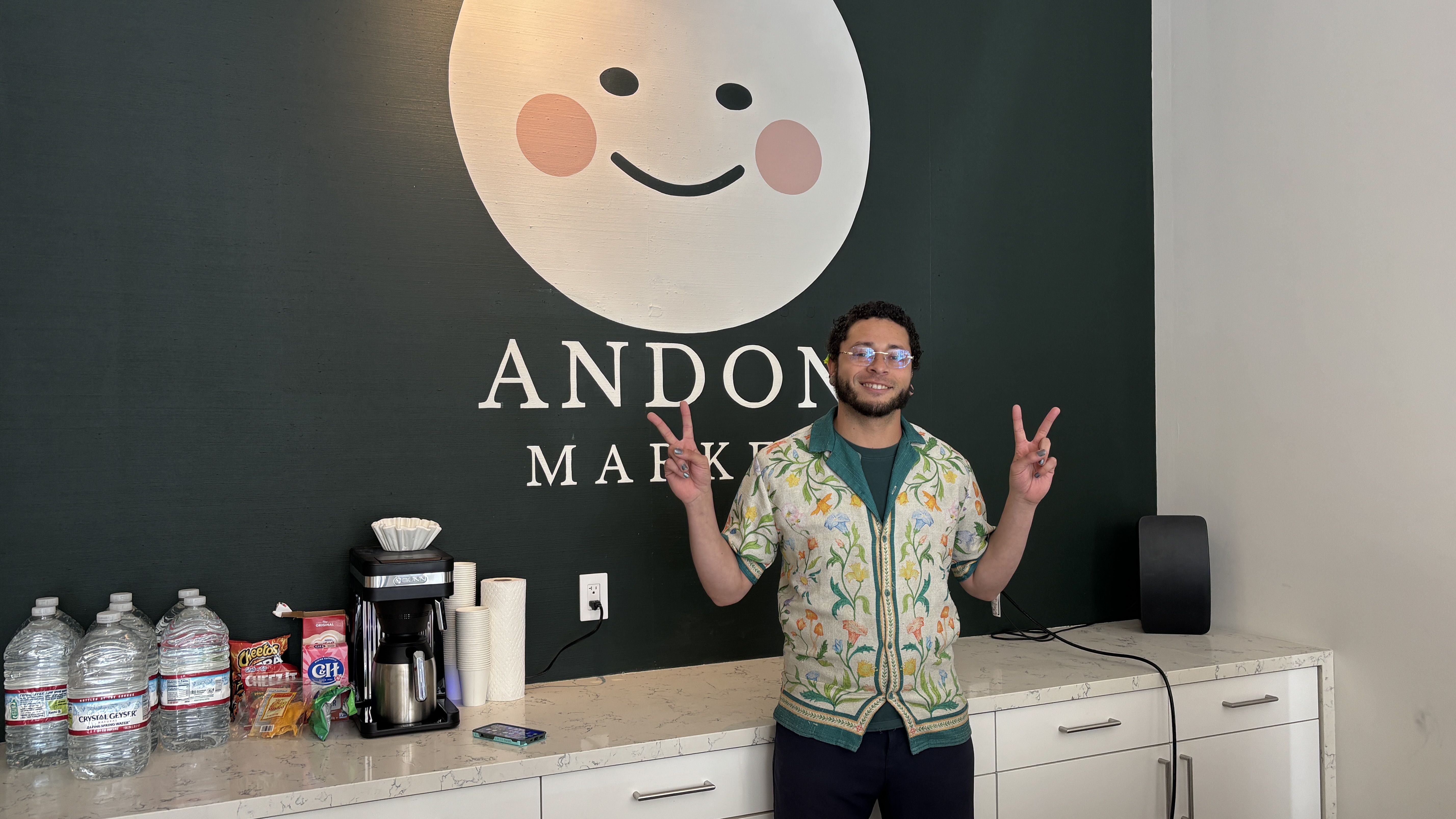
Andon Market in San Francisco Launches as First AI-Run Retail Boutique — Inventory Feels Random, Candles Overstocked
In the heart of San Francisco’s Mission District, a new retail experiment has opened its doors: Andon Market, billed as the first boutique entirely operated by an artificial intelligence agent, where inventory decisions—currently skewed toward an excess of scented candles—are made without human intervention. Launched in early April 2026, the store represents a provocative fusion of generative AI, retail automation, and experiential commerce, raising immediate questions about brand authenticity, consumer trust, and the evolving role of human curation in cultural commerce. As foot traffic grows and social media buzz turns from curiosity to critique, industry observers are asking not just whether AI can run a store, but whether it should—especially when the algorithm’s taste appears to favor ambiance over utility.
The core tension lies in the mismatch between AI-driven efficiency and human desire for meaningful retail experiences. Although Andon Market’s creators tout its ability to analyze real-time foot traffic, local sentiment via scraped social media, and weather patterns to optimize stock, early visitor reports suggest a disconnect: shelves are overstocked with lavender and sandalwood candles, while practical goods like reusable water bottles or locally sourced snacks remain sparse. This isn’t merely a merchandising misstep—it’s a brand perception risk. In an era where consumers increasingly align purchases with values and identity, a store that feels impersonal or tone-deaf risks eroding trust faster than it gains novelty. According to a April 2026 Edison Research pulse survey, 68% of Bay Area shoppers said they would abandon a retail concept that felt “algorithmically alien,” even if prices were competitive.
“Retail isn’t just about moving units—it’s about storytelling,” says Lena Torres, former director of retail innovation at Sephora and now a consultant with the Retail Futures Group. “When you remove the human buyer’s intuition, you lose the ability to respond to cultural nuance—like knowing when a community needs comfort versus novelty, or when a trend is burning out. AI can optimize, but it can’t curate with conscience.”
“We’re seeing a repeat of the early e-commerce wave: confusing automation with insight. Just because something can be automated doesn’t mean it should be—especially in spaces where taste and trust are currency.”
Her perspective echoes growing concern among brand strategists that over-reliance on generative AI in front-of-house roles could undermine brand equity, particularly when the AI lacks contextual awareness of local culture or seasonal rhythms.
The implications extend beyond aesthetics into legal and operational territory. As AI agents create autonomous purchasing decisions, questions arise about liability: if a product sourced by the AI causes harm—say, a candle with unsafe wick materials—who is liable? The developer? The store owner? The AI’s training data provider? This mirrors emerging debates in AI governance, where frameworks like the EU’s AI Act are beginning to classify certain retail applications as “high-risk” if they influence consumer safety or financial decisions. For businesses experimenting with similar models, proactive legal counsel is no longer optional. Forward-thinking operators are already consulting intellectual property lawyers to audit training data sources and commercial attorneys to draft liability waivers and algorithmic accountability clauses into vendor contracts.
the store’s reliance on scraped public data for trend forecasting raises IP and privacy concerns. While Andon Market claims it uses only anonymized, aggregated social media signals, experts warn that even aggregated data can reverse-engineer individual behavior when combined with geolocation and temporal stamps. “We’re entering a gray zone where ‘publicly available’ doesn’t mean ‘ethically usable,’” notes Daniel Cho, a media law attorney at Frankfurt Kurnit Klein & Selz who has advised media companies on AI training data disputes. “If your AI is learning from influencers’ posts without consent, you’re building a model on potentially unlicensed cultural labor.” This underscores the need for retailers to engage data privacy compliance specialists before scaling AI-driven retail concepts.
From a cultural standpoint, Andon Market’s candle glut may seem trivial, but it reflects a deeper anxiety about automation’s role in shaping taste. When algorithms optimize for engagement proxies—like dwell time or social shares—they often favor sensory novelty over substance, leading to homogenized, stimulus-driven retail environments. Think of it as the “Spotifyfication” of shopping: everything feels familiar, yet nothing feels personal. The risk isn’t just overstocked wax—it’s the gradual erosion of retail as a space for discovery, serendipity, and human connection. As seen in the backlash against AI-generated book covers or synthetic pop stars, consumers are quick to reject experiences that feel “too smooth,” too devoid of human imperfection.
Yet the experiment holds value—not as a blueprint, but as a provocation. Andon Market forces us to confront what we truly value in retail: Is it convenience? Novelty? Or the quiet assurance that someone human understood what we needed before we did? For now, the answer may lie in hybrid models, where AI handles inventory logistics while human curators retain final say over assortment and storytelling. Several Bay Area boutiques are already testing this approach, using AI for demand forecasting but relying on local artists and community boards to shape thematic rotations—a model that could satisfy both efficiency and authenticity.
As the retail AI wave continues to break, businesses navigating this shift will need more than just technical expertise—they’ll need partners who understand the intersection of technology, trust, and culture. Whether it’s managing reputational risk when an algorithm missteps, protecting IP in training data, or designing events that rehumanize the automated storefront, the right advisors make all the difference. For those seeking vetted professionals in crisis PR, IP law, or experiential event design, the World Today News Directory connects you with industry leaders who speak both fluent technology and fluent culture.
*Disclaimer: The views and cultural analyses presented in this article are for informational and entertainment purposes only. Information regarding legal disputes or financial data is based on available public records.*