
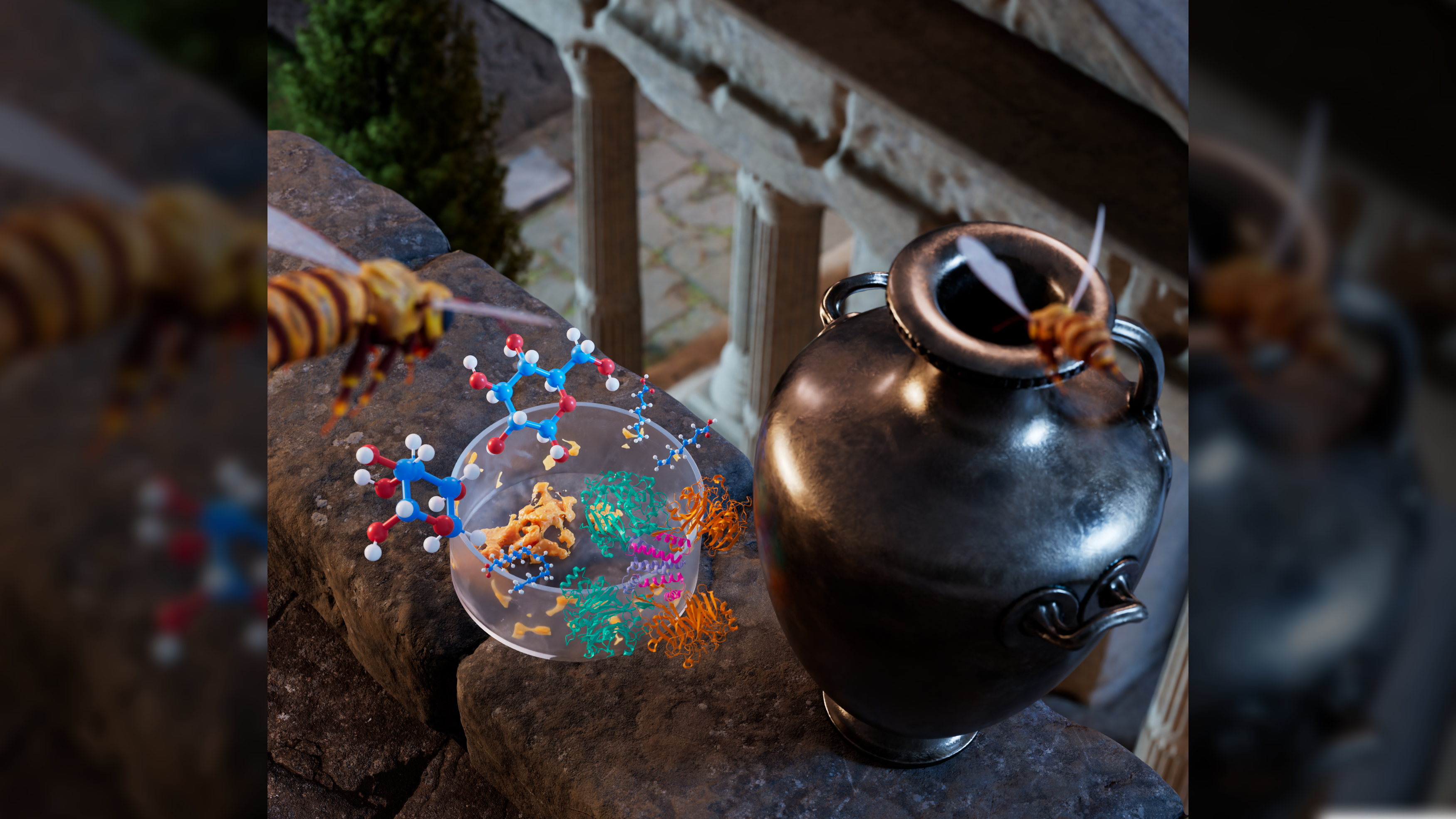
Ancient Honey Residue identified in Paestum Shrine Offering
Researchers have identified the first direct molecular evidence of honey within jars discovered in the 1950s at an underground shrine in Paestum, Italy. The sticky substance, found in an archaeological context dating back to the 6th century B.C., is believed to have been offered as honeycombs.
The analysis revealed that the ancient residue contains a significantly lower sugar concentration compared to modern honey. While not tasted, the residue was described as having a flavor profile akin to washed honeycomb with a slightly acidic note. The presence of copper ions within the mixture is also noteworthy. These ions possess biocidal properties, meaning they can inhibit the growth of microorganisms. Scientists suggest that this characteristic may have played a role in the long-term preservation of the sugars in the residue over millennia.
The discovery sheds light on ancient rituals and the practices associated with shrines. the jars were unearthed in an underground shrine, also known as a heroon, at Paestum. This shrine also contained a substantial wooden table adorned with iron rods wrapped in wool.
The offering is thought to have been dedicated to Is of Helice, the legendary founder of the ancient Greek city of Sybaris. Sybaris was established in what is now the arch of Italy’s boot. Following the destruction of Sybaris in the 6th century B.C., its inhabitants established a new city named poseidonia.Later, in the 3rd century B.C., the Romans conquered the area and renamed the city Paestum.
This re-examination of museum collections highlights the value of applying developing analytical techniques to archaeological finds. The study underscores the ongoing potential for new discoveries and deeper understanding of past cultures through advanced scientific methods.
