
Ancient Star Reveals Secrets of the Early Universe: First Generation Star Discovered
Astronomers have discovered an exceptionally rare, chemically primitive star, designated PicII-503, residing within the ancient Pictor II dwarf galaxy. The star’s unique composition offers a glimpse into the chemical conditions of the early universe, preserving the imprint of the very first stars.
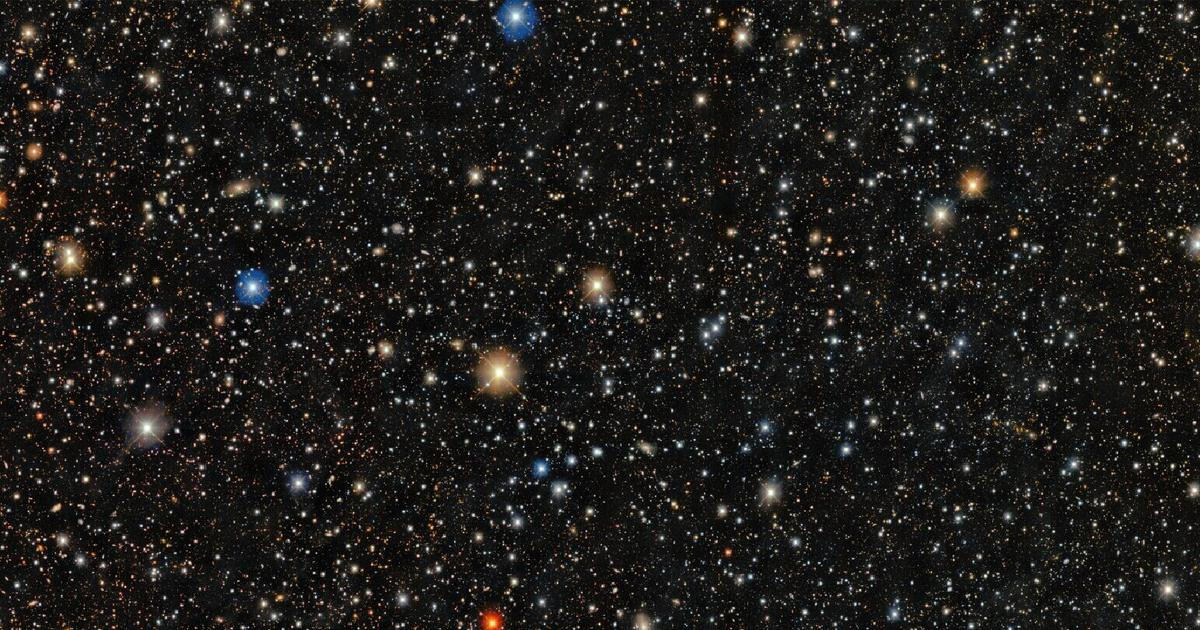
The discovery, announced March 16, 2026, was enabled by the Dark Energy Camera (DECam) on the U.S. National Science Foundation Víctor M. Blanco 4-meter Telescope at the Cerro Tololo Inter-American Observatory in Chile, a program of NSF NOIRLab. PicII-503 exhibits an extreme deficiency in iron – less than 1/40,000th of the amount found in our Sun – making it the clearest example of a star within a primordial system that retains the chemical enrichment from the universe’s earliest stellar generations.
“Discoveries like this are cosmic archaeology – revealing rare stellar fossils that preserve the fingerprints of the first stars in the universe,” said Chris Davis, National Science Foundation Program Director for NOIRLab, in a statement.
The Pictor II galaxy, located in the constellation Pictor approximately 150,000 light-years from Earth, is more than ten billion years old and contains several thousand stars. PicII-503 lies on the outskirts of the galaxy. Alongside its iron deficiency, the star displays an unusually high abundance of carbon, with a carbon-to-iron ratio more than 1500 times greater than that of the Sun. This chemical signature links it to carbon-enhanced stars observed in the Milky Way halo, whose origins have previously been unclear.
The research, led by Anirudh Chiti, Brinson Prize Fellow at Stanford University, suggests that PicII-503 formed from gas enriched by a relatively weak supernova explosion from one of the first stars. Such an explosion would have dispersed lighter elements like carbon into the surrounding space, while heavier elements like iron may have remained within the remnants of the star. This process explains the star’s extreme carbon overabundance and iron depletion.
“The discovery of a star that unambiguously preserves heavy elements from the first stars is at the edge of what we thought possible, given the extreme rarity of these objects,” explained Chiti. He added that PicII-503 “offers an unprecedented window into the initial production of elements in a primordial system.”
The discovery was made possible by the Mapping the Ancient Galaxy in CaHK (MAGIC) project, which systematically searches for the oldest and most chemically primitive stars around the Milky Way. Without the data from MAGIC, Chiti stated, identifying PicII-503 among the hundreds of other stars in Pictor II would have been impossible. Follow-up observations using the Very Large Telescope and Magellan Baade Telescope confirmed the star’s exceptionally low iron and calcium levels.
The findings, published in Nature Astronomy, provide crucial insight into how the first stars seeded the universe with the heavier elements necessary for planet formation and life. The research team intends to continue studying PicII-503 and other similar stars to further refine our understanding of the early universe’s chemical evolution.