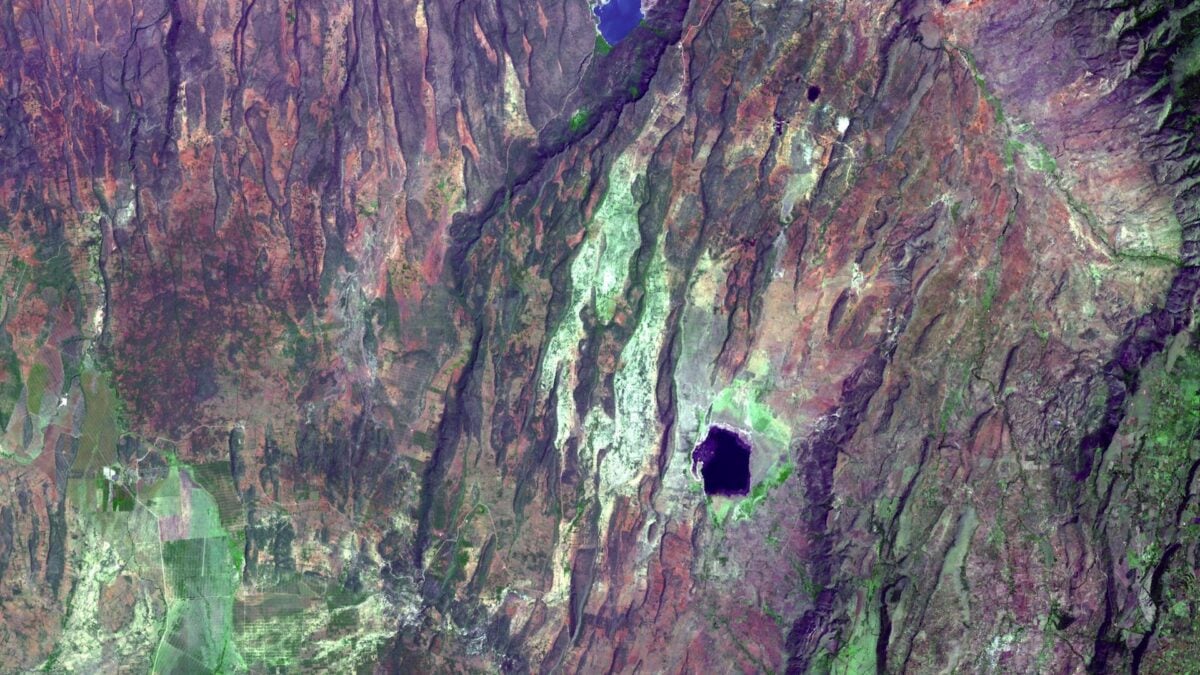
Ancient Rift Beneath Botswana Reactivating, Study Finds
A magnitude 6.5 earthquake struck central Botswana in April 2017, shaking a region scientists considered tectonically stable.
The quake occurred within the Kalahari Craton, an ancient block of continental crust resistant to the forces that pull continents apart. Nearly a decade later, a study published in the journal Tectonics suggests an ancient rift system beneath Botswana may be reactivating, potentially extending the reach of tectonic forces slowly splitting Africa, Gizmodo reported.
Researchers focused on the Khurutshe Fault, a major fracture associated with a 50-mile-long geological structure near the 2017 epicenter. Using trenches and electrical resistivity tomography, the team found the structure first developed around 180 million years ago during the Jurassic Period before stalling. The rocks also revealed signs of recent movement, indicating the fault has become active again after millions of years of dormancy.
Ancient seam reactivated
The rift exploited an intra-cratonic suture zone, a boundary formed billions of years ago when separate crustal blocks collided. Although the surrounding craton is exceptionally strong, these ancient seams remain relatively weak, creating pathways for tectonic forces to fracture the crust.
“While cratons are regarded as strong old continental blocks, they do have inherent zones of weakness that can localize a new plate boundary,” said Folarin Kolawole, a structural geologist at the Lamont-Doherty Earth Observatory and co-author of the study. “Maybe you need to reactivate the rift multiple times. You need to try multiple times before it actually succeeds.”
San Plate may split
The findings challenge the view that the region south of the Okavango Rift Zone moves as a stable microplate known as the San Plate. Renewed fault activity suggests the San Plate may eventually split into two smaller plates, adding another boundary to the network of rifts pulling Africa apart.
Exactly when renewed activity began remains unclear. The team found the Khurutshe Fault has displaced younger layers of Kalahari sand, most accumulated within the past 2.6 million years, suggesting relatively recent movement. Any continental breakup would unfold over millions of years.
Related reading
- Cyberpunk 2 Director Praises GTA VI as Greatest Artistic Achievement, Jokes Project Cancelled
- BakerHostetler Blog Summarizes Tokenized Deposit Launch, Solana Tokenization Plan, CFTC Approval, NYDFS Guidance, DOJ Case, Trezor Breach
- World Psychiatry Study Finds Semaglutide May Improve Eating Disorder Symptoms (time.news)