
Ancient DNA Reveals How Farming Reshaped Societies in Argentina’s Uspallata Valley
Ancient DNA analysis of individuals from Argentina’s Uspallata Valley reveals that local hunter-gatherers adopted farming practices themselves, rather than being displaced by incoming agricultural populations, a new study published in Nature shows. The research, spanning over 2,000 years of population history, also uncovered a later migrant population facing long-term demographic stress, marked by malnutrition, disease and climatic instability.
The Uspallata Valley, situated on the eastern slope of the Andes, presented a unique setting for studying the spread of agriculture, as farming arrived there later than in other parts of South America. Researchers from the Microbial Paleogenomics Unit (MPU) at the Institut Pasteur, in collaboration with CONICET (Argentina’s National Scientific and Technical Research Council) and Huarpe Indigenous communities, analyzed the genomes of 46 individuals, alongside isotopic data, archaeological evidence, and paleoclimate records.
The genomic analysis demonstrated a strong genetic continuity between the early hunter-gatherers inhabiting the valley around 2,200 years ago and the populations that later adopted maize farming. This finding challenges the common model of agricultural expansion driven by large-scale migrations of farmers, suggesting instead that local populations largely integrated agricultural practices into their existing lifestyles. “Beyond the local story of Uspallata, we are also filling a gap in South American human genetic diversity by documenting a genetic component that was previously only suggested by analysing present-day populations, and that now proves to have a very deep divergence and current persistence in the region,” explained Pierre Luisi, a researcher at CONICET who began the perform as a postdoctoral researcher at the Institut Pasteur.
Isotopic analysis of bones and teeth revealed shifts in diet over time, indicating flexible farming practices rather than a complete and immediate reliance on agriculture. Yet, between approximately 800 and 600 years ago, a distinct pattern emerged at the Potrero Las Colonias burial site. Individuals buried there exhibited a heavy reliance on maize – among the highest levels recorded in the southern Andes – and strontium isotope signatures indicating they were not local to the valley.
Further investigation revealed that these migrants originated from nearby regions and were genetically related to the existing local populations. Despite their connection to the broader regional network, genomic data indicated a significant and sustained population decline within this migrant group. Paleoclimate records corroborated this finding, showing extended periods of environmental instability coinciding with the population decrease. Skeletal remains also displayed evidence of childhood malnutrition and disease.
Notably, ancient DNA analysis identified the presence of Mycobacterium tuberculosis at the site, belonging to a lineage previously known from pre-contact South America in Peru and Colombia. This discovery extends the known geographic range of the disease in pre-Columbian South America. “Detecting tuberculosis this far south in a pre-contact context is striking,” said Nicolás Rascovan, head of the MPU at Institut Pasteur. “It expands the geographic frame for understanding how tuberculosis circulated in the past and highlights the value of integrating pathogen genomics into broader reconstructions of human history.”
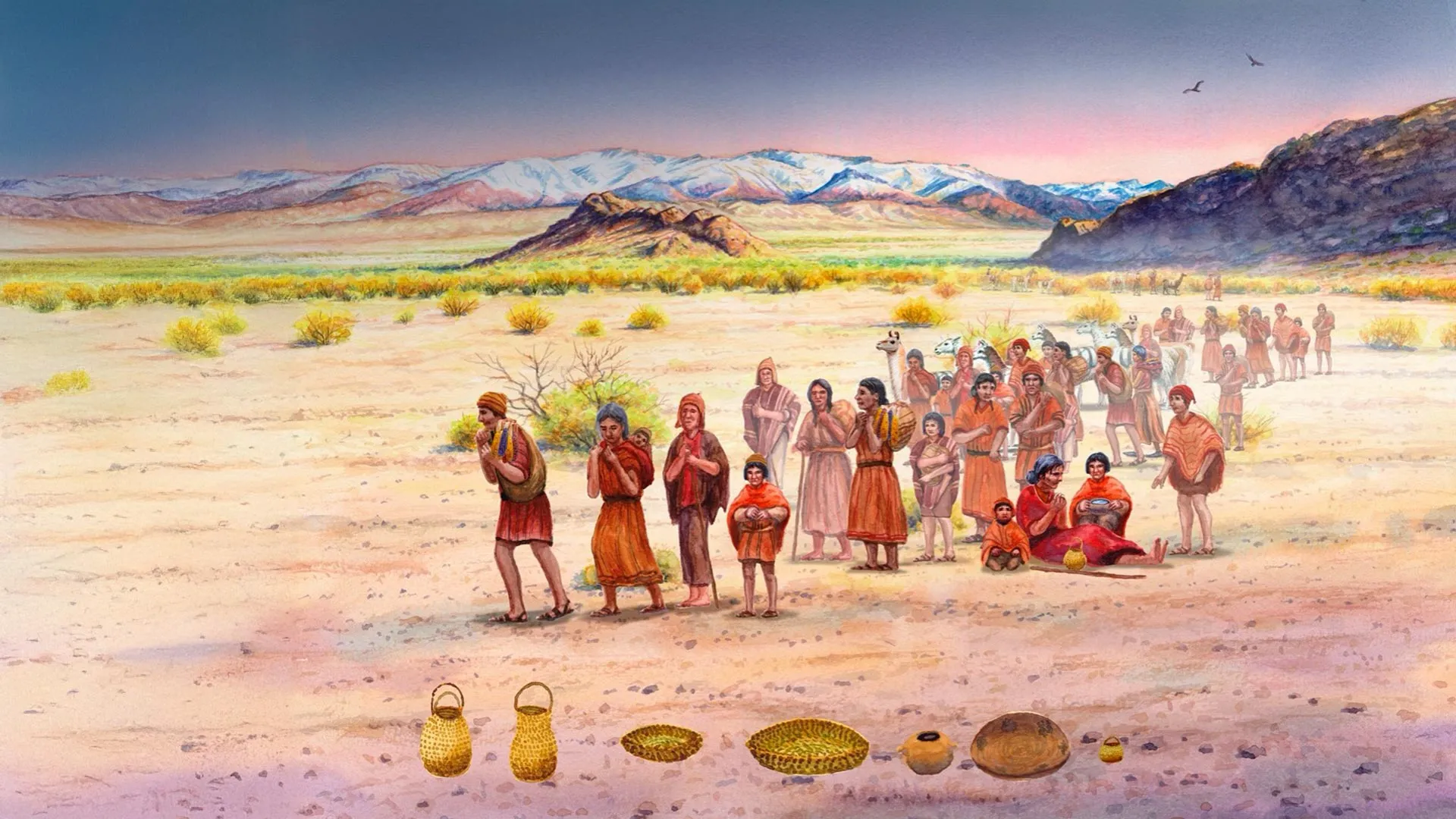
Genetic analysis of family relationships within the migrant population revealed strong kinship ties, with many individuals closely related and buried over multiple generations. Maternal lineages were particularly prominent, suggesting a key role for women in maintaining family continuity and coordinating movement. There was no evidence of violent conflict, and instances of co-burial between local and migrant individuals suggest peaceful coexistence.
Researchers believe that migration, driven by family networks, served as a survival strategy in response to overlapping pressures – environmental instability, food shortages, and disease. “No farming community abandons fields and homes lightly,” stated archaeologist and co-first author Ramiro Barberena, a researcher at CONICET. “Our results are most consistent with people moving under force majeure, relying on family networks to navigate crisis.”
The study also underscores the importance of collaborative research with Indigenous communities. Members of the Huarpe community were actively involved throughout the research process, contributing to the interpretation of findings and shaping the narrative. A Spanish-language version of the study, with accessible explanations, was produced to facilitate local engagement. “Archaeology and paleogenomics are not neutral when they involve the ancestors of living people,” Rascovan emphasized. “Working with communities changes how we do science: it shapes the questions we ask, how we interpret evidence, and how we communicate what One can—and cannot—conclude.”
The findings contribute to a growing understanding that the transition to agriculture was not a uniform process, but rather unfolded differently depending on local environments and social dynamics. The research team is continuing to investigate the long-term consequences of these transitions and their implications for understanding resilience in the face of contemporary challenges.