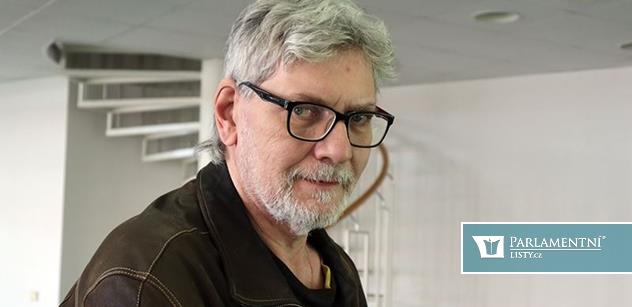
Analyst Reveals Moravec’s Rush for Control at Czech Television
Václav Moravec, a veteran moderator at Czech Television (ČT) for over 21 years, has departed the public broadcaster following concerns over editorial independence. Amid government plans to shift funding to the state budget, Moravec is now exploring an independent digital media project inspired by successful Slovak journalistic models.
The exit of a journalistic pillar is rarely just about a contract ending; We see usually a symptom of a deeper systemic fracture. For Moravec, the decision to leave the halls of the ČT headquarters at Kavčí hory represents a collision between professional conscience and political pressure. The catalyst is not a single event, but a looming structural shift in how public media is financed and controlled in the Czech Republic.
The stakes are higher than a simple job change.
The Funding Pivot and the Threat of Political Control
The core of the conflict lies in the agenda of Prime Minister Andrej Babiš’s government, which is aggressively pushing to abolish the license fees currently paid by citizens to support Czech Television and Czech Radio. The government’s objective is to eliminate these fees entirely by January 1, 2027, replacing them with funding drawn directly from the state budget or other public mechanisms.

While “state funding” might sound like a neutral administrative change, the employees of public media see it as a Trojan horse. A public petition signed by staff warns that moving funding under the state budget creates a direct line of influence for government officials. When the money comes from the treasury rather than the people, the temptation for political actors to exert control over editorial content becomes an existential threat to journalistic independence.
This is not a theoretical fear. It is a lived reality that has already begun to bleed into the newsroom. The tension reached a breaking point with the recent dismissal of Moravec’s permanent dramaturg. The firing was linked to complaints regarding the failure to invite SPD Chairman Tomio Okamura onto Moravec’s program, Questions of Václav Moravec. This personnel intervention served as a loud signal to the staff: editorial choices are now being scrutinized by those outside the newsroom.
Moravec himself admitted in an interview with Respekt that the current situation is unprecedented, framing it as a broader struggle over the very nature of public broadcasting.
He refused to stay “at any price.”
The “Orbanization” Warning and the Slovak Blueprint
Moravec is not navigating this transition in a vacuum. He has found a mirror in the experience of his Slovak colleague, Michal Kovačič. Kovačič left TV Markíza at the complete of 2024 after enduring what he described as intense pressure from both political actors and his own management.
“The fight for the form of reporting at TV Markíza has been going on for months; we face pressure not only from politicians but also from our own management… Slovakia is currently experiencing a fight for the ‘Orbanization’ of our televisions,” Kovačič warned during a live broadcast.
Following his exit, Kovačič launched a digital medium called 360°, which focuses on interviews, reports, and investigative journalism. The project was jumpstarted via a crowdfunding campaign on Donio.sk and now operates on a subscription basis. For Moravec, this is the gold standard for the modern independent journalist.
Moravec has indicated that he is unlikely to accept offers from large, established media houses, despite receiving several. Instead, he is leaning toward “going it alone.” By leveraging his high public approval and the trust he built over two decades, Moravec aims to create a project that supplements public service by potentially doing it better and more independently.
Navigating the Legal and Financial Minefield
The transition from a state-funded salary to an independent entrepreneur is fraught with legal hurdles. Specifically, Moravec must resolve a non-compete clause with Czech Television before he can fully launch his digital venture. Such clauses are designed to prevent high-profile talent from taking their audience directly to a competitor, often creating a period of forced silence or restricted activity.
Resolving these restrictive contracts requires precise legal navigation to avoid costly litigation. Many professionals in this position are consulting employment law specialists to negotiate exits that preserve their freedom of speech without triggering massive penalties.
the shift toward a subscription-based or crowdfunded model is a significant financial gamble. Unlike the stability of a public broadcaster, independent media relies on a consistent value proposition to keep subscribers paying. To replicate the success of the Slovak 360° model, emerging media founders are increasingly relying on digital media strategists to build sustainable growth architectures and engagement funnels.
The move toward independence is as much a financial challenge as it is an ideological one.
Comparative Trajectories: Public vs. Independent Media
| Feature | Public Broadcasting (ČT) | Independent Digital Project |
|---|---|---|
| Funding Source | License Fees $rightarrow$ State Budget | Crowdfunding / Subscriptions |
| Editorial Control | Subject to state/management pressure | Autonomous / Audience-driven |
| Stability | High (until funding shifts) | Variable / Market-dependent |
| Risk Factor | Political “Orbanization” | Financial sustainability |
The Long-Term Impact on Czech Discourse
The departure of Václav Moravec is a bellwether for the future of the Czech Fourth Estate. If the most prominent voices in public media feel they can no longer guarantee the independence of their work, the center of gravity for political discourse will shift. We are seeing a migration of trust from institutional platforms to individual personalities.
This trend suggests a future where “trusted brands” are no longer networks, but people. Although, this fragmentation also risks creating echo chambers where audiences only follow the journalists who confirm their existing biases, rather than those who challenge them through rigorous, neutral inquiry.
As the January 2027 deadline for the funding change approaches, more journalists may find themselves at a crossroads. The choice is stark: adapt to a state-funded model that may come with invisible strings, or risk everything on a digital venture funded by the public. For those choosing the latter, the need for professional guidance in crowdfunding and business management will be the difference between a lasting legacy and a short-lived experiment.
Moravec’s gamble is a test case for the resilience of independent journalism in Central Europe. Whether he succeeds or fails will provide a roadmap for every other journalist currently watching the state budget move closer to their newsroom. The battle for the “conscience” of the media is no longer happening in the editorial meetings—it is happening in the bank accounts and the legal contracts of those brave enough to leave.