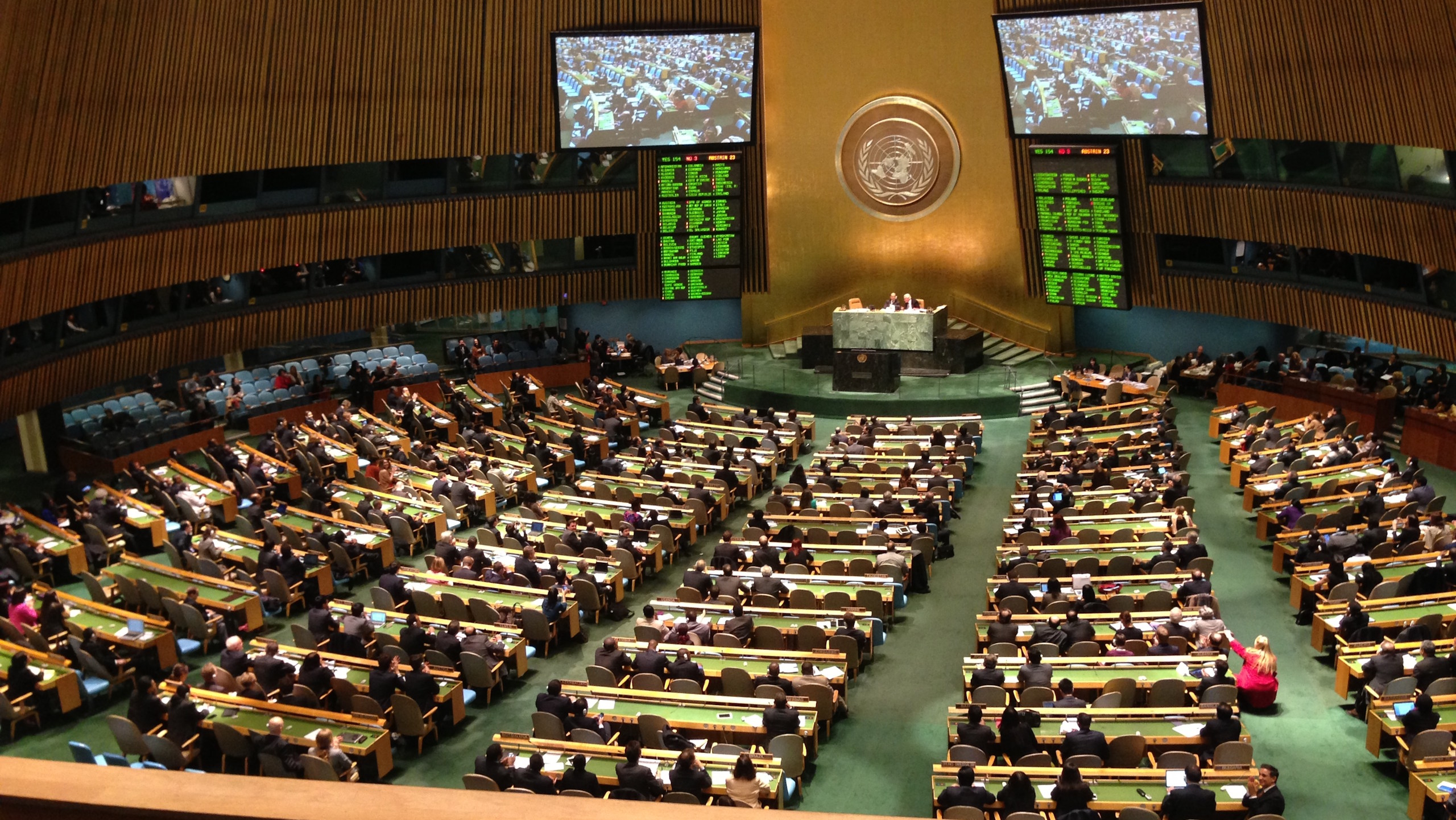
Amnesty International’s Agnès Callamard to Address UN General Assembly on Human Rights and Leadership
As the United Nations confronts unprecedented geopolitical paralysis and financial strain ahead of the 81st Session of the UN General Assembly in New York, Amnesty International Secretary General Agnès Callamard warns that the next UN leader must actively resist powerful political bullies and reject closed-door compromises.
The Critical Junction Facing Multilateralism
The United Nations stands at one of the most perilous moments in its eight-decade history. According to statements released by Amnesty International, the organization faces compounding global crises, including genocide, war, climate collapse, rising inequality, and an unrestrained race to develop advanced artificial intelligence without global oversight. The UN Security Council remains gridlocked, while powerful member states subject the international body to severe political, financial, and diplomatic pressure.
Agnès Callamard highlighted these institutional failures ahead of her meetings with senior UN figures in New York between September 22 and 26, 2026. She argues that the next Secretary-General cannot simply be a consensus manager chosen through opaque compromises by powerful nations. Instead, the role demands a leader willing to confront accountability violations openly and engage constructively with civil society.
Behind these leadership debates lies a complex administrative landscape. Antonio Guterres prepares to conclude his second term as UN Secretary-General on December 31, 2026, leaving behind an open race featuring six declared candidates. These contenders include former Chilean President Michelle Bachelet, International Atomic Energy Agency (IAEA) Director General Rafael Mariano Grossi, and former UN General Assembly President Maria Fernanda Espinosa, each presenting distinct visions for reforming an organization under severe financial and operational scrutiny.
Artificial Intelligence, Global Justice, and Regional Conflicts
Beyond the leadership succession, Callamard’s New York agenda focuses heavily on the regulatory vacuum surrounding artificial intelligence. Amnesty International is pressing for a global, binding, transparent, and effective regulatory model to rein in unrestrained corporate power.
At the same time, international justice institutions face persistent challenges. The narrow and fraught confirmation path through the Security Council, where permanent members China, France, Russia, the United Kingdom, and the United States hold veto power, remains a critical hurdle. Against this backdrop, human rights advocates are pushing for stronger protections against ongoing conflicts, including Israel’s military campaigns in Gaza and the West Bank, unlawful attacks on Iran, internal repression in Iran, Russia’s war in Ukraine, and the devastating crisis in Sudan linked to the UAE and regional actors.
Supply chain integrity also remains a core battleground. On September 21, 2026, Amnesty International publishes a dedicated briefing detailing human rights abuses against artisanal gold and cobalt miners in the Democratic Republic of the Congo. The briefing links these abuses directly to the M23 armed group operating with Rwandan support, raising critical questions for multinational trade networks.
Atrocities, Accountability, and Civil Society Action
The intersection of international law and territorial occupation takes center stage on September 24, 2026. Callamard is scheduled to speak at a public side event titled “When Atrocities Persist: International Responsibility and the Occupied Palestinian Territory.” Hosted jointly by Amnesty International, the Global Centre for the Responsibility to Protect, and the Committee to Protect Journalists at the Japan Society in New York, the discussion addresses ongoing legal failures in the region.

As civil society groups and legal advocates mobilize to address these systemic violations, affected communities and NGOs frequently rely on specialized human rights advocacy organizations to coordinate international legal pressure and secure independent monitoring. Navigating institutional impunity requires robust investigative backing and cross-border cooperation among legal scholars, journalists, and policy experts.
The selection of the next UN Secretary-General will ultimately test whether member states prioritize multilateral accountability or yield to geopolitical polarization. As global institutions grapple with existential financial and structural deficits, the demand for uncompromising leadership on human rights remains more urgent than ever.