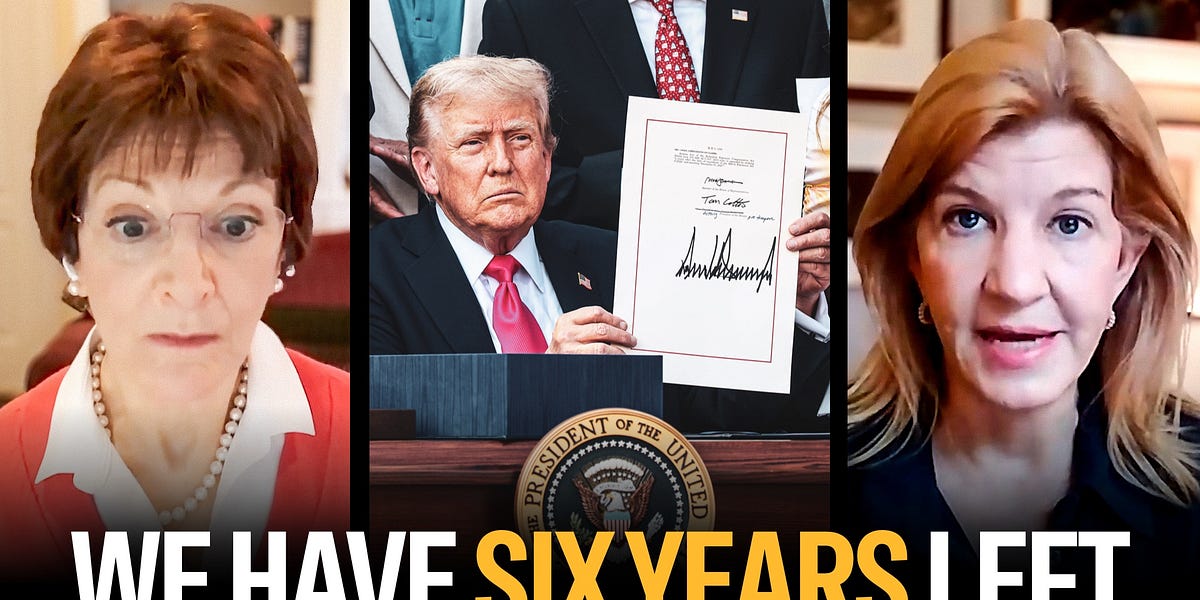
America’s Affordability Crisis Debt Insolvency And Fiscal Recklessness With Maya MacGuineas
Decades of bipartisan fiscal irresponsibility are compounding America’s affordability crisis, driven by tax cuts, spending measures, tariffs, and immigration policies, The Bulwark reported on Saturday.
Mona Charen hosted Maya MacGuineas, president of the Committee for a Responsible Federal Budget, on a Thanksgiving-week episode of The Mona Charen Show to examine the deteriorating national debt trajectory.
“The problem is that both sides have their myths or their free lunch proposals, right? Republicans will tell you the tax cuts are going to pay for themselves. No, they won’t. That’s fine. There’s not enough money there. Not even close, especially when you’re talking about dealing with the fiscal situation and these massive expansions—drop in the bucket,” MacGuineas told alternet.org.
A central focus of the discussion was the approaching insolvency of Social Security. According to Committee for a Responsible Federal Budget projections cited by alternet.org, the retirement trust fund is less than six years away from running dry.
When those reserves are depleted, incoming payroll taxes will serve as the sole source of funding.
This triggers an automatic, across-the-board benefit cut of roughly 22 percent for tens of millions of retirees under current law, alternet.org reported. MacGuineas warned against fiscal gimmicks such as tapping general Treasury revenues, which would add trillions to the national debt.
Because of this budgetary skew, younger workers carry the financial burden for decades of accumulated federal borrowing. Alternet.org said that these policies leave younger generations facing higher living costs today alongside the future bill for government debt.
Maya MacGuineas expressed deep concern on The Bulwark about a potential full-blown fiscal crisis driven by decades of bipartisan budgetary neglect. She explained that political leaders from both parties routinely avoid hard truths by leaning on convenient economic myths.
Alternet.org reported that independent budget scorekeepers consistently find sweeping tax cuts add trillions to the federal deficit. Meanwhile, progressive proposals to fund major new entitlements through wealth taxes fall far short of closing the structural gap.
Operating as a nonprofit think tank headquartered in Washington, D.C., the Committee for a Responsible Federal Budget advocates for public policy aimed at reducing the federal budget deficit and lowering government spending.
Its broader historical scope includes launching the Fiscal Roadmap Project in 2009 to outline pathways for transitioning from economic stabilization to addressing long-term fiscal problems, alongside creating the Stimulus.org database that same year to track the spending and deficit impacts of major government actions taken in response to the 2008 financial crisis.

Unsustainable federal borrowing keeps mortgage, auto loan, and credit card interest rates elevated, squeezing household budgets alongside broad tariff and immigration policies, alternet.org reported. Tariffs act as a regressive tax by raising the price of imported goods and domestic supply chains.
Restrictive immigration policies simultaneously tighten labor markets and place upward pressure on service-sector wages and prices. Federal spending remains heavily tilted toward entitlement programs and debt service rather than forward-looking investments, leaving younger workers to carry the bill for decades of accumulated borrowing.