
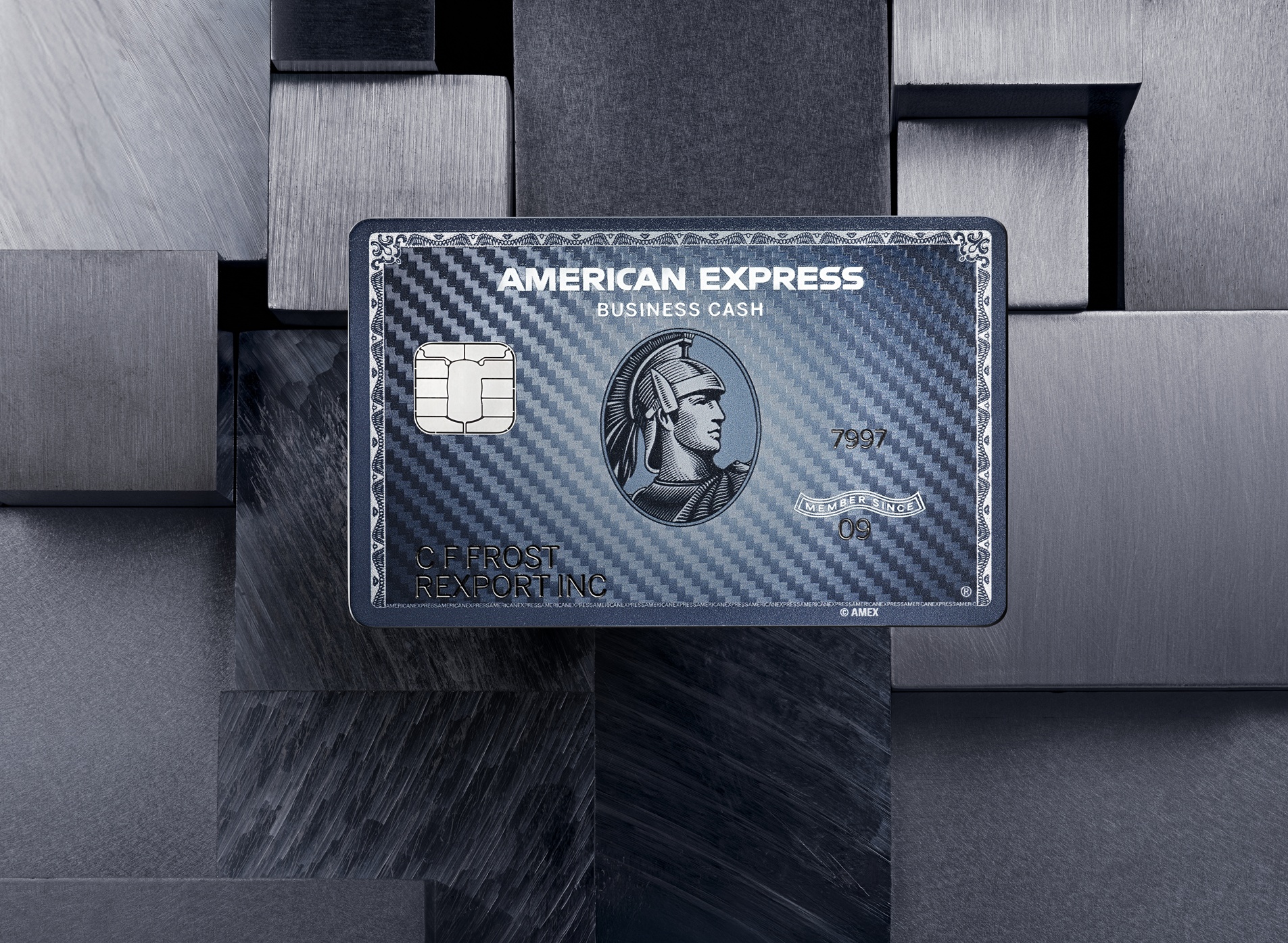
American Express Graphite Business Cash Unlimited Card Launches with $295 Annual Fee
American Express has officially entered the 2026 SMB landscape with the Graphite Business Cash Unlimited Card, a metal product offering unlimited 2% cash back for a $295 annual fee. Although the card includes a $1,500 welcome bonus and credits for the One AP platform, market analysts immediately flag the pricing model as aggressive compared to fee-free competitors like Wells Fargo and Capital One. This launch signals a strategic pivot by Amex to monetize accounts payable automation rather than pure rewards yield, forcing treasurers to weigh liquidity costs against platform integration benefits.
The fiscal reality for mid-market CFOs is stark. In a high-interest rate environment where the cost of capital remains elevated, paying a $295 premium for a commodity reward structure—essentially buying a 2% yield that competitors offer for zero cost—creates an immediate drag on operating margins. This isn’t just a consumer credit story; it is a procurement efficiency problem. When legacy issuers like Amex introduce friction into the expense management stack, finance leaders are forced to seek external optimization. This is where specialized expense management software providers become critical, auditing card programs to ensure every basis point of spend generates net positive yield rather than bleeding into administrative overhead.
The Valuation Gap: Paying for Access, Not Yield
Amex’s pricing strategy relies on the assumption that the “metal” status and the One AP platform integration justify the premium. However, a comparative analysis of Q1 2026 product offerings reveals a significant arbitrage opportunity for the cost-conscious business. The Graphite card effectively charges a 14.75% effective fee on the first $2,000 of monthly spend just to break even against a no-fee 2% card. For businesses operating with thin EBITDA margins, this math does not hold.
The core issue lies in the “One AP” incentive. Amex offers up to $2,400 in statement credits for the One AP platform, but only after hitting a massive $250,000 spend threshold in a calendar year. This creates a barrier to entry for smaller enterprises that cannot leverage the platform credit to offset the annual fee. According to the latest Amex 10-K filing, the company is aggressively pushing “commercial payment solutions” to lock in B2B volume, yet this product structure suggests they are prioritizing fee income over volume growth in the SMB segment.
| Issuer / Product | Annual Fee | Base Cash Back Rate | Break-Even Spend (vs. No-Fee) | Primary Incentive |
|---|---|---|---|---|
| Amex Graphite Business Cash | $295 | 2% Unlimited | $14,750 / year | One AP Platform Credits |
| Wells Fargo Signify Business | $0 | 2% Unlimited | N/A | Pure Yield |
| Capital One Spark Cash Plus | $150 | 2% Unlimited | $7,500 / year | High Limit / Employee Cards |
| Chase Ink Business Unlimited | $0 | 1.5% Unlimited | N/A | Ultimate Rewards Ecosystem |
The data indicates that unless a company can fully utilize the One AP ecosystem, the Graphite card is financially inferior to the Wells Fargo Signify or the Amex Blue Business Cash (which offers 2% on the first $50k for free). This discrepancy forces treasurers to glance beyond the card issuer for structural solutions. Smart finance teams are turning to corporate tax and audit firms to reclassify these annual fees not as rewards costs, but as non-deductible administrative expenses, further eroding the net value proposition.
Institutional Skepticism and the “Lock-In” Trap
Wall Street is reacting with caution. The introduction of a paid tier for a standard cash-back product suggests Amex is struggling to differentiate its SMB offering in a saturated market. In a recent earnings call transcript regarding commercial card growth, Stephen Williams, Senior Analyst at LBG Research, noted the shifting dynamics:
“Amex is attempting to monetize the software layer of payments—the AP automation—rather than the payment rail itself. The risk is that SMBs, who are increasingly rate-sensitive, will simply migrate to zero-fee rails and build their own AP stacks using third-party integrators.”
This sentiment highlights a broader trend: the decoupling of banking and operations. When a bank charges for features that should be inherent to the transaction layer, it invites disruption. The $295 fee is essentially a tax on businesses that refuse to outsource their accounts payable to a dedicated financial consulting firm capable of negotiating better terms or implementing agnostic payment gateways. The friction introduced by Amex’s pricing model creates a vacuum for specialized B2B service providers who can decouple the reward mechanism from the operational cost.
The Liquidity Crunch for Mid-Market Players
For the mid-market company, cash flow is oxygen. Tying up capital in annual fees reduces liquidity. The Graphite card’s requirement of $50,000 spend in six months to trigger the $1,500 bonus is a liquidity trap for seasonal businesses. If a firm cannot hit that velocity, the effective yield drops precipitously. In contrast, competitors are offering immediate liquidity through lower fee structures and faster bonus thresholds.
This environment demands rigorous vendor management. Companies cannot afford to treat credit cards as passive tools; they must be active treasury instruments. The proliferation of complex fee structures like the Graphite launch necessitates the engagement of procurement and sourcing agencies. These entities audit the total cost of ownership (TCO) of financial products, ensuring that the “metal card” prestige does not come at the expense of working capital efficiency.
The trajectory for 2026 is clear: commoditization of rewards is accelerating, while the cost of financial administration is rising. Amex’s Graphite launch is a bet that businesses value platform integration over raw yield. History suggests otherwise. As the yield curve flattens and competition intensifies, the winners will be those who treat financial products as variable costs to be minimized, not status symbols to be acquired. The market is shifting toward agnostic, low-friction payment rails, leaving premium fee structures vulnerable to disruption by agile, zero-cost competitors and the B2B consultants who help navigate them.