AMD Unveils X100 Series of Physical AI Processors for Robotics Applications
AMD X100 Chips Bring Embedded Ryzen AI Strix Halo to Robotics, Targeting Intel’s Panther Lake
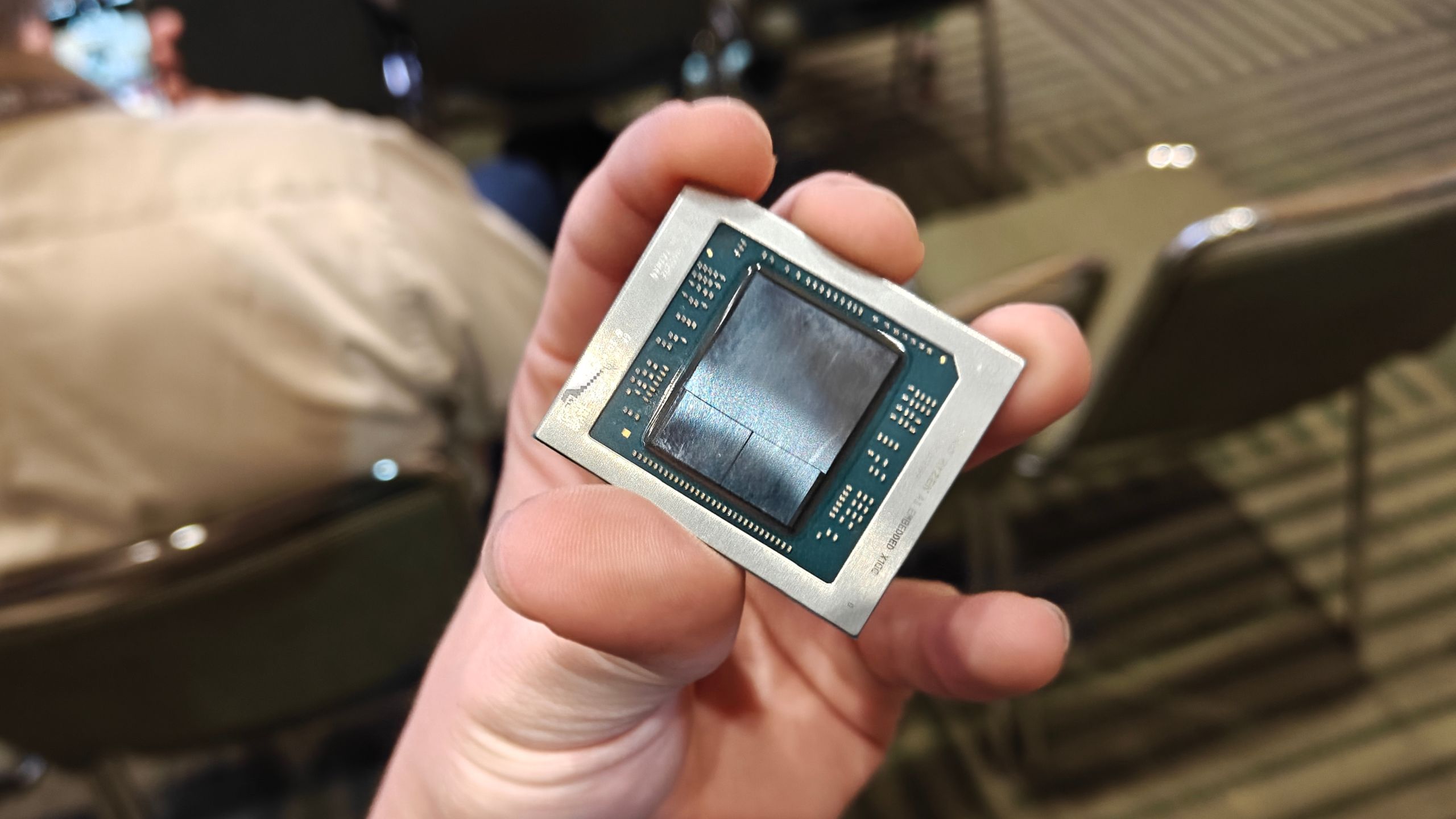
AMD is bringing its Strix Halo architecture into the world of physical AI with the newly announced X100 series of processors, designed for 24/7 embedded applications such as robotics and featuring a 10-year lifecycle.
The Tech TL;DR:
- Physical AI Focus: The new AMD X100 processor lineup brings Zen 5 CPU cores and RDNA 3.5 graphics to embedded robotics with a strict 10-year reliability lifecycle.
- SKU Architecture: Ranging from the top-end X199 (16 Zen 5 cores, 40 RDNA 3.5 CUs) down to the X168, the chips pack up to 128 GB of unified memory and an XDNA 2 NPU delivering up to 50 TOPS.
- Developer Ecosystem: AMD is bundling the silicon into a 120mm x 120mm Kria System on Module (SOM) and an integrated robotics developer platform leveraging Spartan UltraScale+ FPGAs.
Hardware Specifications and Thermal Envelopes of the X100 Series
The X100 family consists of three distinct SKUs mirroring the original Strix Halo client models, excluding the later 40-CU revisions. At the top of the stack, the flagship X199 packs 16 Zen 5 CPU cores alongside 40 RDNA 3.5 compute units. Stepping down in the stack, the X188 scales back to 12 cores and 32 CUs, while the X168 utilizes eight cores paired with the same 32-CU GPU block. While detailed per-model spec sheets remain scarce, AMD confirms a peak boost clock up to 5.1 GHz and support for up to 128 GB of unified memory.
The chips feature an integrated XDNA 2 Neural Processing Unit capable of up to 50 TOPS, configurable TDPs spanning from 45W to 120W, and a ruggedized operating temperature window stretching from -40 degrees Celsius to 105 degrees Celsius. This design directly addresses the hardware bottlenecks of fragmented CPU, GPU, and memory architectures by consolidating silicon onto a monolithic SoC to slash latency in autonomous navigation.
Performance Benchmarks and Comparative Analysis Against Intel
To demonstrate performance advantages over competing silicon, AMD published benchmark comparisons matching the flagship X199 against Intel’s Core Ultra X7 358H, a 16-core SoC featuring an Intel Arc B390 iGPU with 12 Xe3 cores. According to AMD’s released metrics, the X199 claims a 1.2X lead in GeekBench 6.1 and 1.3X in PassMark, alongside a 1.5X improvement in an unofficial SPECrate 2017 integer workload test. In graphics-heavy benchmarks, AMD reports a 1.4X faster Vulkan and 1.7X faster OpenGL performance running GFXBench 5 on Ubuntu, paired with a 1.6X lead in Unigine Heaven Extreme.
For physical AI workloads utilizing a Vulkan backend at a 45W TDP, AMD claims a 1.4X improvement in Time to First Token (TTFT) and a 3.5X increase in tokens per second using Llama-bench. However, these figures require careful interpretation. AMD tested a Ryzen AI Max 395+ configured to mirror the X199 specifications on a Maple reference board at a sustained 45W TDP, whereas the Intel X7 358H was tested inside an MSI Prestige 16 Flip AI+ with an enforced 30W TDP limit. Performance figures for the Intel processor at 45W were mathematically projected using scaling factors derived from public benchmark data rather than direct physical execution.
Developer Ecosystem, Kria SOM Integration, and CUDA Porting
Moving beyond raw silicon, AMD is packaging the X100 family into a standardized 120mm x 120mm Kria System on Module (SOM) adhering to the COM-HPC form factor. For rapid prototyping, the company offers the Kria AI robotics developer platform, an enclosed hardware box pairing the X100 SOM with an AMD Spartan UltraScale+ FPGA baseboard. The platform includes dedicated physical connectivity options for industrial networking, machine vision cameras, and robotic sensors, with early access underway ahead of a full Q4 production rollout.

To evaluate the platform against established market alternatives, AMD commissioned external testing by Open Navigation and Mimix. Rather than testing the final Kria form factor directly, the evaluation pitted Nvidia’s Jetson AGX Thor developer kit against a GMKtech EVO-X2 AI mini PC equipped with a Ryzen AI Max+ 395 configured to match X199 embedded specifications.
Concurrently, AMD is pushing to reduce migration friction for developers locked into Nvidia’s CUDA ecosystem. Its HIPIFY tool automatically translates legacy CUDA source code into AMD’s portable HIP C++ code. Testing across 15 proprietary CUDA applications totaling 1,199 lines of code, AMD reports that HIPIFY autonomously handles 70% to 80% of the porting effort.
Implementation: Querying Hardware Capabilities via CLI
#!/bin/bash
# Check Vulkan device info for AMD RDNA 3.5 architecture
vulkaninfo --summary | grep -E "deviceType|deviceName|apiVersion"

# Verify XDNA 2 NPU kernel module status
lsmod | grep xdna
dmesg | grep -i "xpu|npu"