
Amazon opens two new German distribution centers to cut delivery times
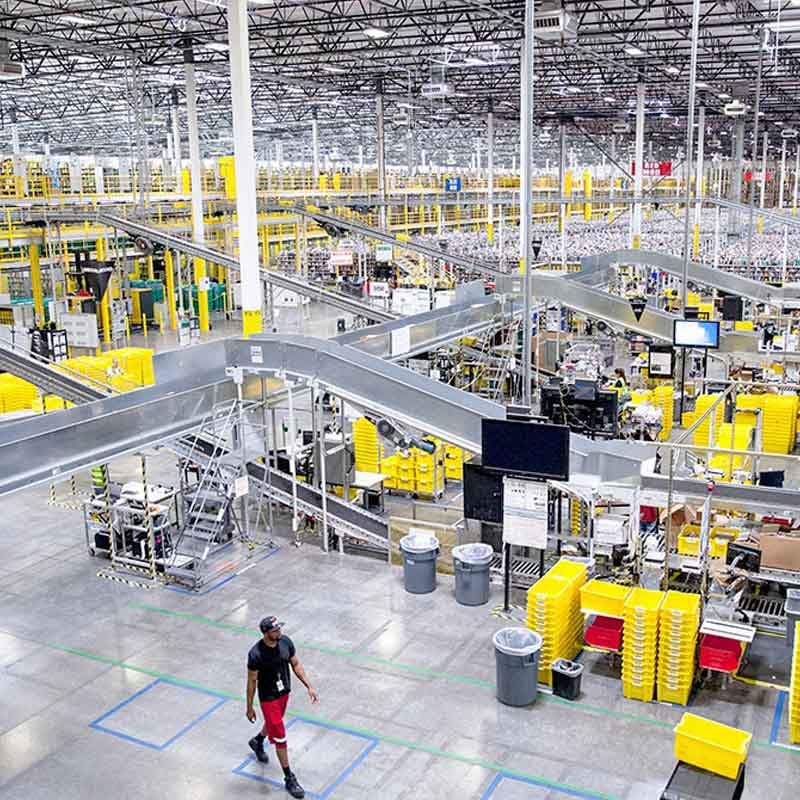
From the air, the new Amazon distribution center near Cottbus looks like a gray rectangle dropped onto a green field beside Autobahn 15. By September, that rectangle—7,700 square meters of concrete and steel—will be humming with activity: packages unloaded, sorted, and dispatched to delivery vans within hours. A second, larger site in Dahlewitz, just outside Berlin, follows in October. Together, they promise to shrink delivery windows for millions of customers in Brandenburg, Saxony, and beyond.
While Amazon is adding roughly 220 warehouse jobs and 350 driver positions across the two sites, it has also announced reductions in administrative roles globally, including in Germany. The company has stated these changes are part of efforts to streamline operations and invest in new technologies. The contrast between physical expansion and workforce adjustments has drawn attention, as the company continues to prioritize its logistics infrastructure.
How Amazon’s New Centers Speed Up Deliveries—Without Reinventing the Wheel
The mechanics of faster delivery are simpler than the marketing suggests. Amazon’s existing network in Brandenburg—Hoppegarten, Werder, and Schönefeld—already handles millions of packages annually, but their reach is uneven. The Cottbus center, positioned near the Polish border, will cover gaps in southern Brandenburg and northern Saxony, regions where packages currently detour through Berlin or Leipzig. Dahlewitz, meanwhile, sits within a 30-minute drive of the capital, allowing Amazon to bypass congested urban hubs for last-mile deliveries.
The company’s stated goal is straightforward: reduce the time between a customer’s click and the package’s arrival. The new centers won’t introduce drones or autonomous trucks—just more vans, more drivers, and more precise routing. For customers in Cottbus or Dresden, that could mean next-day deliveries becoming same-day, or same-day becoming within hours. For Amazon, it’s a way to meet rising expectations without overhauling its entire logistics model.
Beyond speed, the expansion addresses capacity challenges. Recent growth in e-commerce has increased demand for reliable delivery networks, particularly during peak seasons. The new centers are designed to distribute volume more evenly across Amazon’s network, reducing strain on existing hubs. This approach builds on lessons from past bottlenecks, when delayed shipments during high-demand periods led to customer dissatisfaction and operational inefficiencies.
Jobs Gained, Jobs Cut: The Uneven Equation of Amazon’s Expansion
Amazon’s announcement highlights the 220 warehouse jobs and 350 driver positions the new centers will create. In a region where unemployment has been a persistent concern, these additions are significant. The Cottbus site alone will employ about 70 people, while Dahlewitz, with its larger footprint, will add roughly 150. The drivers—200 in Cottbus, 150 in Dahlewitz—will be hired through local delivery partners, a model Amazon has used to scale operations efficiently.
Yet the timing of the expansion coincides with broader workforce adjustments. Earlier this year, Amazon announced plans to reduce roles in corporate and administrative functions globally, including in Germany. The company has described these changes as part of a broader effort to simplify operations and invest in areas like artificial intelligence. The distinction between roles being added and those being reduced reflects differing priorities in Amazon’s operational strategy.
The differences between warehouse and administrative roles are notable. While automation has transformed many aspects of logistics, certain tasks—such as sorting, scanning, and loading packages—still rely on human labor. Administrative functions, however, have seen greater consolidation as technology enables more streamlined processes. This dynamic has led to a workforce structure where operational roles remain critical, even as other positions are scaled back.
For regional stakeholders, the expansion brings both opportunities and challenges. Local economic development efforts have long sought to attract companies like Amazon for their potential to create jobs and generate tax revenue. However, the nature of warehouse work, including its temporary or seasonal aspects, has prompted discussions about long-term economic stability. The new centers will contribute to infrastructure development, but questions remain about how Amazon’s model of expansion and workforce adjustments will affect the communities hosting these facilities.
Brandenburg’s Logistics Landscape: What Changes—and What Doesn’t
The new distribution centers won’t transform Brandenburg overnight, but they will shift the dynamics of its logistics sector. Cottbus, a city of 100,000, has sought to reposition itself as a hub for commerce and industry. The Amazon site, located just off the A15 highway, could attract other e-commerce and logistics companies looking for accessible land and connectivity to eastern Germany. Local real estate developers have already begun exploring adjacent plots for additional warehousing and light manufacturing opportunities.
Dahlewitz, meanwhile, operates in a more competitive environment. The Berlin-Brandenburg region is home to Amazon’s largest German fulfillment center in Brieselang, as well as facilities for DHL, Hermes, and other logistics providers. The new center won’t displace these competitors, but it will intensify competition for drivers, warehouse workers, and last-mile delivery contracts. Smaller courier firms may respond by increasing wages to retain staff or accelerating plans to adopt automation technologies.
Infrastructure considerations are also in play. The Cottbus site is adjacent to a major highway, but local roads were not designed to handle the increased volume of delivery traffic. Municipal officials have raised concerns about the impact on secondary routes, though Amazon has stated it will collaborate with authorities on traffic management solutions. In Dahlewitz, the proximity to residential areas has led to concerns about noise from 24/7 operations, with some neighbors expressing opposition to the new facility.
What remains unchanged is Amazon’s market position. The company holds a significant share of Germany’s e-commerce market, and its logistics network is a key factor in its dominance. Competitors like Zalando and Otto have developed their own delivery networks, but none match Amazon’s density or reach. The new centers in Cottbus and Dahlewitz will further strengthen Amazon’s ability to deliver packages quickly and reliably, making it more difficult for rivals to compete on speed or cost.
The Bigger Picture: Why Germany Matters to Amazon’s European Strategy
Germany is not only Amazon’s second-largest market after the U.S. but also a critical component of its European logistics strategy. The country’s central location, well-developed infrastructure, and high consumer demand make it an ideal base for cross-border shipments. The new centers in Brandenburg are part of a broader effort to decentralize Amazon’s network, shifting from a few large fulfillment centers to a more distributed system of regional sites.
This shift reflects lessons from recent years, when disruptions in supply chains highlighted vulnerabilities in centralized logistics models. To address these challenges, Amazon has expanded its network of smaller, strategically located distribution centers. Since then, the company has opened new facilities in Ettenheim, Kassel, and Salzgitter, with additional sites planned for the future.
The strategy carries both advantages and risks. Smaller sites are more cost-effective to build but require careful management to ensure efficient staffing and coordination. As packages move between multiple locations rather than a single hub, the complexity of operations increases. For Amazon, however, the benefits outweigh the challenges. The company’s ability to deliver packages faster than competitors is a key advantage, particularly in Germany, where consumers have come to expect rapid delivery as a standard service.
The role of automation in this strategy remains a point of interest. Amazon has invested heavily in technologies like robotic sorting systems and AI-driven demand forecasting. Yet the new centers in Cottbus and Dahlewitz rely primarily on human labor for sorting and delivery. This suggests that while automation plays a growing role in logistics, certain aspects of the process still depend on manual work—and that the push for faster deliveries continues to rely on both technology and human effort.
What to Watch: The Next Moves in Amazon’s German Gambit
The opening of the Cottbus and Dahlewitz centers is just the beginning.
1. Labor tensions. Amazon’s warehouse operations have faced scrutiny over working conditions and turnover rates. In Germany, where labor unions play a significant role, these issues could become more pronounced. The country’s largest service-sector union, ver.di, has indicated it will closely monitor the new sites. If productivity demands increase without corresponding improvements in wages or conditions, disputes could arise, particularly during high-demand periods like Black Friday and the holiday season.
2. Competitor responses. DHL and Hermes have expanded their delivery networks in recent years, but neither has matched Amazon’s scale. The question is whether they will attempt to compete directly on speed or focus on other areas, such as sustainability or customer service. Some competitors, like Zalando, have emphasized carbon-neutral shipping as a differentiator. If Amazon’s expansion forces rivals to refine their strategies, it could lead to shifts in Germany’s e-commerce landscape.
3. The next wave of automation. Amazon’s long-term vision includes reducing reliance on human labor through automation. The company has already tested robotic sorting systems in some European warehouses, and it is likely these technologies will eventually be introduced in Cottbus and Dahlewitz. When that happens, the jobs created today could be affected—a pattern observed in other Amazon facilities across Europe.
For now, the focus remains on the immediate outcomes: faster deliveries, additional jobs, and a more resilient logistics network. Whether this resilience comes with trade-offs—for workers, competitors, or the regions hosting Amazon’s growth—remains to be seen. What is clear is that the company’s investment in Brandenburg reflects its broader approach to e-commerce: prioritizing speed, efficiency, and adaptability in an increasingly competitive market.