Amari Carter Explores Black Southern Heritage in NYFW Debut
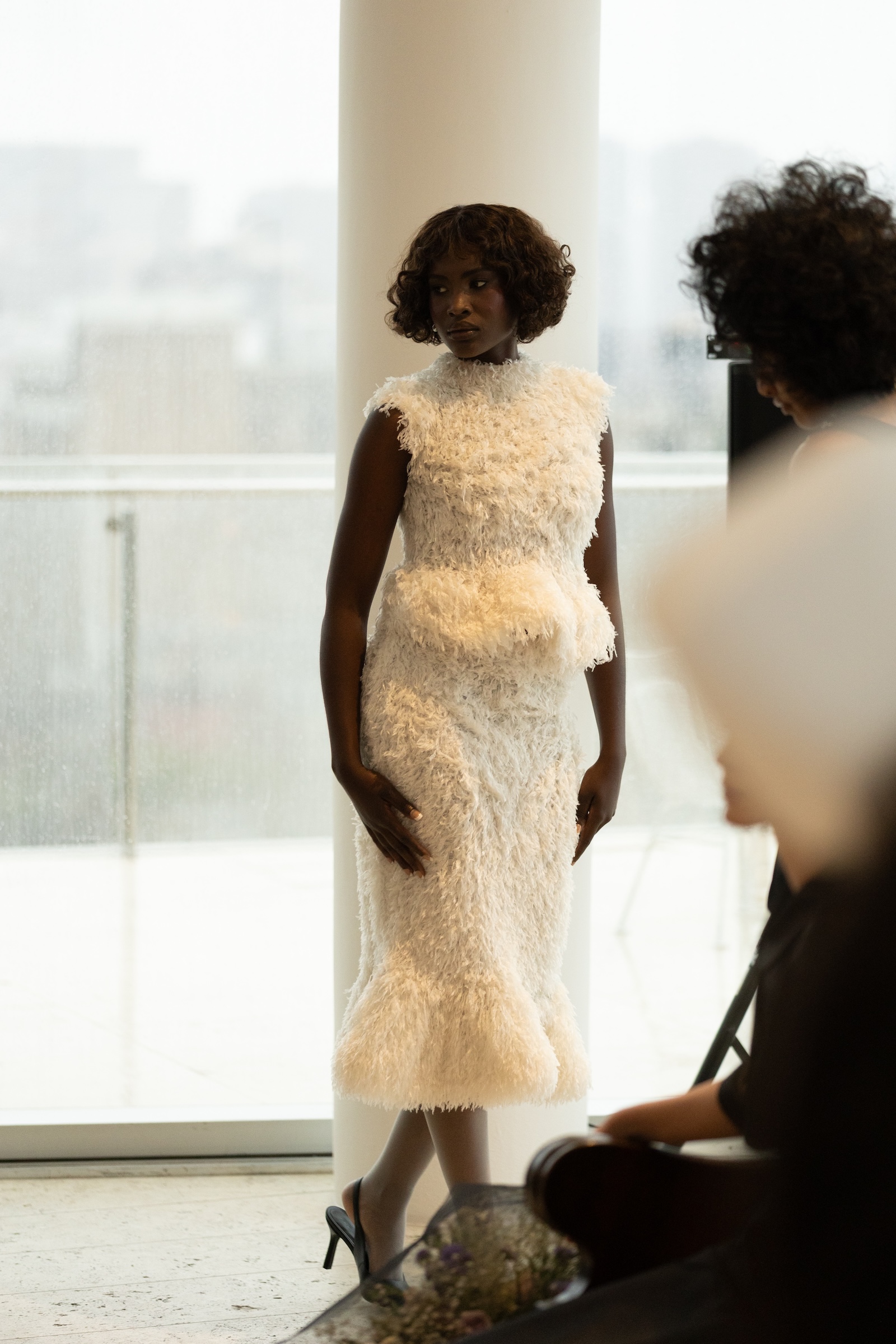
Designer Amari Carter brought Black Southern church traditions to New York Fashion Week for Spring/Summer 2027, staging a presentation titled “The Weight of a Sunday Dress” inside The Penthouse at The Standard East Village on a Sunday morning, complete with a live gospel choir and traditional handheld church fans.
From Southern Pews to the New York Fashion Week Runway
The presentation unfolded against the backdrop of a gospel choir singing as models moved through the room, while guests were handed traditional church fans reminiscent of those found in pews across the American South. Born in Florida and raised in Georgia, Carter learned to sew from her grandmother, who inspired her to pursue a career in design. Following studies at the London College of Fashion and early exposure through Diet Prada and British Fashion Council showrooms during London Fashion Week, Carter launched her namesake brand in 2018. Having previously shown with the Black in Fashion Council, the presentation marked her first solo showcase during New York Fashion Week.
The collection addressed the intricate rules and expectations historically passed down to young Black girls regarding public presentation. As Carter noted ahead of the event, Sunday attire in Black Southern households carried strict behavioral instructions—from sitting up straight to speaking to elders—making clothing an extension of family and personal reputation. The designer explored these concepts through garments that balanced discipline with sensuality, utilizing black satin, corseted bodices, low-slung minis, and voluminous white feathery textures to reinterpret traditional Sunday best.
Navigating the Business Realities of Independent Design
Beyond familial nostalgia, Carter addressed the systemic hurdles facing independent Black designers within the modern luxury market. Drawing on her experiences since launching her brand, she pointed out that while the fashion industry enthusiastically embraces emerging Black talent, maintaining brand longevity after the initial wave of publicity subsides remains a formidable challenge. According to Carter, Black designers are rarely granted the same institutional patience to stumble, evolve, or take their time as long-established luxury houses.
This economic reality drives Carter to design independently of digital metrics, choosing to ignore algorithmic pressures in favor of specific cultural storytelling.
Reclaiming Heritage and Crafting Future Heirlooms
In shaping the collection, Carter drew from an extensive family photo archive dating back to the 1920s, utilizing historical references—including sculpted hairstyles, pearls, and exposed skin—to examine the standards of elegance carried by Black women across generations. Becoming a mother shifted her perspective on these traditions, pushing her to separate the desire for excellence from the restrictive notion that young girls should be seen and not heard. By blending historical discipline with modern self-determination, Carter aims to craft garments intended to function as future heirlooms passed down to daughters, nieces, and goddaughters.