
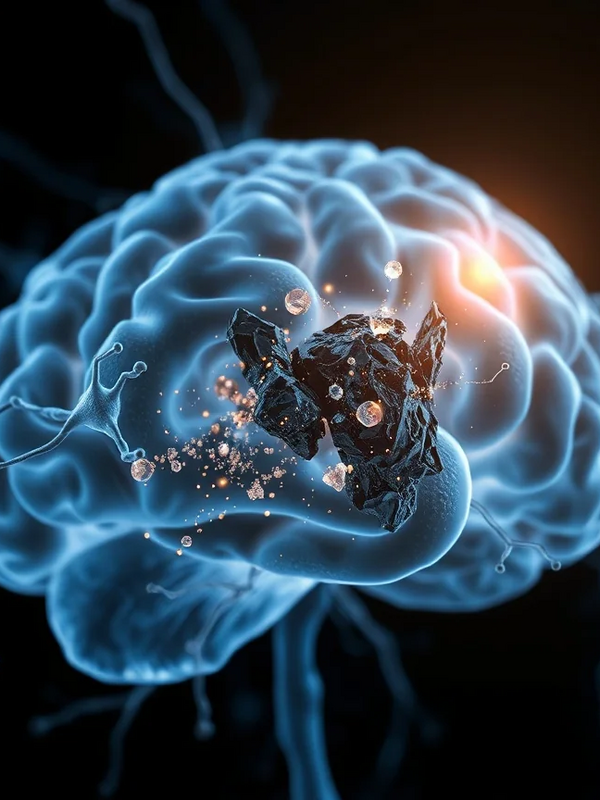
Astrocytes: A Potential New Target for Alzheimer’s Treatment
Recent research suggests astrocytes, a type of brain cell, may hold a key to combating Alzheimer’s disease by enhancing the brain’s natural cleaning processes. Traditionally, microglia were considered the primary immune cells responsible for clearing the brain of debris, but studies reveal they can be damaging and even contribute to the spread of plaque.
Today’s findings highlight astrocytes as a potentially safer option. When activated by Sox9, these cells clear waste without triggering harmful neuroinflammation. Researchers state, “Strengthening the natural cleaning ability of astrocytes could be just as vital as preventing plaque formation.”
Glymphatic System and Astrocytes: A Collaborative Approach
This discovery aligns with the growing understanding of the brain’s waste removal system, the glymphatic system. Demonstrated in the living human brain by researchers at Oregon Health & Science University in October 2024, this network of channels uses cerebrospinal fluid to transport waste along blood vessels.
The interaction between these two systems can be summarized as follows:
* astrocytes: Act as local “street sweepers,” breaking down waste materials on site.
* Glymphatic system: Functions as the “sewerage system,” removing dissolved waste.
Researchers believe that dysfunction in both systems contributes to the advancement of alzheimer’s disease, particularly in older individuals.The identification of Sox9 provides a potential “molecular lever” for manipulating the cellular component of this process. Biotech analysts anticipate potential for gene therapies or “small molecule” drugs that modulate Sox9 in glial cells, avoiding direct manipulation of neurons.
Expert Enthusiasm and a Potential Solution to Side effects
The scientific community has responded positively to the research. This approach could potentially bypass the issues associated with current treatments like lecanemab, which uses antibodies to target plaques but can cause side effects such as brain swelling. Activating an internal cleaning mechanism via astrocytes may prove more tolerable.
A neurologist at the Charité Berlin commented,”This is proof of a principle that we have been looking for for years. If astrocytes resume the protective role they play in early life, we could actively remediate the cellular habitat – not just slow disease progression.”
Next Steps and Future Outlook
The current findings are based on studies using mouse models. The next phase of research will focus on determining if human astrocytes exhibit the same Sox9-MEGF10 mechanism and whether it can be pharmacologically reactivated.
Researchers anticipate the following developments within the next 12-24 months:
* Validation studies: Examining Sox9 expression in human brain tissue from Alzheimer’s patients.
* Active ingredient screening: Identifying molecules that can specifically upregulate Sox9 in astrocytes.
* Combination therapies: Exploring the potential of combining astrocyte activation with existing anti-amyloid therapies.
The research team suggests that November 21, 2025, could potentially mark a turning point in alzheimer’s research, revealing that a solution may have been present within the brain all along, awaiting the correct signal for activation.
[Advertisement]
A short self-test is available to assess whether forgetfulness is within normal limits or warrants further inquiry. A free guide, “Brain training made easy,” offers exercises, nutritional tips, and an anonymous self-test, delivered via email. Get your memory exercises & self-test now
