
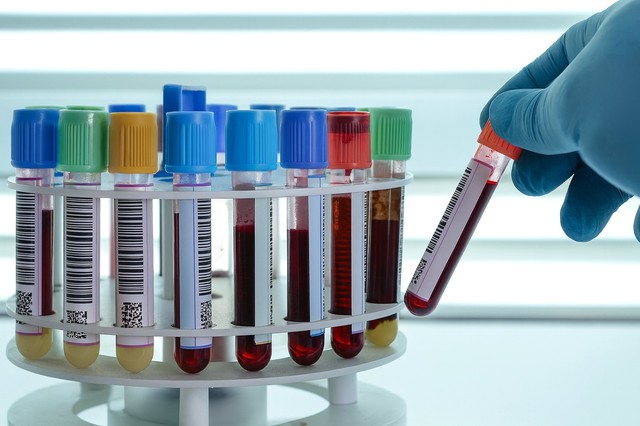
Blood Test Shows Promise for Earlier, More Accurate ALS Detection
A new blood test utilizing analysis of free circulating DNA (cfDNA) offers a potential breakthrough in the diagnosis of amyotrophic lateral sclerosis (ALS), according too research published thursday in Genome Medicine. Researchers at UCLA Health have demonstrated the testS ability to detect the disease faster and with greater accuracy than current methods.
ALS, often referred to as Lou Gehrig’s disease after the famed baseball player who succumbed to it two years after diagnosis, is a progressive neurodegenerative disease impacting motor neurons in the brain and spinal cord. Currently,diagnosis can be challenging,and the disease carries a grim prognosis,with a life expectancy of 2-5 years post-diagnosis,according to the National Institutes of Health (NIH). Early diagnosis is crucial for improving patient quality of life and potentially extending survival.
This non-invasive test analyzes cfDNA – fragments of genetic material released into the bloodstream by dying cells – to identify biomarkers specific to ALS. The study,a first-of-its-kind analysis of cfDNA in relation to ALS,focuses on variations in DNA methylation,an epigenetic process regulating gene activity. Changes in both the quantity of released DNA and its methylation patterns were observed in ALS patients.
Researchers, led by Dr. christa Caggiano,a postdoctoral researcher in UCLA Health’s Department of Neurology,tested the cfDNA of individuals diagnosed with ALS and a control group of healthy individuals. Computer models successfully distinguished between the two groups, and also indicated potential correlations with disease severity.
“There is an urgent need for biomarkers that allow the rapid diagnosis of ALS patients, supporting clinical trials and monitoring the evolution of the disease,” explained Dr. Caggiano. The test’s ability to differentiate ALS from other neurological conditions represents a significant advantage over existing biomarkers.
Notably, the test detected signals not only from nerve cells, but also from muscle tissue and cells associated with inflammation, suggesting a broader impact of ALS on various cell types than previously understood.
While these findings are encouraging,the researchers emphasize the need for larger studies involving more diverse populations to validate the test’s accuracy and reliability before it can be implemented in clinical settings.UCLA Health is currently undertaking a larger, collaborative study to confirm these initial results.
