Allowing any party to restrict Strait of Hormuz transit could set dangerous precedent: PM Wong – CNA
Singapore Prime Minister Lawrence Wong warned on Friday that allowing any party to restrict transit through the Strait of Hormuz could establish a dangerous precedent threatening critical sea lanes in Southeast Asia.
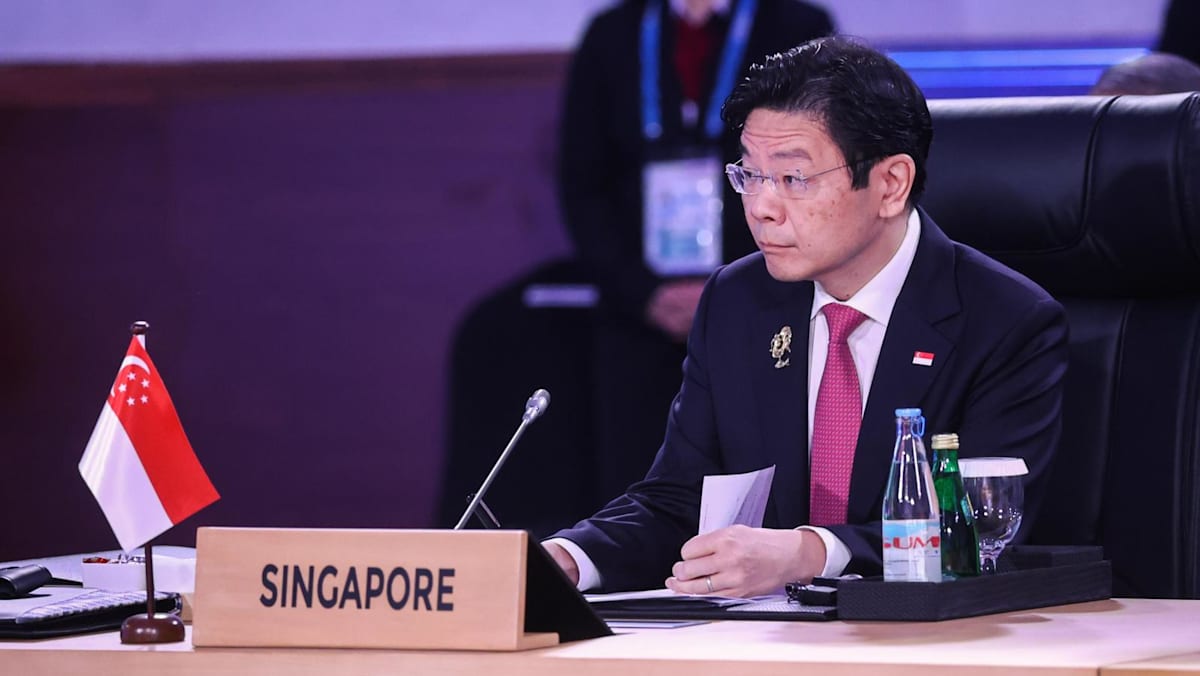
Speaking at the leaders’ retreat of the 48th Association of Southeast Asian Nations (ASEAN) summit in Cebu, Philippines, Mr. Wong stated that the weaponization of international waterways poses a direct risk to regional stability. “We, too, have very critical waterways which could be disrupted,” Mr. Wong said. “And if it is disrupted, this would have very severe implications for all of us, and for the rest of the world too.”
Navigational Rights and UNCLOS
The Prime Minister asserted that ASEAN must uphold the navigational rights and freedoms enshrined in the 1982 United Nations Convention on the Law of the Sea (UNCLOS), a treaty to which all member states are party. He emphasized that these legal frameworks are essential for maintaining the steady flow of global trade across critical sea lanes.

Mr. Wong argued that because ASEAN does not exist in isolation, the bloc must work collectively and with external partners to ensure that these waterways remain open, secure, and accessible to all parties.
Economic Pressures and Growth Outlook
The diplomatic warning coincides with significant economic volatility within Singapore. Local refineries are currently operating at half capacity, a development that threatens the nation’s growth outlook of 2% to 4%. These industrial constraints are compounded by ongoing fuel disruptions that analysts warn are far from over.

ASEAN Integration and the New Normal
In response to these systemic vulnerabilities, Mr. Wong urged ASEAN to strengthen its internal integration to better prepare for a “new normal” defined by frequent disruptions. He positioned the reinforcement of regional cooperation as a necessary strategic pivot to mitigate the impact of external geopolitical shocks on Southeast Asian trade.
The summit continues in Cebu, where leaders are expected to further discuss the implementation of these integration strategies.