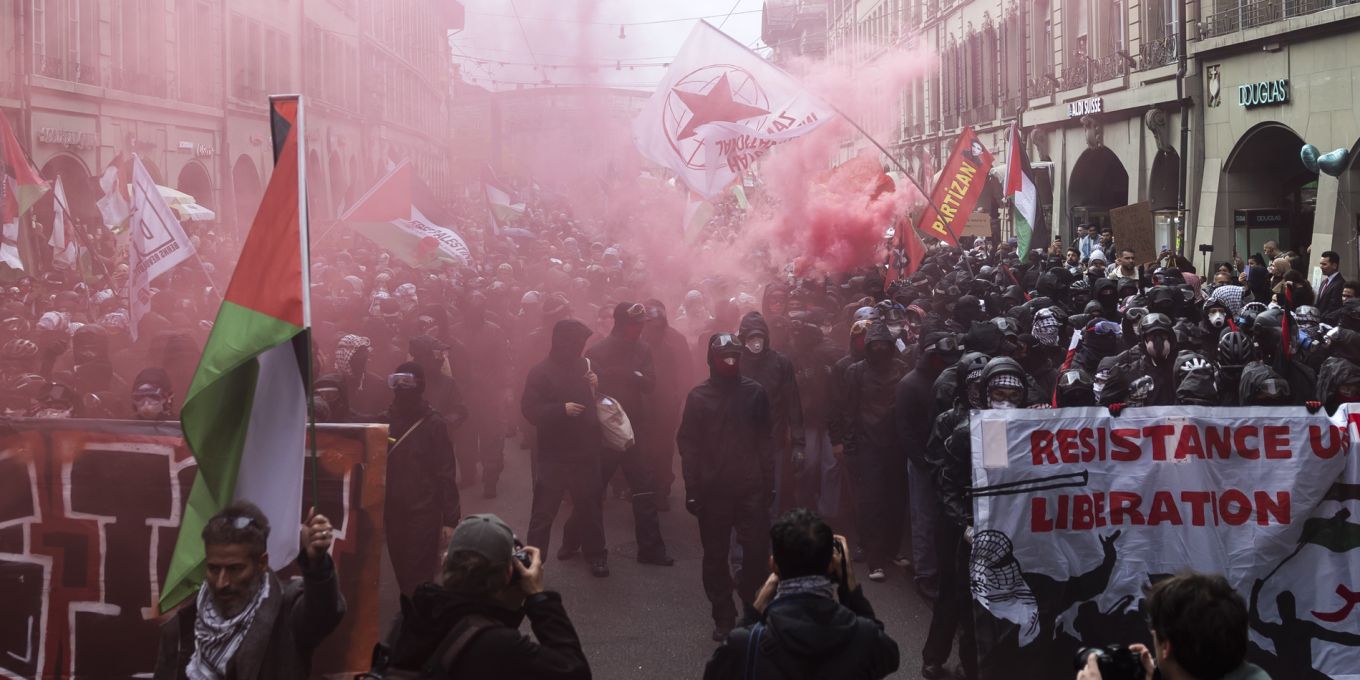
Alliance Against the Right Bern Announces Anti-Fascist Evening Walk
In Bern, Switzerland, a legal and political standoff is intensifying as activists prepare for an anti-fascist evening walk at the end of May. While discussions regarding a potential ban on Antifa movements persist, the “Alliance Against the Right Bern” maintains that the decentralized nature of the movement makes such a legal prohibition effectively impossible under current Swiss law.
The tension currently gripping the Swiss capital is not merely a matter of political disagreement; it is a fundamental test of the nation’s constitutional protections regarding assembly and association. As the “Alliance Against the Right Bern” mobilizes for its upcoming demonstration, the conversation has shifted from the specific goals of the march to a much broader, more existential question: how does a democratic state regulate a movement that possesses no central leadership, no registered headquarters, and no formal hierarchy?
This friction creates a significant challenge for municipal governance and public order. When political movements operate through decentralized networks, the traditional tools of legal enforcement—such as serving injunctions or dissolving registered organizations—become largely obsolete. This creates a vacuum that requires sophisticated management from both local authorities and the legal professionals who navigate these complex jurisdictional waters.
The Impending March and the Rise of Local Activism
The scheduled event at the end of May is being organized by the “Alliance Against the Right Bern,” a collective that has become a prominent voice in the city’s current political landscape. The group’s intent is to host an “anti-fascist evening walk,” a format designed to reclaim public spaces and signal opposition to far-right sentiments rising in the region. Unlike traditional large-scale protests that require massive logistical coordination, these smaller, more frequent walks are characteristic of modern, decentralized activism.
For the residents and businesses of Bern, these events represent a recurring variable in the city’s social fabric. The frequency of such gatherings necessitates a high level of coordination between local administrative services and community stakeholders to ensure that public transit, pedestrian access, and local commerce remain uninterrupted. As these movements become more integrated into the urban rhythm, the city must balance the rights of protesters with the rights of the broader citizenry to maintain a functional urban environment.
The upcoming walk serves as a flashpoint. It is not just a demonstration; it is a statement of presence intended to challenge the efficacy of potential state intervention.
The Legal Paradox of Decentralized Movements
The core of the controversy lies in the perceived futility of a ban. In many legal systems, a ban is applied to a specific, identifiable entity—a political party, a registered non-profit, or a formal club. However, the “Antifa” movement operates as a loose collection of individuals and small, independent cells sharing a common ideology rather than a single legal personhood.
Under the Swiss Federal Constitution, the right to freedom of association and assembly is a cornerstone of democratic life. To ban an organization, the state must typically demonstrate that the group’s primary purpose is the commission of crimes or that it poses a direct, imminent threat to the democratic order. Proving this against a decentralized movement is a logistical and legal minefield.
“The difficulty for the state lies in the lack of a ‘head to cut off.’ If there is no central board of directors to hold accountable and no official treasury to freeze, the traditional mechanisms of administrative law struggle to find a target that can be legally dissolved.”
Legal experts suggest that attempting to ban a movement based on its ideology, rather than its specific illegal actions, would likely face immediate challenges in the Swiss court system. This creates a situation where the state may find itself in a position of managing the symptoms of political unrest rather than being able to address the source through formal prohibition. For organizations navigating these high-stakes environments, consulting with constitutional law specialists is becoming a standard necessity to ensure compliance with both local ordinances and federal rights.
Navigating Public Order in the Swiss Capital
As the end of May approaches, the focus in Bern is shifting toward the practicalities of security and public safety. The potential for friction between opposing political factions necessitates a highly disciplined approach to crowd management and urban security. This is not just a task for the police; it involves a complex web of private and public actors working to maintain the “peace of the city.”

Municipalities facing such polarized climates often find themselves in need of public safety and crowd management experts to assist in planning routes that minimize conflict and maximize safety. The goal is to facilitate the right to protest while simultaneously shielding the city’s infrastructure and its citizens from the potential volatility that often accompanies high-tension political demonstrations.

The challenges include:
- Route Management: Coordinating walking paths that avoid high-density commercial zones or sensitive government buildings.
- Communication Channels: Establishing clear lines of dialogue between organizers, like the “Alliance Against the Right Bern,” and local law enforcement.
- Resource Allocation: Ensuring that municipal services can respond to localized disruptions without compromising the safety of the wider metropolitan area.
The complexity of these tasks highlights why the intersection of politics and urban management is one of the most demanding sectors for modern professionals. Whether it is a law firm defending civil liberties or a security firm managing a complex public event, the expertise required is increasingly specialized.
A Growing Divide in Civic Discourse
The debate in Bern is a microcosm of a much larger trend seen across Europe, where the boundaries of acceptable political expression and the limits of state authority are being constantly renegotiated. The question of whether a movement can be “unbannable” is not just a legal curiosity; it is a fundamental question about the nature of power in the digital and decentralized age.
As the “Alliance Against the Right Bern” prepares its march, the eyes of legal scholars and political analysts will be on the city. The outcome of this period of tension will not necessarily be a definitive legal ruling, but rather a clearer understanding of how Swiss democracy will adapt to a landscape where the most influential movements are those that refuse to be organized.
In an era of rapid social shifts and political fragmentation, staying informed and prepared is the only way to navigate the complexities of a changing society. For those seeking to understand the legal and social implications of these developments, or for those requiring professional guidance to manage the fallout of social unrest, the World Today News Directory provides access to verified community advocacy groups and professional services equipped to handle the evolving landscape of modern civic life.