
Allergic Diseases Cost Australia Billions, Impacting Millions
CANBERRA – A new report reveals the staggering economic and social burden of allergic diseases in Australia, totaling $63.5 billion in 2024. the findings, released today, underscore the widespread impact of allergies on the nation’s health system, workforce, and overall quality of life.
The report, compiled by the National Allergy Center of Excellence (NAC) and the National Allergy Council of Australia (NACE), estimates the direct financial cost of allergic disease in 2024 at $18.9 billion. This figure encompasses health system expenses and losses in productivity and efficiency. A further $44.6 billion is attributed to non-financial costs – encompassing the intangible impact of illness,including pain,suffering,reduced quality of life,and limitations on daily activities.
“It’s not just the financial burden; it’s the social costs as well that impact a person,” said Dr. Elizabeth Said, a key researcher involved in the report.”Allergic disease can ultimately control people’s lives and requires a multi-pronged approach to improve the health and well-being of those affected.”
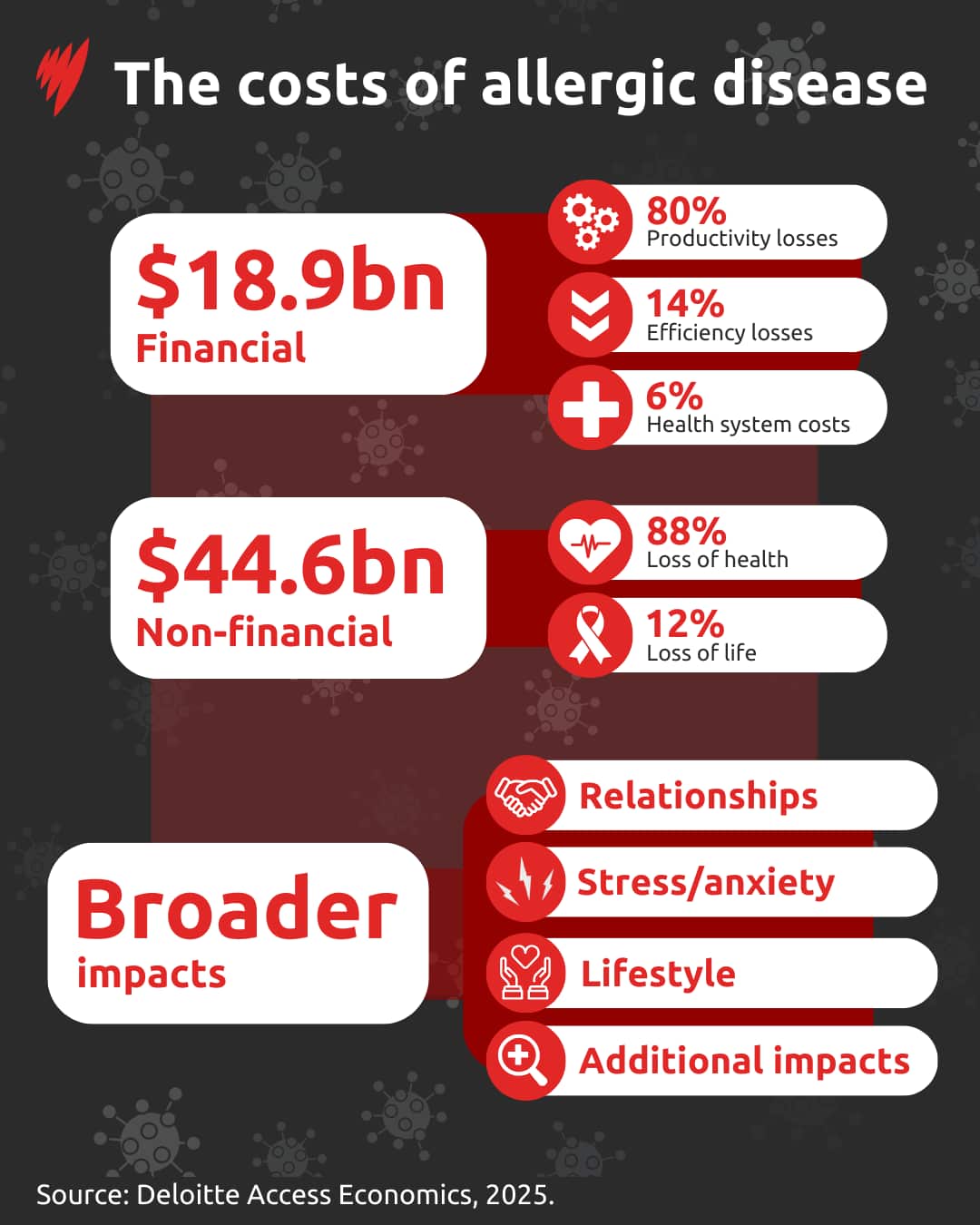
The estimated financial cost of allergic disease in 2024 was $18.9 billion. Source: SBS News
the report highlights that allergic diseases affect approximately one in three Australians – nearly every household. This includes a range of conditions, from food allergies and hay fever to asthma, eczema, and anaphylaxis. The prevalence of allergies has been steadily increasing in recent decades, notably among children, though the exact reasons remain a subject of ongoing research.
Dr. Katie Perrett, also involved in the report, emphasized the need for greater attention to this significant public health issue. “This report shows that allergic disease is a hugely significant problem for Australians, affecting one in three. That’s almost every household,” she stated. “Allergic disease has not been given the attention it deserves.”
Perrett and Said are advocating for sustained investment in the NAC and NACE to improve access to care, accelerate research, and enhance community safety. “Our hope is that [the government] will invest in further funding of the NAC and NACE, so that we can continue to improve access to care, accelerate further research and increase safety in the community,” Said added.
The federal health department has been contacted for comment. The findings of this report are expected to fuel calls for increased funding for allergy research, improved diagnostic tools, and better management strategies for those living with allergic conditions. The NAC and NACE play a crucial role in coordinating national efforts to address the growing allergy epidemic in Australia.
