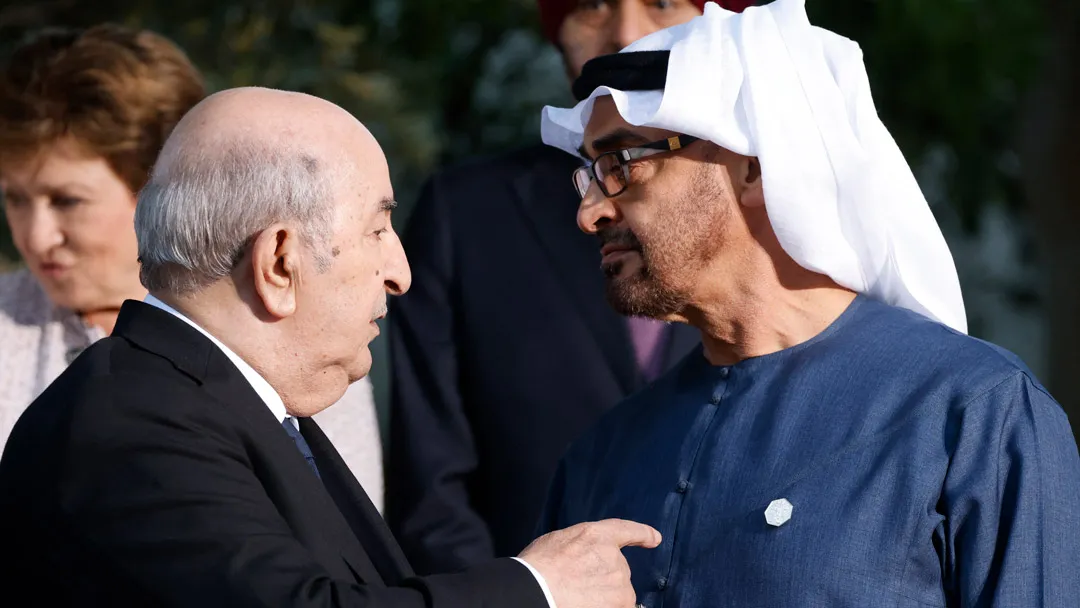
Algeria severs diplomatic ties with the United Arab Emirates
On 10 September 2026, Algeria severed diplomatic ties with the United Arab Emirates, culminating years of mounting regional friction over policy in North Africa, the Sahel, and the Middle East.
Decades of Economic Partnership Give Way to Strategic Divergence
The diplomatic break follows a sharp deterioration in relations that were once strong. In the early 1970s, Algeria sent oil experts from the state-owned hydrocarbons company Sonatrach to the Gulf to help establish institutions that later became the Abu Dhabi National Oil Company. Former Algerian President Abdelaziz Bouteflika lived in Abu Dhabi from 1984 to 1987 as a diplomatic adviser to Sheikh Zayed bin Sultan Al Nahyan.
During Bouteflika’s tenure from 1999 to 2019, Emirati capital made deep inroads into the Algerian economy. In 2012, Emirati investors partnered with the Algerian defence ministry and state-owned firms to manufacture Mercedes-Benz vehicles and NIMR armoured vehicles locally. Those commercial and elite networks largely survived Bouteflika’s fall in 2019.
الإمارات تؤكد حرصها على علاقاتها مع جميع الدول بما يخدم مصالح الشعوبUAE Affirms Commitment to Relations with All Countries in Support of the Interests of Peoples pic.twitter.com/flV5b6K9YZ
UAE Normalization with Israel Strains Algeria Relations
The relationship cracked in 2020 when the UAE normalized relations with Israel under the Abraham Accords, a move President Abdelmadjid Tebboune criticized as a rush toward normalization that excluded a comprehensive settlement for Palestinians. Algiers is the primary external backer of the Polisario Front, which fights for Western Sahara’s independence.
Tensions deepened on 4 November 2020, when the UAE became the first Arab nation to open a consulate in Western Sahara, establishing an office in Laayoune within the Moroccan-controlled territory. Former Algerian Foreign Minister Sabri Boukadoum questioned the move’s compatibility with international law. Morocco followed by normalizing ties with Israel, and the two countries signed a landmark defence cooperation agreement in November 2021.
Algiers viewed the defense pact as a direct security threat. Algerian authorities also accused Morocco and Israel of supporting the Movement for the Self-Determination of Kabylia (MAK), an independence group designated as a terrorist organization by Algeria in 2021, pointing to statements by Morocco’s UN representative regarding a right to self-determination.
Competing Interventions Across the Sahel and Libya
Disagreements expanded across North Africa and the Sahel. In 2024, UAE Minister of State Sheikh Shakhboot bin Nahyan Al Nahyan toured Mali, Niger, and Burkina Faso, offering counter-terrorism cooperation as Western influence waned.

In Libya, the UAE has backed Field Marshal Khalifa Haftar, whereas Algeria supports the internationally recognized government in Tripoli. Similar divisions emerged in Sudan, where Algeria backs the national army.
Suspicion intensified over reported ransom payments linked to the UAE and paid to the JNIM jihadist group operating in the Sahel.
BREAKING: Algeria says it has decided to cut diplomatic relations with the United Arab Emirates after what it described as a series of “provocative or hostile” actions by Abu Dhabi despite “repeated warnings”.🔗: https://t.co/gwrkvaWoxw pic.twitter.com/Q2XNHC2j1u
Tebboune Terminates Air Travel Agreement as Tensions Rise
President Tebboune escalated his rhetoric, complaining in 2024 that Gulf money sat behind regional conflicts, stating in 2025 that Algeria enjoyed good relations with every Gulf monarchy except one, and denouncing a destabilizing “mini-state” in February 2026. In that same month, Algeria terminated the 2013 bilateral air travel agreement.
Mediating efforts by Bahrain and Oman stalled as Algiers rejected outside intercession while perceived Emirati interference continues.