
Alexei Leonov: First Human Spacewalk & Cold War Space Race History
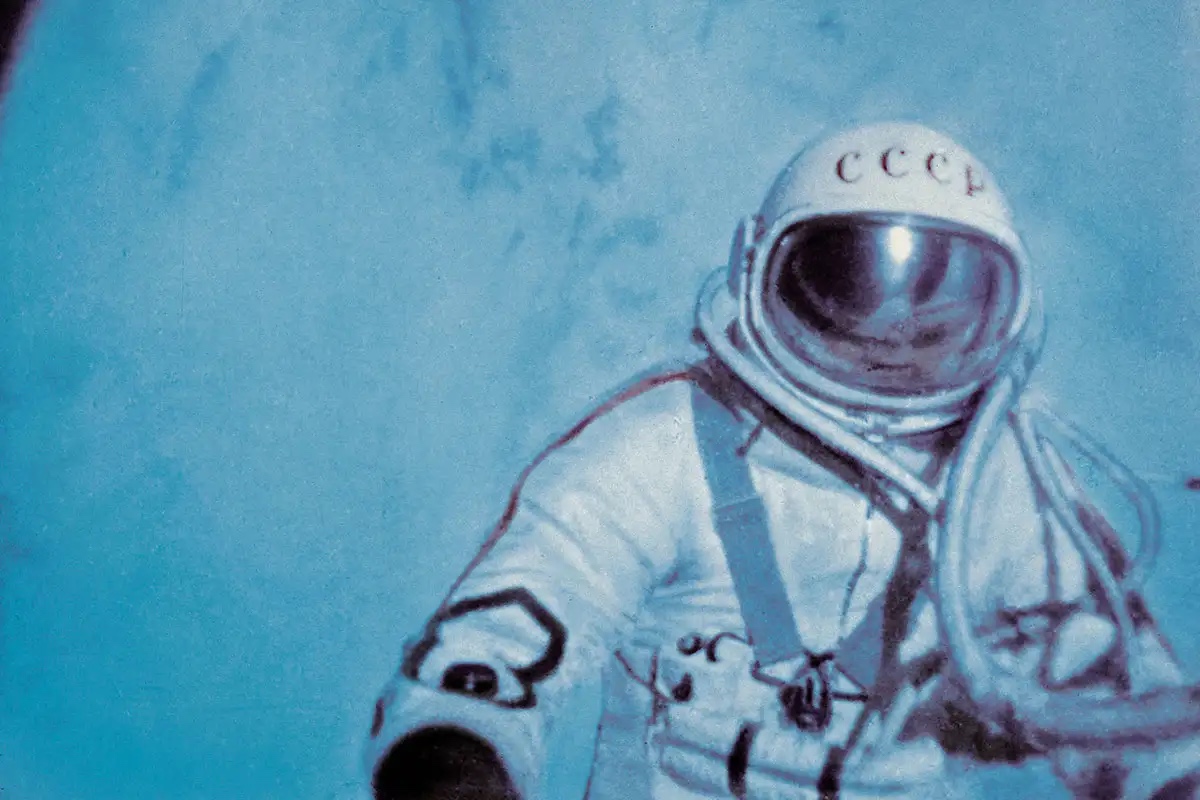
On March 18, 1965, Soviet cosmonaut Alexei Leonov became the first human to conduct a spacewalk, exiting his Voskhod 2 spacecraft and floating in orbit for 12 minutes and 9 seconds. The event, a landmark achievement in the Cold War space race, demonstrated the Soviet Union’s continued lead in crewed spaceflight following Yuri Gagarin’s historic orbit in 1961.
The Voskhod 2 mission was conceived as a direct response to the challenges posed by the United States’ Gemini program, which aimed to develop the techniques necessary for eventual lunar missions. Soviet chief designer Sergei Korolev, seeking to maintain momentum, modified existing Vostok capsules into the Voskhod spacecraft to achieve another first in space. This necessitated transforming the three-seat Vostok into a two-seater to accommodate the bulky spacesuit required for an extravehicular activity (EVA), commonly known as a spacewalk.
The crew consisted of Pavel Belyayev, the commander, and Alexei Leonov, the pilot. Both cosmonauts underwent extensive training in a life-size mock-up of the Voskhod-2, simulating the conditions of weightlessness. However, as Leonov later reflected, no simulation could fully prepare them for the realities of operating in the vacuum of space.
The Voskhod 2 spacecraft launched from Baikonur Cosmodrome at 07:00 UTC on March 18, 1965. Leonov was equipped with the Berkut spacesuit, a modified Sokol-1 suit featuring a metal backpack providing approximately 45 minutes of oxygen and temperature regulation. After achieving orbit, the crew inflated and pressurized the Volga airlock, a crucial component engineered specifically for this mission.
Upon exiting the spacecraft, Leonov became the first person to experience the sensation of free-floating in space. Tethered to the Voskhod 2 by a 5.35-meter cable, he conducted observations and research during his 12-minute EVA, making five entries and exits from the airlock. Belyayev monitored the operation from inside the spacecraft, utilizing onboard television equipment and telemetry to track Leonov’s progress. Leonov also sketched an orbital sunrise, marking the first artwork created in space.
The spacewalk was not without significant peril. Approximately eight minutes into the EVA, Leonov’s suit began to inflate due to the vacuum of space, becoming rigid and hindering his movement. His hands detached from his gloves, and his feet loosened within his boots. The suit’s expansion threatened to prevent his re-entry into the airlock. Leonov made the critical decision to vent some of the suit’s oxygen, reducing the pressure and allowing him to bend his limbs, a risky maneuver that carried the threat of decompression sickness and oxygen starvation.
Even after regaining some flexibility, Leonov faced further difficulties re-entering the airlock. Unable to re-enter feet first as planned, he was forced to turn and enter headfirst, violating established protocol. He became wedged sideways within the narrow 1.2-meter diameter hatch, requiring considerable effort to maneuver back into the spacecraft.
The challenges continued after Leonov’s successful, though arduous, re-entry. The spacecraft’s oxygen levels began to rise dangerously, creating a potential fire hazard. It took approximately seven hours to activate an emergency valve and stabilize the atmosphere. Subsequently, a malfunction in the orientation system caused Voskhod 2 to spin uncontrollably, forcing Belyayev to manually stabilize the spacecraft. The automatic landing system also failed during re-entry, necessitating the first-ever manual landing in spaceflight history.
The Voskhod 2 capsule ultimately landed in a remote area of the Siberian wilderness. Upon opening the hatch, the cosmonauts were immediately exposed to frigid temperatures. A rescue helicopter located them, but the cosmonauts were unable to climb the rope ladder due to the bulk of their spacesuits. They were forced to ski nine kilometers through the snow to reach a clearing where a helicopter could land, ultimately awaiting rescue for two to three days in temperatures as low as -30°C.
While the mission demonstrated the feasibility of human activity in space, the full extent of the difficulties encountered by Leonov and Belyayev was initially concealed. Leonov later described the experience as profoundly isolating and challenging, recalling the sensation of hearing his own heartbeat in the silence of space and the immense effort required to overcome the suit’s malfunction and re-enter the spacecraft. The incident underscored the inherent risks of early space exploration and the ingenuity required to overcome unforeseen obstacles.