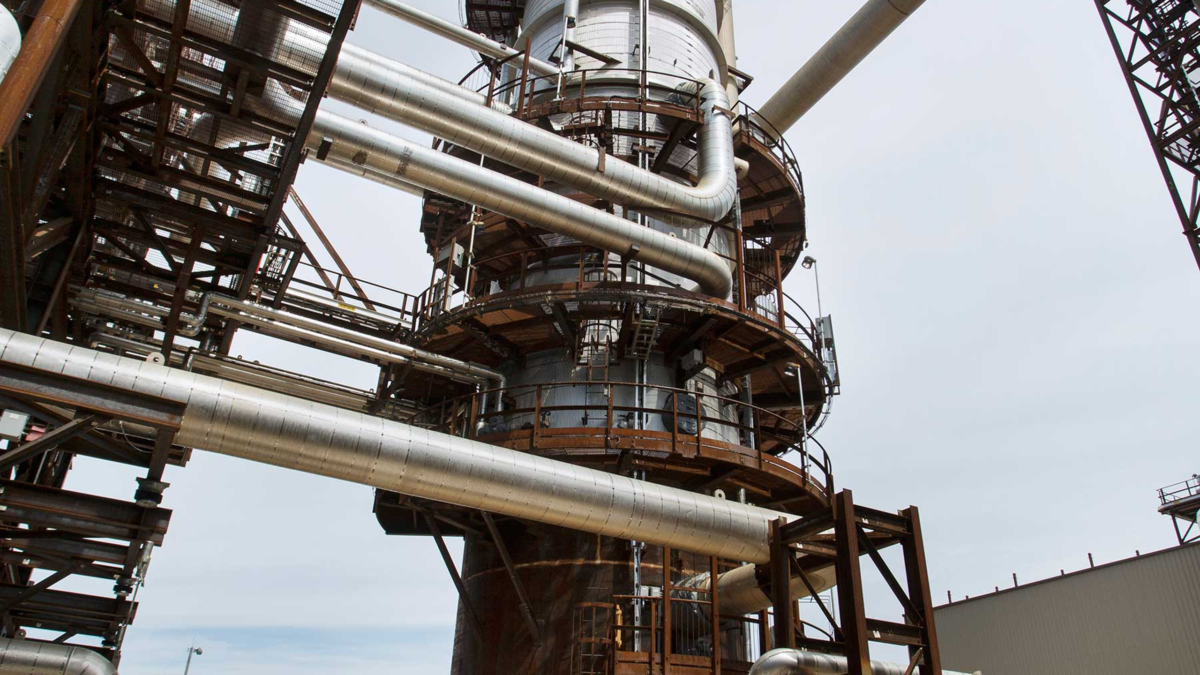
Alberta Carbon Capture Project Linked to Largest Earthquakes Attributed to CO2 Injection
A major carbon capture and storage project in Alberta, Canada, has been linked to a decade of seismic activity, including the largest earthquakes ever attributed to the sequestration of carbon dioxide in a deep saline aquifer.
Researchers have traced two significant tremors felt in Edmonton—a magnitude 4.1 earthquake near Bon Accord on April 1 and a magnitude 4.3 event near Waskatenau on May 9, 2026—directly to the Quest Carbon Capture and Storage (CCS) project operated by Shell Canada, according to a study published in Geophysical Research Letters.
The findings, led by seismologist Ryan Schultz of the Swiss Seismological Service at ETH Zürich and his colleagues, indicate that the earthquakes were caused by fluid injection raising pressure within subterranean rock formations. While the Alberta Energy Regulator reported no injuries or property damage following the May tremor, the study suggests that the seismic risk may persist for years, even if injection operations were to cease immediately.
The Quest project, which began operations in August 2015, injects approximately one million metric tons of carbon dioxide annually into a porous sandstone layer located 2.1 kilometers underground. While the carbon is intended to remain trapped by impermeable rock, the injection process increases fluid pressure in the surrounding water-bearing sandstone.
According to reporting by Phys, this pressure change spreads beyond the site of the carbon itself, eventually reaching faults in the crystalline rock layers located 2.5 to 5 kilometers below the surface. These faults, already under natural stress, slip when the rising pressure eases the force holding them together.
The research team analyzed regional seismic data dating back to 1985, identifying that the area experienced only one earthquake of magnitude 2.5 or greater in the three decades prior to the project’s launch. In the decade following the start of injections, that number rose to more than ten. Plotting these events revealed that seismic activity expanded outward from the wells at a rate consistent with pressure diffusion through the sandstone.
The study highlights a major challenge in managing carbon storage: the delay between operations and geological response. Simulations modeled by Schultz and his colleagues show that pressure buildup near the injection wells will continue to spread outward for years, even under a permanent shutdown scenario. In models assessing the fault near the April earthquake site, pressure is expected to peak between 2033 and 2035.
The researchers said that while their models align with readings taken near the injection wells, data from further afield remains limited. The exact amount of pressure reaching the deeper faults remains uncertain, as the existence of fractures may provide faster pathways for pressure to travel.
To better manage future sequestration sites and minimize seismic hazards, the authors emphasize the necessity of taking pressure measurements in wells located at greater distances from injection points. It remains unknown exactly how much pressure is required to trigger slips on faults at these depths, or whether future operational changes can effectively mitigate the ongoing pressure diffusion.
“A detailed analysis of the Quest CCS earthquakes is important for ensuring safe subsurface injection practices moving forward,” write seismologist Ryan Schultz of ETH Zürich and colleagues in a paper in Geophysical Research Letters.