
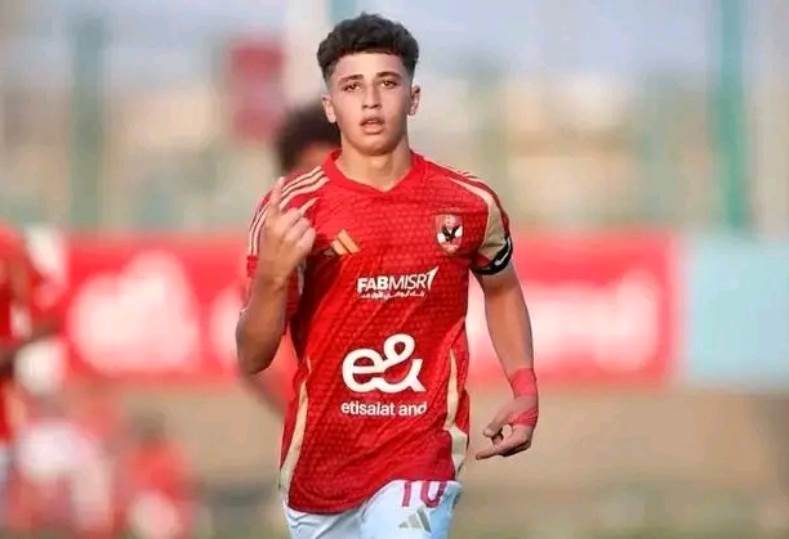
Al Ahly’s Bilal Attia: Injury Update and Racing Santander Transfer News
Spanish side Racing Santander has reaffirmed its commitment to signing Al Ahly youth prospect Bilal Attia despite a severe knee injury sustained during a Republic Championship match against Tala’ea El Gaish. The club intends to provide full rehabilitation support to finalize the transfer of the former Egyptian youth captain, regardless of the diagnosis.
The intersection of high-potential athletic trajectory and catastrophic physical failure creates a volatile scenario for any front office. When a player of Bilal Attia’s ceiling suffers a traumatic knee injury on the eve of a European move, the standard operating procedure for most clubs is to trigger a medical exit clause or pivot to a secondary target. However, Racing Santander is operating on a different timeline. This isn’t a tactical stop-gap signing; it is a strategic acquisition of a “project player.” The problem now shifts from scouting and negotiation to a grueling medical recovery process that will test the player’s mental fortitude and the club’s patience.
The Biomechanical Fallout: Analyzing the Knee Trauma
The reports emerging from the match against Tala’ea El Gaish describe a high-impact incident that left Attia in tears and necessitated immediate hospitalization. While official confirmation of a rupture is pending, the suspicion of an Anterior Cruciate Ligament (ACL) tear looms large. In the world of elite sports medicine, an ACL injury is more than a tear; it is a disruption of the entire kinetic chain. Recovery requires a precise sequence of surgical intervention, followed by a rigorous periodization of rehabilitation to restore proprioception and biomechanical stability.
For a young player, the risk involves more than just the ligament. The focus must now shift to load management to prevent compensatory injuries in the opposite limb. While Racing Santander has offered their medical center for Attia’s recovery, the transition from the Egyptian youth setup to a Spanish professional environment during a rehab cycle is a high-stakes gamble. Professional athletes in this position must avoid the temptation of rushed returns, which often lead to secondary ruptures. For local youth athletes facing similar catastrophic failures, the priority must be securing vetted orthopedic specialists and rehab centers to ensure the recovery protocol matches professional standards.
“Racing is committed to its agreement with Bilal, and the injury will not affect any decision regarding the deal. The medical center is open to Bilal Attia, whether his injury is minor or a cruciate ligament tear as is rumored; he is a project for the club and we trust in his capabilities.”
The statement from Omar Nail, Director of International Relations and Contracts at Racing Santander, signals a rare level of institutional loyalty in the modern transfer market. By treating the player as a “project,” the club is essentially hedging its bet on Attia’s long-term ceiling rather than his immediate availability. This approach suggests that the scouting department’s data on Attia—likely focusing on his leadership and tactical versatility—far outweighs the temporary setback of a physical injury.
Contractual Rigidity in the Face of Medical Volatility
The timing of the injury was particularly disruptive, occurring just as contracts were slated for signature. Under standard FIFA Transfer Regulations, medical examinations are the final gatekeeper. A failed medical usually voids the agreement. Yet, Racing Santander has explicitly waived this volatility. This decision moves the transaction from a standard transfer to a calculated investment. By absorbing the risk of a long-term injury, Santander secures a player who was the captain of the Egyptian youth team during the World Cup in Qatar, ensuring they don’t lose him to a competitor who might be equally patient.

This level of contractual commitment is uncommon and often requires specialized sports contract attorneys to draft specific clauses that protect both the club’s investment and the player’s future earnings during a period of inactivity. The agreement ensures that Attia’s path to Europe remains open, shifting the burden of recovery from the player’s shoulders to the club’s infrastructure.
The Scouting Profile: Why the Risk is Justified
To understand why a Spanish club would commit to a player who may be sidelined for nine months, one must look at Attia’s profile. His experience as a leader on the global stage in Qatar provided a baseline of psychological resilience that scouts value as much as technical ability. In the modern game, the ability to manage the pressure of a World Cup at a young age is a primary indicator of future success in the high-pressure environment of La Liga.
From a tactical perspective, Attia represents the modern prototype of a versatile midfielder—capable of disrupting play while maintaining the composure to initiate attacks. The loss of his immediate availability is a blow to the short-term depth chart, but for a club focusing on sustainable growth, the long-term acquisition of a captain-caliber player is the priority. The club’s willingness to host his rehabilitation in Spain serves two purposes: it ensures the quality of the medical care and begins the player’s cultural and linguistic integration long before he ever steps onto the pitch.
Regional Impact and the Egyptian Export Pipeline
This saga transcends a single player; it reflects the growing appetite of European clubs for Egyptian youth talent. When a club like Racing Santander shows this level of commitment, it increases the “export value” of Al Ahly’s academy. It signals to other European scouts that the technical floor of Egyptian youth players is high enough to justify significant medical and financial risks.
Locally, this creates a halo effect for youth sports infrastructure in Egypt. The ability to move a player from the Republic Championship directly into the Spanish system encourages greater investment in youth coaching and sports science within the region. However, it also highlights a gap in local high-performance recovery options, as the player must travel to Spain to access the “open medical center” promised by Nail. This underscores the necessity for local franchises to invest in professional-grade recovery facilities to maintain the value of their assets before they are sold abroad.
Bilal Attia’s journey is now a race against biology. The technical ability is there, and the contractual pathway is secured. The only remaining variable is the success of the surgical graft and the discipline of the rehabilitation phase. If Attia returns to his pre-injury form, this will be remembered as a masterstroke of patient scouting by Racing Santander. If the recovery falters, it serves as a cautionary tale about the fragility of youth prospects. For those tracking the development of global talent or seeking the professional services required to navigate these high-stakes transitions, the World Today News Directory remains the definitive resource for vetted medical and legal experts in the sports industry.
Disclaimer: The insights provided in this article are for informational and entertainment purposes only and do not constitute medical advice or sports betting recommendations.