Airwaves of Power: Why the Pentagon Should Shift to a Commercial-First Spectrum Model
The Pentagon’s continued reservation of valuable mid-band electromagnetic spectrum for low-throughput military uses, while commercial demand for 5G and future 6G networks surges, represents a growing economic inefficiency and strategic vulnerability as of April 2026, prompting calls for a commercial-first approach to spectrum allocation that could unlock hundreds of billions in economic value while maintaining national security through dynamic sharing technologies.
The current stalemate over spectrum policy reflects a dangerous misalignment between outdated defense priorities and the realities of 21st-century economic competition. While the Defense Department clings to legacy allocations in bands like the 3.45-3.55 GHz range—originally earmarked for Cold War-era radar systems—commercial carriers in cities from Dallas to Denver are forced to deploy less efficient network architectures, driving up infrastructure costs and slowing innovation. This isn’t merely about faster smartphone downloads; it’s about the foundational infrastructure for autonomous vehicles, smart manufacturing, and telemedicine that powers regional economies.
We’re essentially paying premium prices for broadband access in our own cities as the military holds spectrum it rarely uses at full capacity, while hospitals and factories wait for the connectivity they need to compete globally.
— Elena Rodriguez, Chief Technology Officer, Austin Smart City Initiative
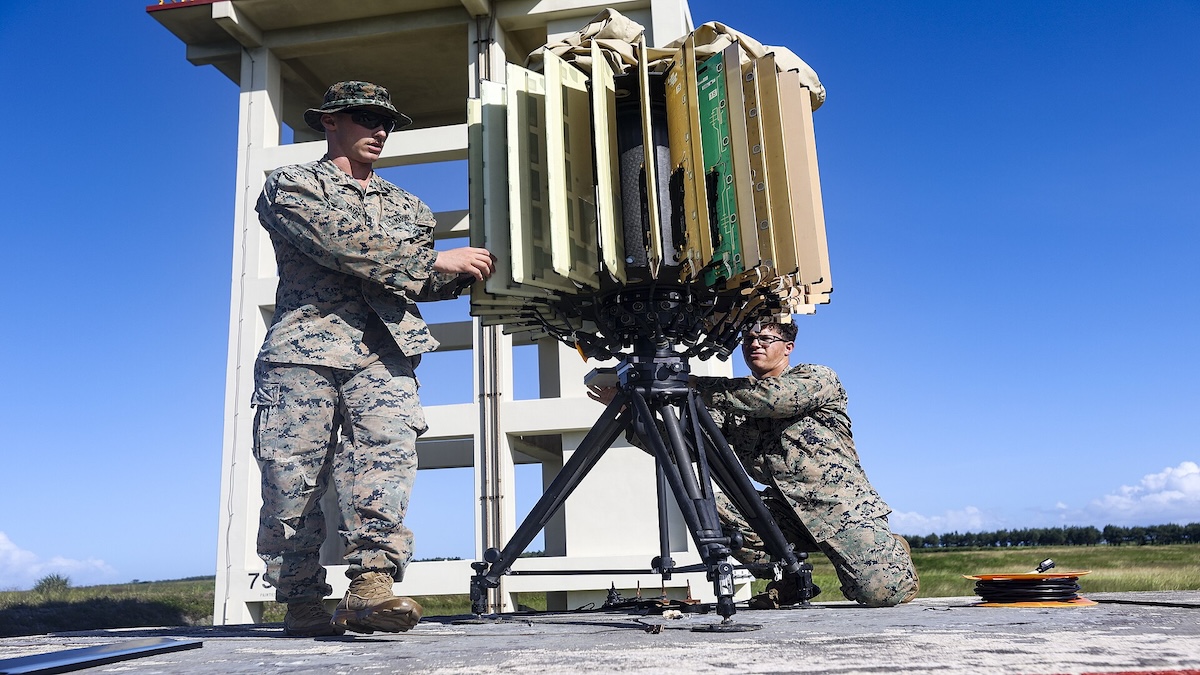
The economic stakes are immense. A 2025 study by the National Telecommunications and Information Administration (NTIA) estimated that reallocating just 500 MHz of underutilized mid-band spectrum could generate $100 billion in annual economic growth through increased productivity, job creation, and innovation—equivalent to adding a mid-sized state’s GDP to the national economy. Yet, as of early 2026, the Pentagon continues to resist sharing proposals, citing concerns about potential interference with critical systems like the AN/TPY-2 radar used in missile defense.
However, technological advances have rendered these concerns increasingly obsolete. Dynamic Spectrum Sharing (DSS) and Spectrum Access Systems (SAS)—technologies already deployed in CBRS (Citizens Broadband Radio Service) bands—allow commercial and government users to coexist on the same frequencies with millisecond-level coordination. In testbeds at NIST facilities in Boulder, Colorado, engineers have demonstrated that military radar operations experience zero degradation when commercial 5G nodes operate under coordinated SAS protocols, even during peak usage.
The human impact is felt most acutely in regions pursuing tech-led economic revitalization. In Syracuse, Recent York, where state officials have invested $500 million in a semiconductor hub targeting job creation in advanced manufacturing, local leaders report that spectrum shortages are forcing companies to either delay expansion or invest in costly workarounds like private LTE networks. Similarly, in Chattanooga, Tennessee—often cited as a model for municipal broadband success—the city’s EPB fiber network faces constraints in extending wireless backhaul for its smart grid initiatives due to limited access to mid-band frequencies.
When we talk about bridging the digital divide, we’re not just talking about fiber to the home. We’re talking about the wireless layers that make smart cities function—traffic management, environmental monitoring, public safety. If the military won’t share spectrum it’s not using, it’s holding back the very communities it swore to protect.
— Marcus Johnson, Director of Broadband Strategy, Tennessee Advanced Energy Business Council
The path forward requires neither naivety nor confrontation, but a structured transition. Proposals circulating within the Federal Communications Commission suggest a tiered approach: identifying specific bands where military usage is intermittent (such as certain weather radar bands), implementing SAS pilots modeled on the successful CBRS framework, and establishing clear interference resolution mechanisms overseen by an independent body. Crucially, any reallocation must include provisions for incumbent protection—ensuring that if military needs genuinely increase, they retain priority access through established protocols.
This is where specialized expertise becomes indispensable. Municipalities navigating these complex federal negotiations benefit from consulting telecommunications policy specialists who understand both the technical nuances of spectrum sharing and the political landscape of Washington. Simultaneously, companies seeking to deploy private 5G networks in industrial parks or logistics hubs require guidance from wireless engineering firms experienced in SAS integration and interference modeling—services that are increasingly in demand as edge computing and Industry 4.0 initiatives accelerate nationwide.
The irony is palpable: an institution built to defend national security is, through inflexible spectrum policy, inadvertently undermining the economic resilience that underpins long-term security. True strength in the modern era lies not in hoarding resources, but in optimizing their use—ensuring that the same airwaves that carry defense signals similarly power the innovation, connectivity, and economic vitality that make a nation formidable. For communities and businesses navigating this shifting landscape, the World Today News Directory remains an essential resource for identifying verified experts capable of turning spectrum policy from a bottleneck into a competitive advantage.