
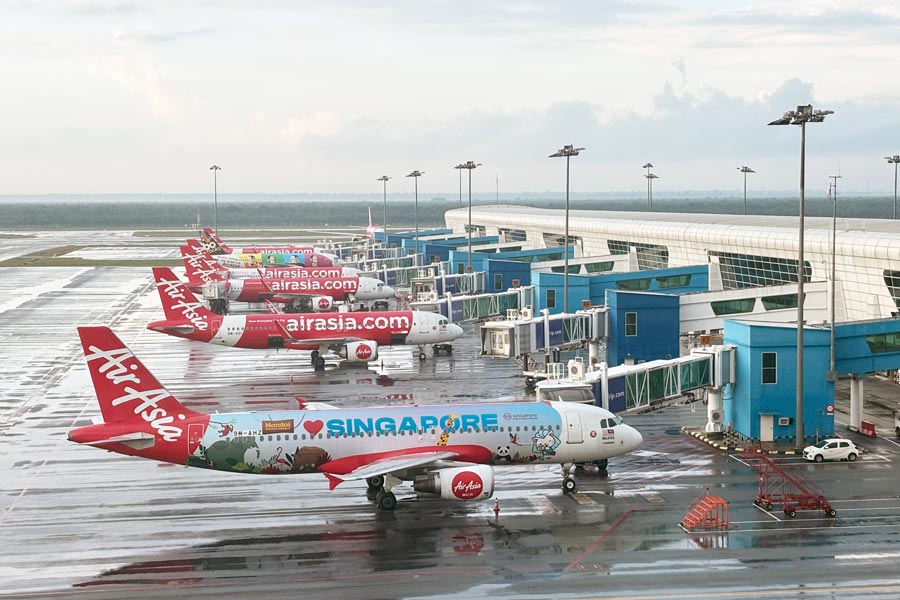
AirAsia Launches “Give Peace a Chance” Flight Discounts
AirAsia Group has launched the “Give Peace a Chance” discount campaign across its Southeast Asian network to stimulate regional tourism and promote cross-border harmony. By slashing airfares, the airline aims to lower travel barriers and revitalize economic activity in key hubs throughout Malaysia, Thailand, and Indonesia.
Cheap flights are a wonderful incentive, but they create a secondary pressure point: the sudden surge of “revenge travel” often outpaces the capacity of local infrastructure. When thousands of budget-conscious travelers descend upon a mid-sized city simultaneously, the strain on local hospitality, transit, and sanitation services becomes an immediate operational crisis.
This isn’t just about a sale; it’s about the volatility of tourism-dependent economies.
The Geopolitical Calculus of Low-Cost Aviation
AirAsia’s strategy leverages the “Low-Cost Carrier” (LCC) model to do more than just move people—it’s an exercise in soft power. By branding the campaign around “peace,” the group is aligning its corporate identity with regional stability. In Southeast Asia, where diplomatic tensions can flare over maritime borders or trade disputes, the act of facilitating mass human movement serves as a stabilizing force. When people travel, they consume, and when they consume, they create interdependence.
Historically, the Association of Southeast Asian Nations (ASEAN) has pushed for a “Single Aviation Market,” aiming to make the region as integrated as the European Union’s airspace. AirAsia is effectively acting as the private-sector engine for this political goal. However, this rapid expansion often bypasses the gradual scaling of municipal resources.
“The challenge for regional hubs is no longer just attracting visitors, but managing the ‘peak load’ of arrivals. We see a dangerous gap between the volume of passengers arriving via budget carriers and the available sustainable infrastructure to support them without degrading the local quality of life.”
This quote comes from Dr. Aris Munandar, a regional urban planning consultant based in Jakarta, who notes that the “Give Peace a Chance” initiative, while economically beneficial, risks overwhelming the “last-mile” connectivity in secondary cities.
The Infrastructure Gap: From Airport to Hotel
The problem manifests the moment a traveler steps off the plane. While the flight is discounted, the cost of ground logistics remains rigid. In cities like Phuket or Kuala Lumpur, an influx of budget travelers leads to immediate spikes in ride-sharing prices and hotel occupancy. This creates a “tourist bubble” where local residents are priced out of their own services.
For the traveler, the “peace” of a cheap ticket is often replaced by the stress of navigating unregulated transport or substandard lodging. This is where the ability to find vetted, professional services becomes critical. Travelers and expatriates are increasingly relying on professional concierge and relocation services to navigate the logistical minefield of rapidly growing Asian hubs.
Consider the economic ripple effect. A 30% increase in arrivals doesn’t just assist the airline; it puts immense pressure on local hospitality law firms and compliance officers who must ensure that the sudden surge of short-term rentals (like Airbnb) doesn’t violate municipal zoning laws or tax codes.
Comparing the Impact: Budget vs. Premium Travel
| Metric | Budget Campaign Impact (LCC) | Premium Travel Impact |
|---|---|---|
| Volume | High volume, short duration stay | Low volume, long duration stay |
| Economic Leakage | High (spending often stays in corporate chains) | Low (higher spend on local luxury/boutique) |
| Infrastructure Strain | Severe (concentrated on public transit/low-cost hubs) | Minimal (private transport/high-end hotels) |
| Environmental Load | High carbon footprint per capita/stay ratio | Moderate (fewer flights, higher spend per trip) |
Navigating the Legal and Regulatory Maze
As AirAsia pushes for more open borders, the legalities of “Visa-Free” travel and digital nomadism turn into central. Many travelers taking advantage of these discounts are not just vacationing; they are “slow-traveling” or working remotely. This creates a legal gray area regarding labor laws and residency permits.
In Thailand, for example, the government has fluctuated between strict enforcement of tourist visas and the introduction of the Long-Term Resident (LTR) visa to attract high-wealth individuals. The “Give Peace a Chance” campaign brings in the opposite demographic—the budget traveler. This creates a friction point for local authorities who must balance the need for tourism revenue with the need to prevent illegal employment.
For those attempting to establish a legitimate business presence while taking advantage of these regional shifts, the complexity is daunting. Navigating the bureaucracy of Southeast Asian trade requires more than a cheap ticket; it requires the guidance of international corporate attorneys who specialize in cross-border compliance and regional trade agreements.
The risk of “over-tourism” is not just a social nuisance; it is a legal liability. When hotels overbook or transport systems fail, the resulting disputes often land in local courts, where foreign travelers have little recourse without professional representation.
The Long-Term Outlook: Sustainability vs. Scale
The enduring question is whether the LCC model can ever be truly sustainable. The aviation industry is under immense pressure to reach “Net Zero” by 2050, as outlined by the International Air Transport Association (IATA). Massive discount campaigns, while great for the bottom line and regional diplomacy, fundamentally increase the number of flights in the air, complicating carbon offset goals.
the reliance on “discounted peace” is a fragile strategy. If a regional conflict erupts or a new health crisis emerges, these low-margin models are the first to collapse. We saw this during the 2020-2022 period, where the sudden cessation of travel left thousands of employees and dependent local vendors in financial ruin.
To mitigate this, regional governments are now investing in “Smart City” initiatives to better manage tourist flows. This involves integrating AI-driven traffic management and digital health passports to ensure that a “sale” doesn’t turn into a “system failure.”
a cheap flight is merely a doorway. The real challenge lies in what happens after you walk through it. Whether you are a traveler seeking a getaway or an entrepreneur looking to expand into the ASEAN market, the volatility of the region requires a strategy backed by verified expertise. As the gap between travel volume and infrastructure capacity widens, the only way to ensure a seamless experience is to connect with the right professionals. The World Today News Directory remains the definitive resource for locating the legal, financial, and logistical experts capable of turning a budget trip into a successful regional venture.