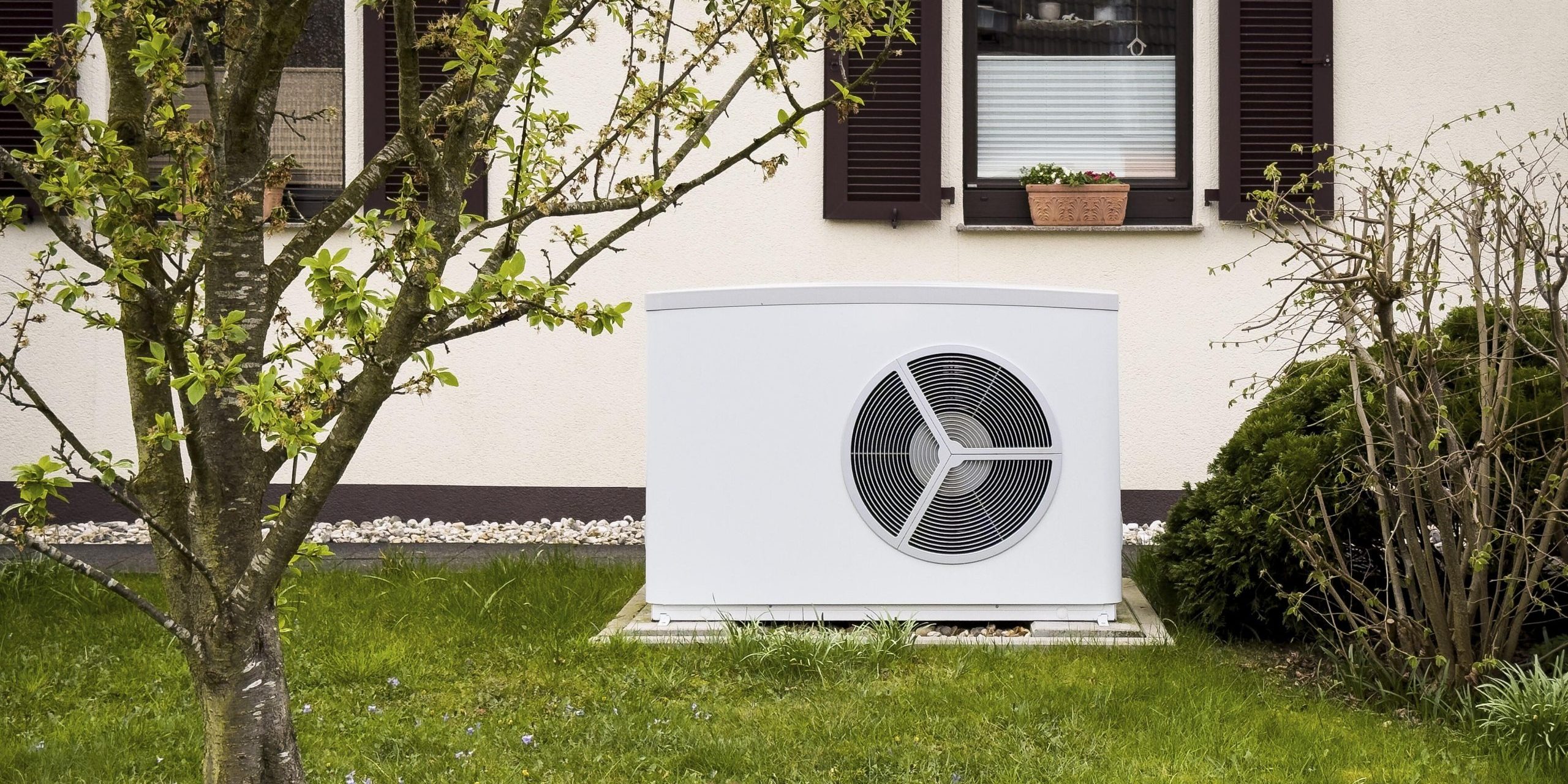
Air-to-Water Heat Pumps: New Noise Level Regulations for Funding from 2026
Starting in 2026, German government subsidies for air-to-water heat pumps will be strictly tied to acoustic performance metrics, according to reports from ingenieur.de. New regulatory frameworks mandate that devices must meet lower decibel thresholds to qualify for financial incentives, forcing manufacturers to optimize compressor harmonics and fan blade geometry to prevent urban noise pollution.
- Subsidy Lock: Funding eligibility now depends on verified sound power levels (LwA) rather than just energy efficiency.
- Hardware Pivot: Shift toward variable-speed inverters and advanced acoustic dampening to meet 2026 deadlines.
- Compliance Risk: Improperly sited units failing noise audits may lose funding or face forced decommissioning.
The core problem is a classic physics bottleneck: the trade-off between heat exchange efficiency and acoustic output. As homeowners shift from gas boilers to air-source heat pumps (ASHPs), the “hum” of the outdoor unit has become a primary point of friction in high-density residential areas. According to ingenieur.de, the 2026 pivot treats noise not as a nuisance, but as a technical specification that determines the financial viability of the installation.
For the CTOs and system integrators managing large-scale residential retrofits, this isn’t just about a quieter fan. It’s about the integration of the unit into the broader building automation system. Poorly calibrated units can create resonance frequencies that propagate through the building’s structural slab, leading to “structure-borne noise.” To mitigate this, firms are deploying specialized [Acoustic Engineering Consultants] to perform site-specific vibration analysis before installation.
Why Acoustic Benchmarks Now Dictate ROI
The shift toward noise-linked subsidies reflects a broader trend in European urban planning. When a heat pump operates at peak capacity during a cold snap, the compressor’s RPM increases, often pushing the sound pressure level (SPL) beyond local zoning ordinances. By tying subsidies to these metrics, the government is effectively forcing a hardware refresh across the industry.
From an engineering perspective, this requires a move away from simple on/off cycling toward sophisticated inverter technology. According to technical documentation often cited in IEEE acoustics whitepapers, modulating the compressor frequency allows the system to maintain a steady state, avoiding the high-decibel “kick-in” associated with traditional compressors. This is similar to how modern NPU (Neural Processing Unit) clock speeds are managed to prevent thermal throttling; the goal is a consistent, low-impact output rather than erratic bursts of power.
Current industry benchmarks for “quiet” units often target a sound pressure level of 45-50 dB(A) at a distance of 5 meters. For those managing fleet deployments, verifying these levels requires calibrated Class 1 sound level meters and adherence to ISO 3744 standards. If a unit fails this audit, the installation may be deemed non-compliant, triggering a clawback of government funds.
The Hardware Spec Breakdown: Noise Mitigation
To meet the 2026 requirements, manufacturers are iterating on the physical architecture of the outdoor unit. The focus has shifted to the fluid dynamics of the fan and the isolation of the compressor.

| Component | Legacy Approach | 2026 Compliance Approach | Acoustic Impact |
|---|---|---|---|
| Compressor | Fixed-speed / Direct Mount | Inverter-driven / Spring-isolated | Reduces low-frequency drone |
| Fan Blades | Standard Symmetric | Serrated/Bio-mimetic edges | Cuts aeroacoustic turbulence |
| Casing | Galvanized Steel | Composite with Dampening Liners | Eliminates panel resonance |
| Control Logic | Binary State (On/Off) | Predictive PID Loops | Smooths RPM transitions |
The implementation of these changes often involves a software layer that manages the “acoustic profile” of the machine. For developers integrating these units into smart-home APIs, the focus is on creating “Quiet Modes” that can be triggered via external sensors or time-of-day schedules. This is essentially a load-balancing problem: reducing the heat pump’s output during night hours to maintain compliance, while relying on the home’s thermal mass to bridge the gap.
For those attempting to automate noise monitoring or integrate heat pump telemetry into a centralized dashboard, a basic cURL request to a modern heat pump’s REST API (assuming a local gateway) might look like this to check current operating frequency and noise state:
curl -X GET "http://192.168.1.50/api/v1/system/status"
     -H "Authorization: Bearer YOUR_API_TOKEN"
     -H "Content-Type: application/json"
# Expected Response: {"compressor_hz": 35, "fan_speed": "low", "noise_mode": "silent", "current_db": 42}
Solving the Deployment Bottleneck
The transition to quieter units creates a new bottleneck: the “installation gap.” Many existing heat pump mounts are not designed for the heavier, dampened chassis of 2026-compliant models. Furthermore, the requirement for precise placement to avoid “echo chambers” in narrow alleys means that standard installation templates are no longer sufficient.
Enterprises and developers are now bringing in [HVAC System Integrators] to ensure that the physical deployment doesn’t negate the hardware’s acoustic engineering. A unit that is 5dB quieter on paper can still be a nuisance if it’s bolted directly to a resonant exterior wall. This is where the “triage” happens—moving from a simple hardware swap to a full-stack acoustic audit of the building envelope.
This evolution mirrors the trajectory of data center cooling. Just as hyperscalers moved from loud, high-RPM fans to liquid cooling and optimized airflow to reduce noise and energy waste, residential heating is moving toward a “silent-by-design” architecture. The 2026 deadline is the catalyst that turns a “nice-to-have” feature into a financial necessity.
As we look toward the end of the decade, expect to see the integration of active noise cancellation (ANC) directly into the heat pump chassis—using out-of-phase sound waves to neutralize compressor hum in real-time. For now, the industry is stuck in the “passive” phase: better rubber, better blades, and smarter code. Those who fail to optimize their hardware stack before the 2026 window closes will find themselves locked out of the most lucrative subsidy pools in the EU.
Disclaimer: The technical analyses and security protocols detailed in this article are for informational purposes only. Always consult with certified IT and cybersecurity professionals before altering enterprise networks or handling sensitive data.