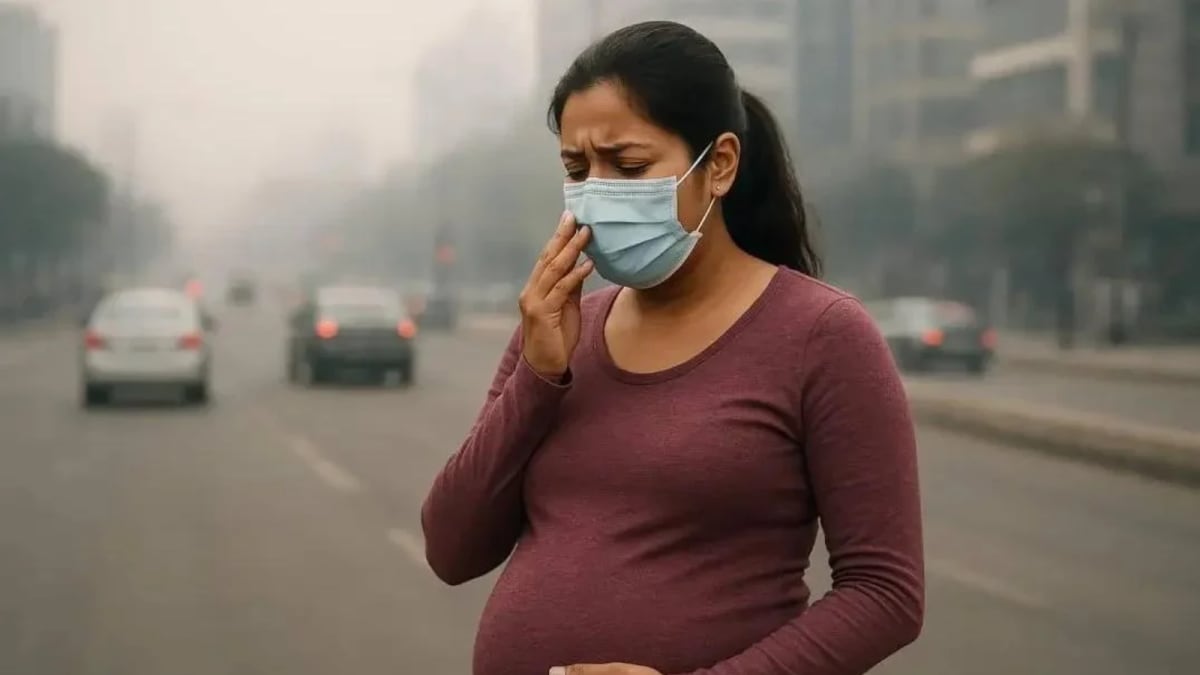
Air Pollution Linked to Lower Ovarian Reserve, IVF Risks; Experts Urge Caution Over Direct Cause
Prolonged exposure to fine particulate matter such as PM2.5 and PM10 is associated with lower anti-Müllerian hormone levels, a marker of ovarian reserve, though experts say the evidence shows a possible association rather than a direct cause of infertility, News18 reported.
What does research say about air pollution and fertility?
Studies in the United States and Italy have linked long-term exposure to PM2.5 and PM10 with reduced AMH levels, according to Dr Ruchi Shrivastava, Director of Obstetrics & Gynaecology and Advanced Gynaecological Laparoscopic Surgery at ShardaCare–Healthcity.
“AMH is one of the markers doctors use to understand a woman’s ovarian reserve. Research has suggested that prolonged exposure to air pollutants may be associated with lower AMH levels. However, it is important to understand that a lower AMH level does not mean a woman cannot conceive. It is an indicator of ovarian reserve and needs to be interpreted alongside other clinical findings,” she said.
Other research suggests women in high-pollution areas may take longer to conceive and face a higher likelihood of infertility, with women in their late 30s potentially more vulnerable.
How does pollution affect IVF outcomes?
Studies from China examining women undergoing in-vitro fertilisation have reported associations between higher pollution levels around egg retrieval or embryo transfer and lower implantation and live-birth rates, though findings vary.
“Researchers are also examining whether exposure to air pollution can influence IVF outcomes, implantation and pregnancy maintenance. Some studies have reported concerning associations, but the findings are not consistent enough to establish pollution as a direct cause of unsuccessful fertility treatment,” Dr Shrivastava said.
Air pollution has also been associated with increased risks of miscarriage, preterm birth, and low birth weight.
What biological mechanisms are involved?
Fine particulate matter can enter the bloodstream carrying substances such as polycyclic aromatic hydrocarbons and heavy metals, which may trigger inflammation and oxidative stress.
“Exposure to certain air pollutants can trigger inflammation and oxidative stress within the body. These processes may potentially affect egg quality, ovarian function and the uterine lining, although the precise mechanisms are still being investigated,” Dr Shrivastava said.
Certain pollutants may also act as endocrine disruptors, interfering with hormones that regulate ovulation and the menstrual cycle, and may complicate conditions such as PCOS.
Should women trying to conceive be worried?
Dr Shrivastava said the risks should not be overestimated. Most studies are observational, making it difficult to separate pollution effects from factors such as income, diet, stress, occupation, and smoking. The effects are generally modest and more apparent at a population level.
“Women should not panic because of a few days of poor air quality. A single high-AQI day or a few weeks of exposure during winter will not determine whether someone can conceive. Fertility is influenced by several factors, and air pollution is only one of them,” she said.
Age is the biggest factor affecting female fertility, along with ovulation disorders, endometriosis, blocked fallopian tubes, thyroid conditions, and male-factor infertility.
What precautions can reduce exposure?
Dr Shrivastava recommends monitoring the daily Air Quality Index and moving outdoor exercise indoors when pollution is high. She advises wearing a well-fitted N95 mask on high-pollution days, noting cloth and surgical masks offer considerably less protection against fine particulate matter.
Using a properly sized HEPA air purifier in the bedroom or main living area can reduce indoor particulate pollution, with windows kept closed during severe episodes. Avoiding smoking and secondhand smoke, ensuring good kitchen ventilation, and limiting burning of incense and candles also help.
“Reducing exposure wherever possible is a sensible precaution, particularly for women planning a pregnancy. However, these measures should complement, rather than replace, regular preconception consultations and appropriate medical care,” Dr Shrivastava said.
When should a fertility specialist be consulted?
Women who have been trying to conceive for 12 months without success should consider consulting a gynaecologist or fertility specialist. For women aged 35 and above, evaluation after six months is generally recommended.
Earlier consultation is advised for women with irregular menstrual cycles, known PCOS or endometriosis, or a history of recurrent pregnancy loss. A fertility evaluation includes assessment of ovulation, hormone levels, thyroid function, the uterus and fallopian tubes, and a semen analysis for the male partner.
“Fertility evaluation should always consider both partners. If a couple is experiencing difficulty conceiving, it is important to investigate the possible underlying causes rather than attributing the problem to air pollution alone,” Dr Shrivastava said.