
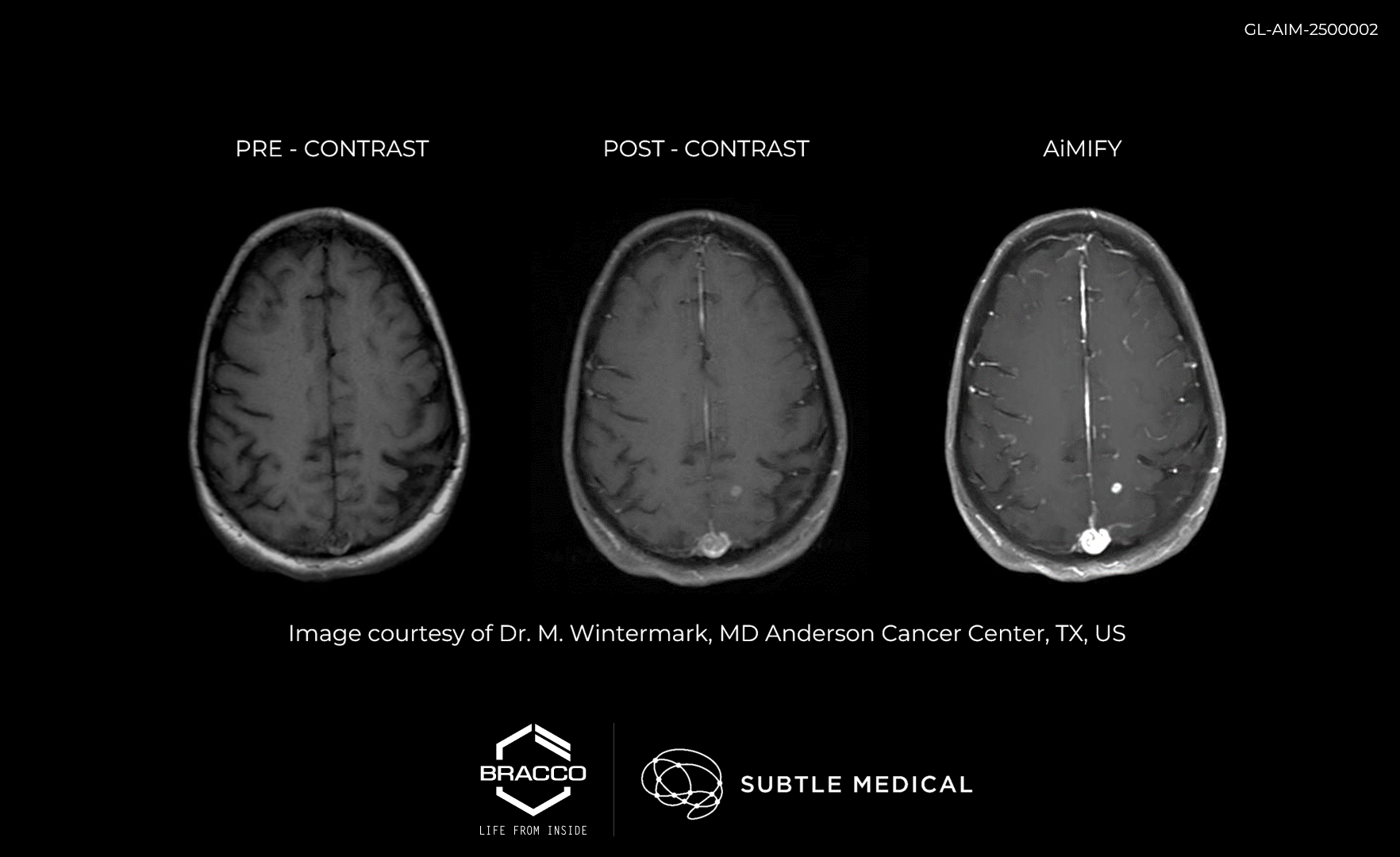
AiMIFY™ AI-Powered MRI Software Receives CE Mark for Enhanced Brain imaging
technology improves diagnostic precision.">
Milan – Bracco Imaging S.p.A., a global leader in diagnostic imaging, and Subtle Medical, Inc., an innovator in artificial intelligence (AI) for medical imaging, announced that AiMIFY™, their jointly developed AI-powered software for brain magnetic resonance imaging (MRI), has secured the CE Mark under the European Medical Device Regulation (MDR). This approval confirms AiMIFY™ meets EU standards for safety and performance.
AiMIFY™: Revolutionizing Brain MRI with AI
AiMIFY™ utilizes advanced AI to significantly enhance the contrast in brain MRI scans,potentially doubling the enhancement achieved with standard doses of gadolinium-based contrast agents (GBCAs). This improvement provides radiologists with clearer images,notably beneficial for detecting small and subtle lesions crucial for early diagnosis and assessment of various conditions. The software has demonstrated consistent effectiveness across diverse patient groups, pathologies, lesion sizes, scanner types, and MRI sequences.
Did You Know? The global MRI market is projected to reach $7.8 billion by 2029, driven by technological advancements and increasing demand for diagnostic imaging [1].
Partnership and Future Availability
Sascha Daeuber,Radiology Platform Leader at Bracco Imaging,expressed pride in extending their partnership with Subtle Medical into the European market. Ajit Shankaranarayanan, PhD, Chief Product Officer at Subtle Medical, highlighted AiMIFY™ as a new frontier in AI-powered imaging, offering enhanced clarity and confidence in brain MRI reads without altering standard contrast imaging practices.
Bracco and Subtle Medical are now preparing for the commercial launch of AiMIFY™ in key European markets, with a phased rollout expected between late 2025 and early 2026.
key Benefits of AiMIFY™
- enhanced contrast in brain MRI scans
- Improved visualization of small lesions
- Potential for earlier and more accurate diagnoses
- Consistent efficacy across diverse patient groups
Pro Tip: Radiologists can leverage AI-powered tools like AiMIFY™ to improve diagnostic accuracy and efficiency,ultimately benefiting patient care.
AiMIFY™ Development Timeline
| Milestone | Date |
|---|---|
| FDA Clearance | Previous Year |
| CE Mark Approval | June 2025 |
| Commercial rollout (Europe) | Late 2025 – Early 2026 |
Webinar Spotlight
Applied Radiology will feature AiMIFY™ in a webinar on June 17, offering expert insights from Bracco and Subtle Medical. The session will be recorded and available on demand.
the Growing Role of AI in Medical Imaging
Artificial intelligence is rapidly transforming medical imaging, offering tools to enhance image quality, improve diagnostic accuracy, and streamline workflows. AI algorithms can analyse complex medical images with speed and precision, assisting radiologists in detecting subtle anomalies and making informed decisions. The integration of AI in medical imaging is expected to continue expanding, leading to advancements in early disease detection, personalized treatment planning, and improved patient outcomes. The core essence of AI lies in its ability to mimic human behavior based on parameters and context [3].
Frequently Asked Questions About AI in MRI
- How can AI improve MRI image quality?
- AI algorithms can reduce noise,enhance contrast,and correct artifacts in MRI images,leading to clearer and more detailed visualizations.
- What are the limitations of AI in medical imaging?
- AI algorithms require large datasets for training and may be susceptible to biases present in the data. They also lack the contextual understanding and clinical judgment of human radiologists.
- Will AI replace radiologists?
- It is unlikely that AI will completely replace radiologists. Rather,AI is expected to augment their capabilities,assisting with image analysis and decision-making,allowing radiologists to focus on more complex cases.
Disclaimer: This article provides information about AiMIFY™ and AI in medical imaging for informational purposes only and does not constitute medical advice. Consult with a qualified healthcare professional for any health concerns or before making any decisions related to yoru health or treatment.
What are your thoughts on the use of AI in medical imaging? How do you think it will impact patient care in the future?
Share this article and join the conversation!
