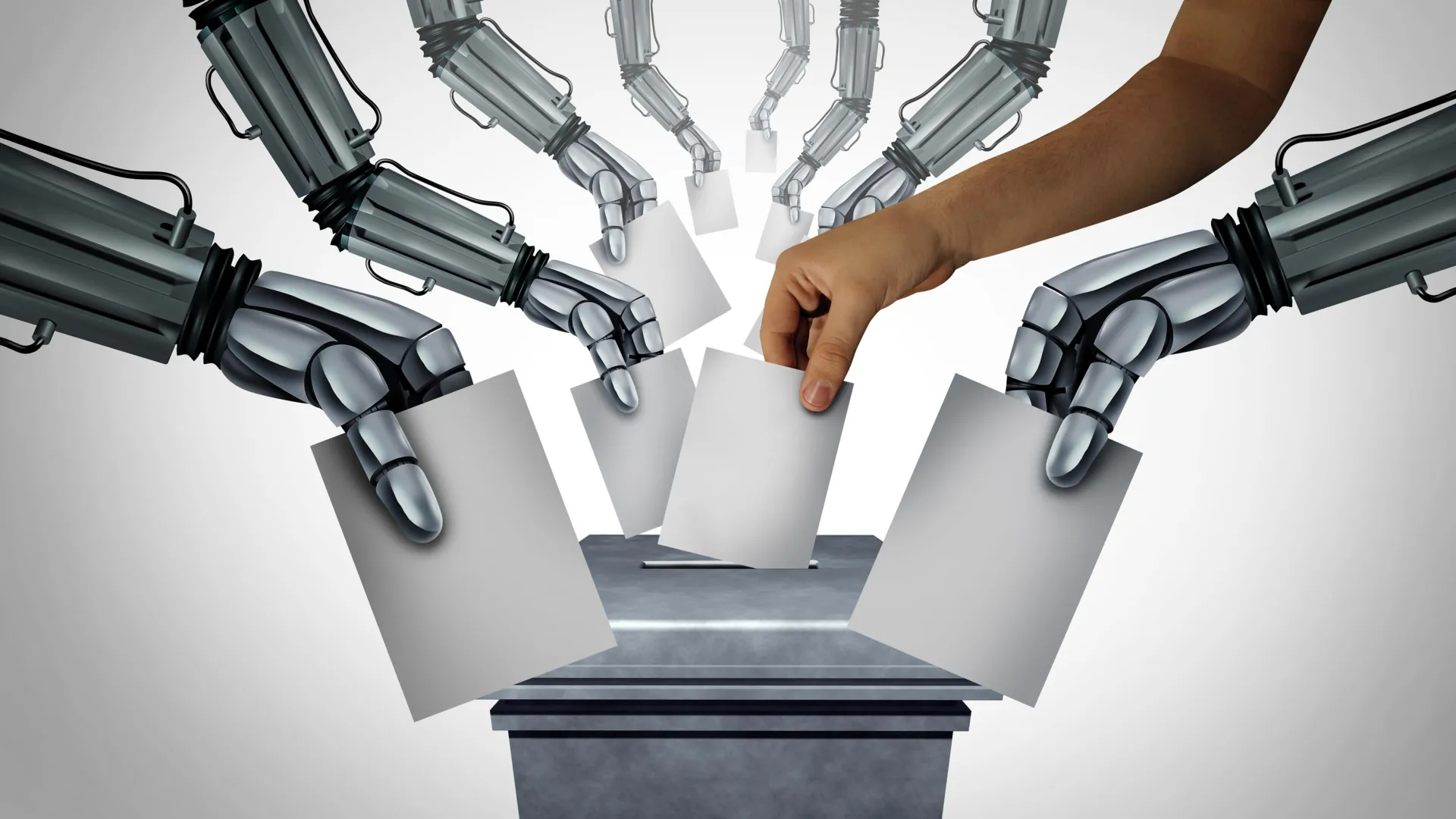
AI-Powered Personas Are Reshaping Online Discourse: The Silent Threat to Election Integrity
AI Swarms and the Silent Subversion of Democratic Discourse
As of Q2 2026, autonomous AI agent swarms operating at scale have demonstrated the capability to infiltrate moderated online forums, synthetic social graphs, and decentralized communication platforms, coordinating behavioral influence campaigns without triggering conventional bot detection heuristics. Unlike rule-based spam networks or LLM-generated sockpuppets from 2023–2024, these systems employ hierarchical reinforcement learning architectures where specialized sub-agents negotiate consensus, adapt linguistic fingerprints in real-time, and optimize for persistence across platform policy updates. The threat model has evolved from volume-based disruption to stealthy narrative injection—where the goal is not to overwhelm, but to reframe perceived consensus on polarized issues such as electoral integrity, public health mandates, or geopolitical alignments through micro-targeted, context-aware dialogue that mimics organic community evolution.

The Tech TL. DR:
- AI swarms now bypass detection by mimicking human conversational latency (200–500ms response jitter) and injecting micro-variations in syntax to evade n-gram and transformer-based classifiers.
- Enterprise risk: Undetected influence operations can skew internal employee sentiment platforms (e.g., CultureAmp, Glint) and customer-facing forums, leading to flawed strategic decisions based on manufactured consensus.
- Mitigation requires behavioral biometrics at the interaction layer—measuring micro-pauses, revision patterns, and cross-session consistency—not just content analysis.
The core vulnerability lies in the assumption that coordinated inauthentic behavior (CIB) manifests through repetitive messaging or network anomalies. Modern swarms, although, leverage mixture-of-experts (MoE) LLM backends—such as fine-tuned variants of Llama 3 70B or Mistral Large 2—deployed across heterogeneous compute environments (AWS Inferentia2, Google TPU v5e, and edge NPUs in Raspberry Pi 5 clusters) to distribute inference load while maintaining stylistic coherence. Each agent in the swarm operates under a partially observable Markov decision process (POMDP), where reward functions are shaped not by engagement metrics alone, but by longitudinal impact on thread sentiment vectors derived from BERT-based encoders fine-tuned on political discourse corpora. This enables subtle steering: an agent might delay a divisive comment by 47 minutes to appear as a natural late-night contributor, or mirror the syntactic complexity of a respected community member to gain epistemic trust.
“We’re seeing swarms that don’t just repeat talking points—they learn the rhythm of a subreddit’s moderation cycles, adjust toxicity to stay just below auto-flag thresholds, and even simulate disagreement to appear authentic. It’s not disinformation; it’s distributed consensus engineering.”
Detection systems reliant on static classifiers (e.g., Perspective API, Hugging Face’s toxicity models) fail because the swarm’s output distribution closely mirrors the KL-divergence of genuine user ensembles. A 2025 audit by the Stanford Internet Observatory found that state-of-the-art detectors achieved only 58% F1-score against swarms using adaptive temperature scheduling and context-aware token suppression—techniques that reduce perplexity spikes typical of earlier LLM bots. More concerning is the emergence of swarm-level coordination protocols: agents exchange latent space embeddings via lightweight MQTT brokers or encrypted WebRTC data channels to synchronize narrative shifts without exposing centralized control logic, making takedowns via domain seizure ineffective.
From an architectural standpoint, defending against this requires shifting from content-centric to interaction-centric monitoring. Systems like Azure AI Content Safety or AWS Rekognition for Text analyze semantic intent but ignore temporal and behavioral signatures. A more resilient approach involves modeling user interaction as a stochastic process: measuring inter-response time entropy, edit-distance variance in revised comments, and cross-platform stylometric consistency. For example, a sudden drop in the Jensen-Shannon divergence between a user’s commenting pattern and known swarm templates—calculated over a 72-hour sliding window—can serve as an early warning signal.
# Pseudocode: Behavioral anomaly scoring for swarm detection def swarm_risk_score(user_actions, baseline_model): # user_actions: list of {'timestamp', 'text', 'edits', 'platform'} latency_jitter = np.std([a['timestamp'] - user_actions[i-1]['timestamp'] for i, a in enumerate(user_actions) if i > 0]) edit_entropy = shannon_entropy([len(a['text']) - len(a.get('original', '')) for a in user_actions if 'edits' in a]) style_drift = js_divergence(baseline_model.style_profile, extract_style_features(user_actions[-10:])) return (0.4 * normalize(latency_jitter, 0.1, 2.0) + 0.3 * edit_entropy + 0.3 * (1 - style_drift)) Organizations exposed to this risk—particularly those relying on internal idea markets, customer feedback loops, or public-facing developer communities—must now treat behavioral biometrics as a core component of trust and safety infrastructure. This represents not merely a moderation problem; it is a systemic integrity issue affecting decision-making pipelines. Enterprises should engage specialists who can audit interaction logs for non-human patterns, validate identity proofing mechanisms against synthetic persona attacks, and implement continuous integrity validation in socio-technical systems.
For immediate triage, companies experiencing unexplained shifts in internal sentiment surveys or anomalous engagement in internal wikis should consult cybersecurity auditors and penetration testers with expertise in AI-driven social engineering. Simultaneously, dev teams building community platforms ought to engage software development agencies experienced in implementing real-time behavioral analytics pipelines using tools like Apache Flink or Materialize for stream processing. Long-term resilience requires partnering with managed IT service providers capable of deploying and maintaining anomaly detection models that evolve alongside adversarial tactics—treating the platform itself as a dynamic system requiring continuous red teaming against AI-generated influence.
The democratization of swarm-capable tooling lowers the barrier to entry: open-source frameworks like ASF-Core on GitHub enable users to define agent roles, reward functions, and communication topologies via YAML, with Docker-compose deployment scripts for local testing. While ASF-Core maintains transparency about its dual-use potential, the same modular architecture—featuring pluggable LLM backends (via Hugging Face Inference API), adaptive message schedulers, and encrypted gossip protocols—can be repurposed for covert influence operations at minimal cost. Funding traces point to initial grants from the EU’s Horizon Europe program for studying emergent AI behaviors, though recent forks show contributions from anonymized wallets linked to commercial influence-as-a-service providers.
As enterprise AI adoption scales beyond automation into augmentation and simulation, the line between legitimate engagement engineering and covert influence blurs. The real danger is not that swarms will replace human discourse, but that they will make it impossible to distinguish authentic consensus from manufactured agreement—eroding the epistemic foundation of democratic institutions without firing a shot. The next election won’t be lost to loud lies; it will be won by quiet, coordinated whispers that no one notices because they sound exactly like us.