
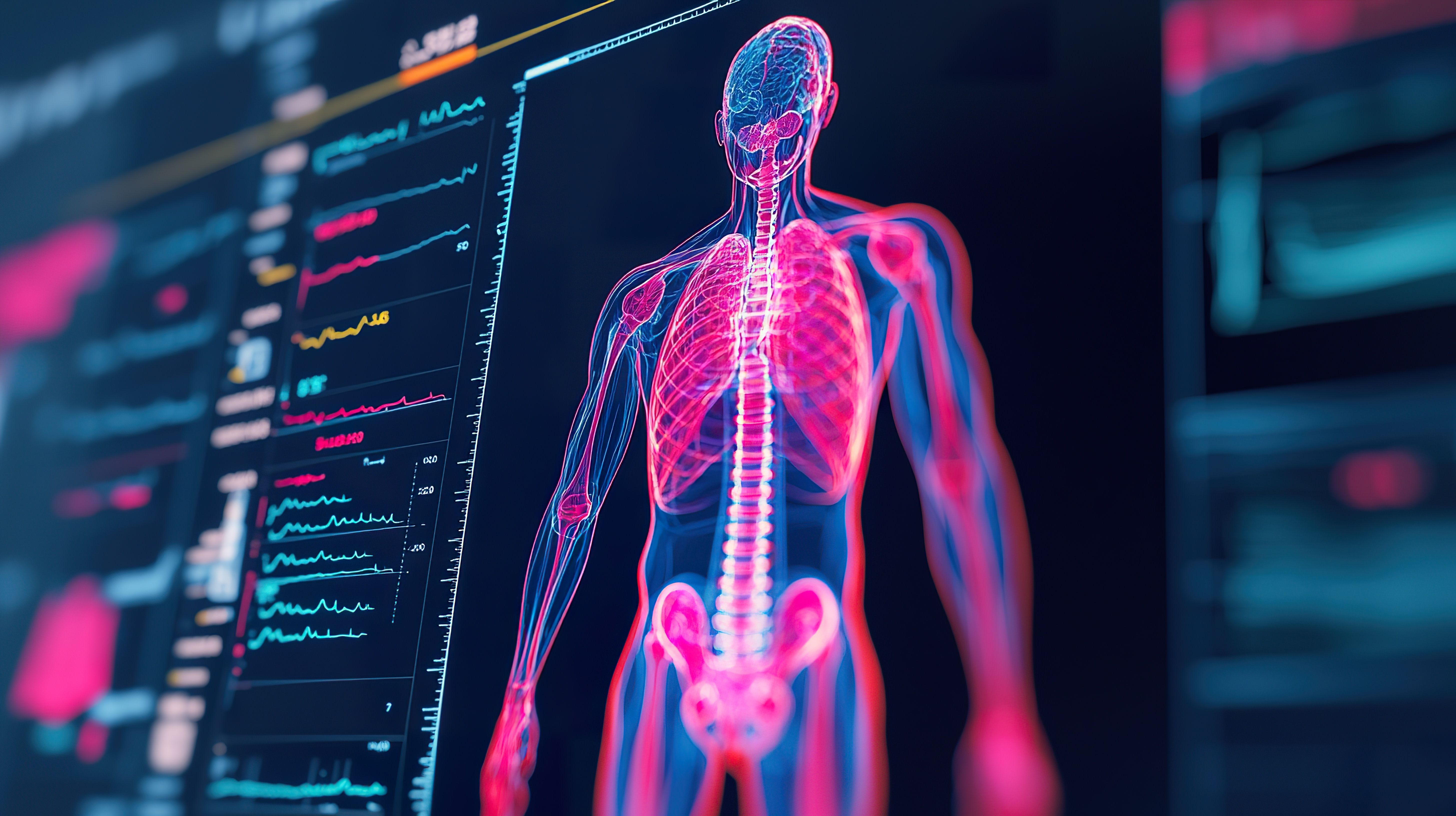
Advances in precision oncology increasingly emphasize teh importance of understanding tumor metabolism, especially in aggressive cancers such as glioblastoma. Brain tumors are known for their metabolic adaptability, enabling them to survive, resist therapy, and recur despite aggressive treatment. Historically,clinicians and researchers have faced meaningful barriers to directly measuring metabolic activity within human tumors,especially in real time.This has been overcome by an innovative approach used in the latest research study at the University of Michigan (UM),wich uses the digital twin technique based on artificial intelligence.1-3
The study, published in Cell Metabolism, describes the first success in using the power of machine learning-based “digital twins” to noninvasively measure metabolic flux in actual patients’ tumors. This breakthrough has the potential to open the door to personalized metabolic therapies by predicting the treatment success rate for each patient and avoiding treatment failures.2
The Challenge of Measuring Tumor Metabolism in Real Time
metabolism in tumors can change dynamically in accordance with environmental and pressure-related factors. Yet most current metabolic analyses rely on static tissue samples collected during surgery.This approach fails to grasp the dynamic nature of metabolism in the tumor.
“typically, metabolic measurements during surgeries to remove tumors can’t provide a clear picture of tumor metabolism—surgeons can’t observe how metabolism varies with time, and labs are limited to studying tissues after surgery. By integrating limited patient data into a model based on fundamental biology, chemistry, and physics, we overcame these obstacles,” said Deepak Nagrath, UM professor of biomedical engineering and co-corresponding author of the study.1
This has posed a challenge for personalizing any metabolic treatment, whether related to diet or metabolic inhibitors. This implies that, because metabolic flux cannot be measured, any treatment given to patients is generalized.
Digital Twin Technology Meets Oncology
To address this challenge, the research team applied digital twin technology, a concept borrowed from engineering and manufacturing in which virtual replicas simulate real-world systems. In medicine, a digital twin integrates patient-specific data into computational models to predict biological behavior under different conditions.4 Digital twins aren’t simply data collection tools; they are dynamic simulations that evolve with the patient’s condition, offering a continuously updated depiction of their unique biology.
To achieve digital twins of brain tumors,the research team used the subject’s intraoperative patient data to generate digital twins using models developed in biochemistry and physics. Machine learning models were applied to simulate metabolic fluxes and infer metabolism.2 This process involves complex algorithms that analyze data points like glucose uptake, lactate production, and amino acid metabolism to create a comprehensive metabolic profile of the tumor.
“This is the first time a machine learning and AI-based approach has been used to measure metabolic flux directly in patient tumors,” said Baharan Meghdadi,a doctoral student in chemical engineering and co-first author of the study.1 This represents a significant leap forward, moving beyond traditional, static analyses to a dynamic, patient-specific understanding of tumor metabolism.
The approach allows researchers to test how tumors might respond to different metabolic therapies virtually,before exposing patients to potentially ineffective or toxic treatments. This in silico testing phase is crucial, as it minimizes risk and maximizes the potential for successful treatment outcomes.
Predicting Therapeutic Response and Resistance
The most promising implication of this technology lies in it’s ability to predict therapeutic resistance. Many tumors intrinsically acquire resistance to metabolic therapies, rendering treatments ineffective and exposing patients to unnecessary side effects. Understanding these resistance mechanisms is paramount to developing more effective treatment strategies.
“These results are exciting. The ability to measure metabolic activity in patient tumors could allow us to predict which metabolic therapies might work best for each patient,” said daniel Wahl, the Achtenberg Family Professor of Radiation Oncology and a co-corresponding author of the study.1 this predictive capability is a cornerstone of personalized medicine, allowing clinicians to tailor treatment plans to the individual characteristics of each patient’s tumor.
Similarly, Wajd N. Al-Holou, assistant professor of neurosurgery and co-first author, emphasized the potential clinical impact of this predictive capability. “This amazing tool could help doctors avoid prescribing treatments that a specific tumor is already equipped to resist and is a way for us to move towards more targeted and personalized treatments for our patients,” Al-Holou said.1 By identifying potential resistance mechanisms upfront, clinicians can proactively adjust treatment strategies, improving the likelihood of a positive outcome.
Implications for Diet-Based and Metabolic Therapies
The study has considerable implications for new metabolic therapies, such as dietary therapies aimed at depriving tumor cells of a certain nutrient. Experimental work has shown that a new diet could affect tumor metabolism, but results for patients have been variable.3 This variability highlights the need for a more personalized approach to dietary interventions.
The simulation of the metabolic response using the digital twin could, in principle, help clinicians identify patients who would most benefit from dietary and/or metabolic management. This aligns with the broader efforts to integrate nutrition,metabolism,and oncology into more comprehensive management plans. For example, a digital twin could predict whether a ketogenic diet – a high-fat, low-carbohydrate diet – would be effective in slowing tumor growth for a specific patient, based on their unique metabolic profile.
“This work moves us closer to truly personalized cancer care—not just for brain cancer, but eventually for a variety of tumors. By simulating different therapies virtually, we hope to spare patients from unnecessary treatments and focus on those likely to help,” said Costas Lyssiotis, the Maizel Research Professor of Oncology and co-corresponding author of the study.1 The potential to extend this technology beyond brain cancer opens up exciting possibilities for treating a wide range of malignancies.
What Does This Mean for Pharmacists?
For pharmacists, especially those working in cancer and outpatient settings, the use of digital twins may play an increasingly vital role in treatment decision-making and medication management. As metabolic therapies and other treatments become more personalized, pharmacists will play an important role in interpreting metabolic details and counseling patients.
Pharmacists may also help detect medication-nutrient interactions, manage the adverse effects of metabolic therapy, and communicate the logic and rationale of the treatment regimen to patients. As AI-driven tools such as digital twins move closer to clinical adoption,pharmacists’ expertise in pharmacokinetics,metabolism,and patient-centered care will become increasingly valuable.Their understanding of drug interactions and metabolic pathways will be crucial in optimizing treatment plans generated by digital twin simulations.
Although this technology remains in the research phase,its implications are far-reaching. By enabling direct measurement of tumor metabolism without invasive sampling,AI-powered digital twins could redefine how clinicians approach cancer treatment. As validation studies continue and clinical integration advances, this approach may extend beyond brain cancer to other metabolically driven malignancies.
For now,the study represents a significant step toward precision oncology—one that leverages artificial intelligence not just to analyze data,but to meaningfully guide individualized patient care.
Key Takeaways
- Personalized Treatment: Digital twins offer the potential to tailor cancer treatments to the unique metabolic profile of each patient’s tumor.
- Non-Invasive Monitoring: This technology allows for the assessment of tumor metabolism without the need for invasive biopsies.
- Predictive Capabilities: Digital twins can predict treatment response and identify potential resistance mechanisms, optimizing therapeutic strategies.
- Expanding Applications: While initially focused on brain cancer, the technology has the potential to be applied to a wide range of malignancies.
- Pharmacist’s Evolving Role: Pharmacists will play a crucial role in interpreting metabolic data and counseling patients on personalized treatment plans.
REFERENCES
Brain cancer digital twin predicts treatment outcomes. EurekAlert!. Published January 12,2026. Accessed January 13, 2026.
https://www.eurekalert.org/news-releases/1112339 Meghdadi B, Mittal A, Nagrath D, et al. digital twins for in vivo metabolic flux estimations in patients with brain cancer. zenodo (CERN European Association for Nuclear Research). Published January 6, 2026. Accessed January 13, 2026. doi:10.5281/zenodo.17373726
Sen A.Dietary changes could provide a therapeutic avenue for brain cancer. Michigan Medicine. Published September 3, 2025.Accessed January 13, 2026.
https://www.michiganmedicine.org/health-lab/dietary-changes-could-provide-therapeutic-avenue-brain-cancer What is digital-twin technology? McKinsey & Company. Published August 26, 2024. Accessed January 13, 2026.
https://www.mckinsey.com/featured-insights/mckinsey-explainers/what-is-digital-twin-technology
