
AI Insiders Vulnerable to Honey-Trap Espionage, Experts Warn
Artificial intelligence industry insiders face rising vulnerability to sophisticated honey-trap schemes as geopolitical tech competition intensifies.
The Tech TL;DR:
- AI industry workers at all levels face targeted social engineering efforts, moving beyond traditional executive threats.
- Attackers routinely use artificial intelligence tools to scale fake backstories, digital personas, and audio communications.
- Security specialists recommend implementing strict personal and professional boundaries alongside routine behavioral audits.
Following the fallout involving Nvidia Chief Executive Officer Jensen Huang and allegations concerning Alice Huang, security analysts point out that Silicon Valley has yet to adapt its internal defense posture to modern espionage tactics. “Nobody briefs founders on counterintelligence,” Aaron Brown told TechCrunch. Brown serves as a former senior CIA officer and current founder of the software firm Lumbra.
Historically, intelligence services deployed honey traps primarily against military personnel, diplomats, and political figures who maintained active security clearances. Today, however, critical intellectual property sits inside commercial chip designers, foundation model developers, and cloud infrastructure providers.
“A spy wants what the CEO can touch,” Brown told TechCrunch. “The roadmap, the export decisions, the customer list, who gets the technology. The CEO is the shortest path to all of it.”
Huang faced accusations of falling for a honey trap through an affair with Alice Huang, a former executive of a Singapore neocloud accused of acting as a foreign intelligence operative and smuggling restricted Nvidia hardware into China, TechCrunch reported.
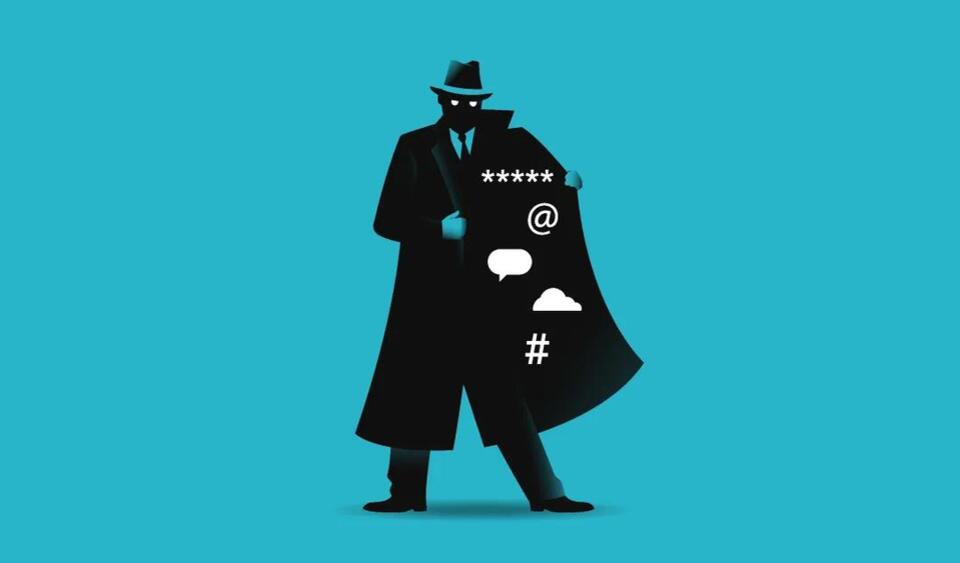
Expanding Threats Across Enterprise Teams
While internet humor focused on which executive might face exposure next, operational risks extend far beyond the c-suite. The Wall Street Journal reported that OpenAI began warning its employees about outsiders attempting to cultivate personal relationships to extract proprietary corporate assets.
Vulnerabilities affect any personnel with access to sensitive internal codebases, strategic roadmaps, or customer databases. Attackers frequently bypass romantic approaches entirely, relying instead on friendship as a primary vector for infiltration. “They gain access to their targets as investors, customers, recruiters, and consultancies,” Brown said.
These actors craft requests that appear completely legitimate during initial interactions. “They need you to feel comfortable talking,” Brown told TechCrunch. “They last longer because nobody’s looking.”
Artificial Intelligence Lowers Operational Costs
Modern generative artificial intelligence tools allow threat actors to automate and scale social engineering campaigns with minimal overhead. Historically, crafting a credible long-term persona required months of manual research and coordination. Today, bad actors deploy automated pipelines to generate convincing social media profiles, employment histories, and synthetic voice calls.
“AI can help sustain an entire fictional backstory,” Perry Carpenter told TechCrunch. Carpenter serves as a criminologist and chief deception strategist at KnowBe4. “The technology helps set the stage, but the deception ultimately plays out through human relationships.”
This dynamic leaves technical organizations exposed. “The AI industry became a national security industry faster than its culture caught up,” Brown told TechCrunch.
Identifying Behavioral Indicators
Recognizing active manipulation attempts requires rigorous internal awareness and behavioral audits. Security teams advise monitoring for specific red flags during day-to-day interactions.

Warning signs include coincidental encounters occurring with unusual frequency, excessive inquiries regarding internal team dynamics, and requests for absolute confidentiality during meetings. “A simple gut check,” Brown said. “Would this person still be around if you lost your job tomorrow?”
Carpenter recommends establishing rigid boundaries between personal interactions and professional duties, alongside eliminating executive exceptionalism where standard corporate governance protocols do not apply to leadership figures. “One of the most dangerous security cultures is one where nobody feels comfortable questioning the CEO,” Carpenter told TechCrunch.
Founded on April 5, 1993, by Jensen Huang, Chris Malachowsky, and Curtis Priem, Nvidia began with $40,000 in capital sketched out at a Denny’s in East San Jose. The company survived a field of 70 graphics startups in the late 1990s — only Nvidia and ATI Technologies endured — and went public on January 22, 1999.
In 2025, it became the first company to surpass US$4 trillion and US$5 trillion in market capitalization, driven by demand for the AI data center hardware now at the center of espionage concerns.
Always consult with certified IT and cybersecurity professionals before altering enterprise networks or handling sensitive data.