
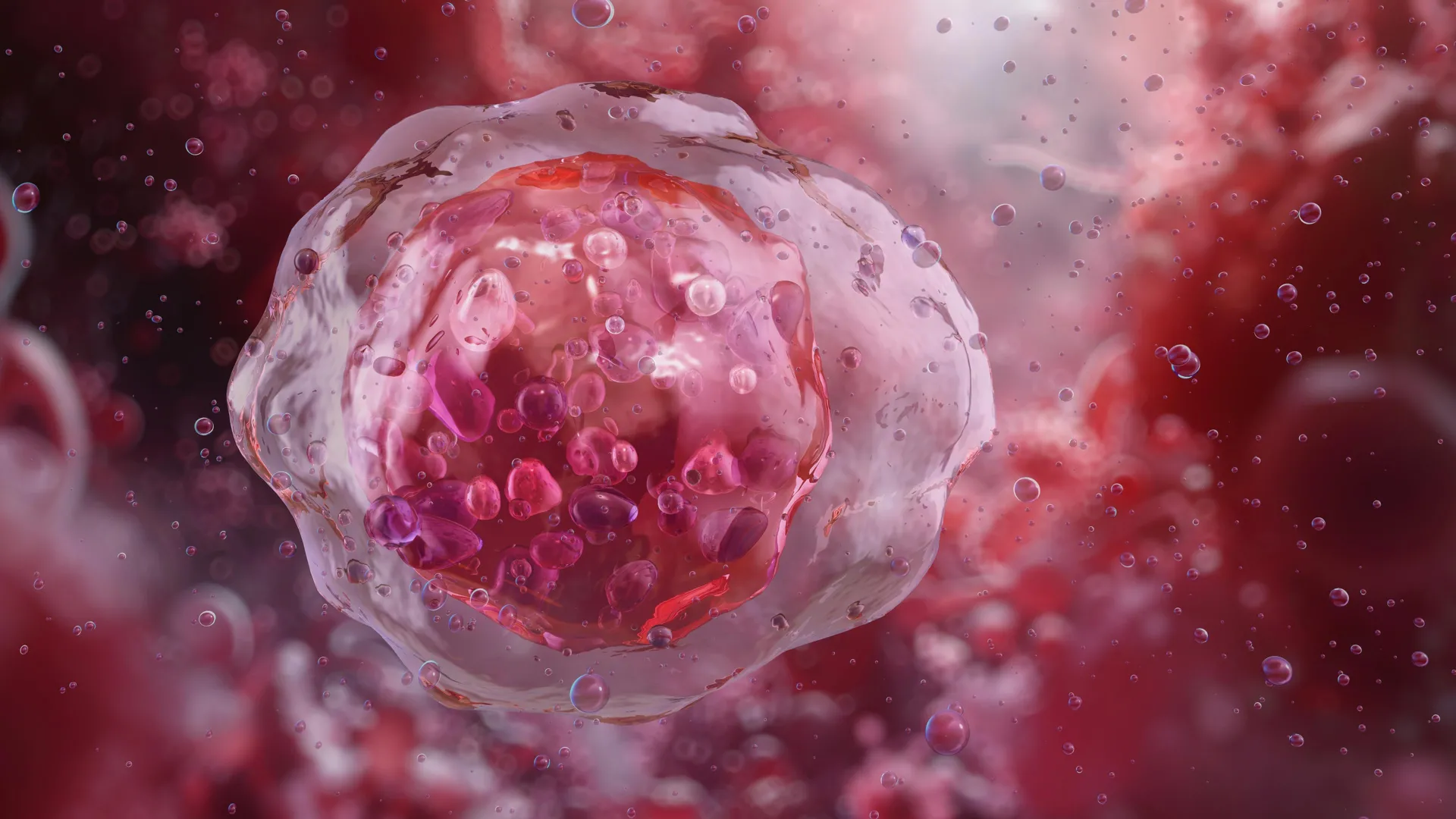
AI revolutionizes Blood Disease Diagnosis wiht Unprecedented Accuracy
Cambridge, UK – January 16, 2026 – A groundbreaking artificial intelligence system is poised to substantially improve the diagnosis of blood diseases, including leukemia, by analyzing the subtle characteristics of blood cells with greater precision than human specialists. Dubbed CytoDiffusion, this novel tool leverages the power of generative AI – the same technology powering image generation platforms like DALL-E – to identify abnormal cells and reduce diagnostic uncertainties.
The Challenge of Blood Smear Analysis
Diagnosing blood disorders often relies on the microscopic examination of blood smears, a process demanding extensive training and expertise. Hematologists meticulously assess the size, shape, and structure of blood cells, seeking minute variations that indicate disease. Though, this task is both time-consuming and susceptible to subjective interpretation, even among experienced professionals. A standard blood smear can contain thousands of cells, making extensive manual review impractical. As Dr. Suthesh Sivapalaratnam from Queen Mary University of London notes, “The clinical challenge I faced as a junior hematology doctor was that after a day of work, I would face a lot of blood films to analyze… I became convinced AI would do a better job than me.”
CytoDiffusion: A New approach to Cellular Analysis
Unlike many existing medical AI systems that focus on categorizing images based on pre-defined patterns, CytoDiffusion adopts a more nuanced approach. Developed by researchers at the University of Cambridge,University College London,and Queen Mary University of London,and published in Nature Machine Intelligence,CytoDiffusion studies the complete range of normal blood cell appearances,allowing it to reliably identify rare or unusual cells that may signal disease. This is achieved by modelling the entire spectrum of possible cell appearances rather than simply learning to classify cells into fixed categories.
Generative AI and the Power of Subtle Variation
The system’s effectiveness stems from its use of generative AI. This type of AI doesn’t just recognise; it *understands* the underlying structure of the data it’s analyzing. In the case of blood cells, this means CytoDiffusion isn’t simply looking for pre-defined “leukemia cell” shapes, but rather recognizing deviations from normal cellular morphology. This allows it to detect anomalies that a human might miss or dismiss as insignificant. Simon Deltadahl, the study’s first author from Cambridge’s Department of Applied Mathematics and Theoretical Physics, explains, “Our model can automate that process, triage the routine cases, and highlight anything unusual for human review.”
An Unprecedented Training Dataset
The growth of CytoDiffusion was fueled by an exceptionally large and diverse dataset: over half a million blood smear images collected from Addenbrooke’s Hospital in Cambridge. This dataset includes not only common blood cell types but also rare examples and features that typically challenge automated systems. The sheer size and complexity of this dataset allowed the AI to learn the subtle nuances of blood cell morphology with remarkable accuracy. What’s more, the researchers are making this dataset publicly available, hoping to “empower researchers worldwide to build and test new AI models, democratize access to high-quality medical data, and ultimately contribute to better patient care,” according to Deltadahl.
Performance and the ‘Turing Test’ for Hematology
Testing revealed CytoDiffusion’s superior performance in identifying abnormal cells associated with leukemia, surpassing the sensitivity of existing systems. Remarkably,the system also performed as well as,or even better than,leading models while requiring significantly less training data. But perhaps the most striking demonstration of its capabilities came in a “Turing test” involving ten experienced hematologists. The specialists were unable to distinguish between real blood cell images and those synthetically generated by CytoDiffusion – a testament to the AI’s ability to realistically replicate cellular structures.
“That really surprised me,” Deltadahl confessed. “These are people who stare at blood cells all day, and even they couldn’t tell.”
Beyond Accuracy: The Value of Uncertainty
Beyond its accuracy, cytodiffusion possesses a critical advantage: “metacognitive awareness.” It can quantify its confidence in its own predictions and,crucially,recognize when it is uncertain. As Deltadahl points out, “Our model would never say it was certain and then be wrong, but that is something that humans sometimes do.” This ability to express uncertainty is a vital asset in medical diagnostics, prompting clinicians to seek further examination when needed. Professor Michael Roberts from Cambridge highlights that the system’s evaluation against real-world challenges – including unseen images and variations in image capture – reflects a comprehensive assessment of its performance.
The Future of Blood Disease Diagnosis: AI as a Collaborative Tool
The researchers are clear that CytoDiffusion is not intended to replace hematologists. Instead, it’s designed to be a powerful assistive tool, accelerating workflows, flagging potentially concerning cases, and providing a second opinion. “The true value of healthcare AI lies not in approximating human expertise at lower cost, but in enabling greater diagnostic, prognostic, and prescriptive power than either experts or simple statistical models can achieve,” argues Professor Parashkev Nachev from UCL.
While further research is needed to enhance the system’s speed and validate its performance across diverse populations, cytodiffusion represents a critically important leap forward in the application of AI to medical diagnostics. this technology promises to enhance the accuracy and efficiency of blood disease diagnosis, ultimately leading to better patient outcomes. The open-source release of the training dataset will further accelerate innovation in this critical field.
Frequently Asked Questions (FAQ)
- How does CytoDiffusion differ from other medical AI systems? CytoDiffusion utilizes generative AI to model the *entire range* of normal blood cell appearances, enabling it to identify subtle anomalies that might be missed by systems trained to recognize pre-defined categories.
- will this AI replace hematologists? No.The system is designed to assist clinicians, not replace them. It will automate routine tasks and flag potentially concerning cases for further review.
- What is the meaning of the publicly available dataset? The dataset allows researchers worldwide to develop and test new AI models, fostering innovation and improving blood disease diagnostics globally.
- How was the AI’s accuracy validated? The system was evaluated against real-world challenges, including unseen images and variations in image quality, and performed a ‘Turing Test’ were experts could not differentiate between real and AI-generated images.
