AI Data Centers: Energy Challenges, Liquid Cooling, and Orbital Infrastructure
Global data center electricity consumption will surge from 485 terawatt-hours in 2025 to approximately 950 terawatt-hours by 2030, driven by intense artificial intelligence workloads that require concentrated computing power, according to International Energy Agency projections.
Grid Constraints and Infrastructure Siting Pressures
Producing electricity is no longer the sole hurdle for expanding digital infrastructure. Facilities must secure continuous high-load power, dependable grid access, and advanced thermal management without overtaxing local water supplies. According to Spain DC, the Spanish data center association, the availability of electrical power within strict timeframes, alongside land and connectivity, dictates where new facilities can be built. This limitation is pushing developers toward regions featuring high power capacity and ample acreage.
Grid transmission capacity remains a significant bottleneck. Javier de la Cruz, cloud and edge lead at Capgemini, notes that the primary limit centers on securing adequate network capacity, reliable connections, and power supply at the precise time and location required. Water usage for cooling imposes strict limitations in drought-prone areas.
Official regulatory data highlights the scale of pending connection requests. A draft royal decree submitted for public consultation by the Miteco in August records more than six gigawatts of access approvals granted in the transport grid since December 2023, alongside another six gigawatts in the distribution network since 2020. These figures represent access permits rather than actual power consumption.
Optimizing Power Distribution Inside the Facility
As server racks transition from tens of kilowatts to hundreds of kilowatts, and occasionally exceed one megawatt, traditional electrical architectures become inefficient. Victor Gago, commercial manager for data centers, cloud providers, and services at Schneider Electric Iberia, explains that legacy setups demand more copper, generate higher energy losses, and consume valuable floor space. Adopting 800-volt direct current systems moves power conversion and distribution out of the server rack, freeing space for computational hardware and preparing buildings for artificial intelligence factories.


Power generation should remain separate from data center operations, according to Isidro Ramos, managing partner at Aeon Ingeniería. Specialized firms already exist to supply energy, while continuous large-scale users act as valuable assets for electrical grids and should draw power from the existing energy mix. Ramos emphasizes that prioritizing secure, affordable power is vital, questioning the rationale behind decommissioning nuclear plants if grid decarbonization remains the primary objective.
Network latency also allows flexibility in facility locations. Alfonso Medrano, green transition and sustainability strategy lead at NTT DATA, points out that batch workloads and model training offer more operational flexibility than real-time transactions. This flexibility allows operators to shift computing loads toward regions with abundant electricity. In 2024, NTT DATA linked two British data centers located 89 kilometers apart via an optical network, achieving a latency of less than one millisecond.
Exploring Orbital Data Centers and Advanced Hardware
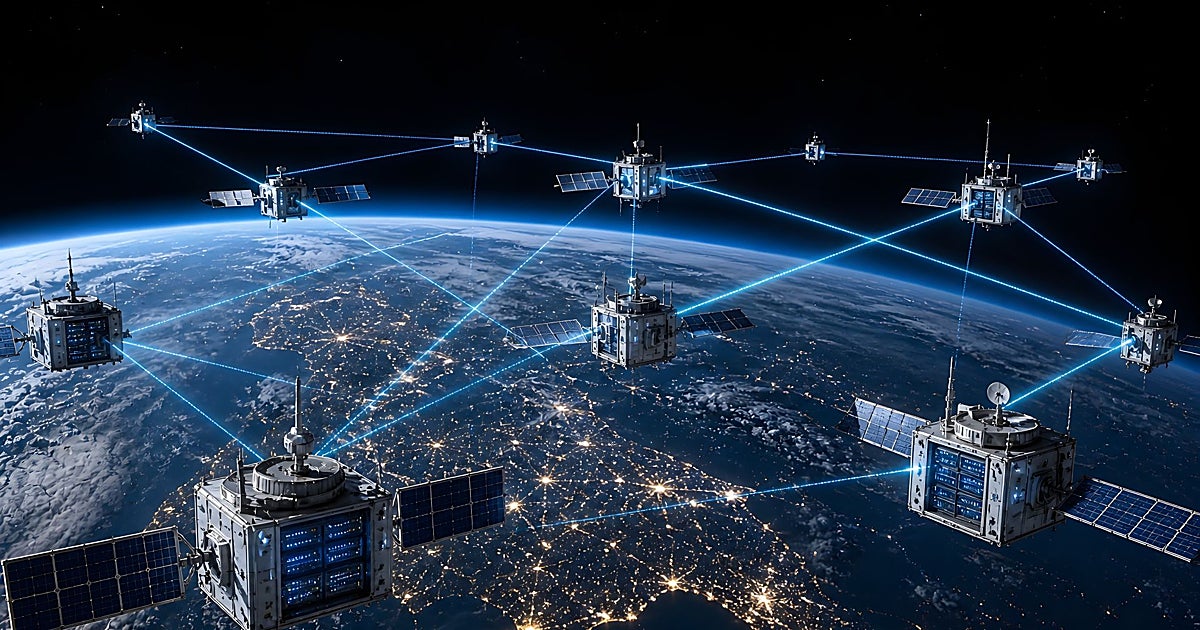
Beyond terrestrial adjustments, some industry figures look to space to bypass terrestrial grid limitations entirely. Elon Musk suggests moving infrastructure off-planet. Ricardo Abad, CEO of Quark, a Sener group company, acknowledges that space offers abundant, near-continuous solar energy without competing with terrestrial power grids or depending on land, water, or ground-based infrastructure. However, Abad views orbital facilities strictly as a complement for specialized workloads rather than replacements for ground infrastructure.
Orbital deployment faces severe technical obstacles, specifically thermal dissipation and launch costs. Because the vacuum of space lacks convection, heat must be eliminated via large thermal radiators, compounded by challenges involving radiation, system redundancy, maintenance, and communications. Abad anticipates proof-of-concept demonstrators arriving by 2030, with specialized commercial applications emerging between 2030 and 2035. Viable orbital data centers at scale will likely remain impractical past 2035 unless launch costs drop substantially and thermal management is resolved.
At the semiconductor level, architectural improvements offer another pathway to reduce energy consumption. Eduard Puig, CEO and founder of Ideaded, notes that a single data center houses billions of transistors, meaning minor efficiency gains accumulate into massive savings. Puig identifies carbon nanotubes as a promising alternative to silicon, capable of operating at lower voltages while transporting electrical current and thermal energy more efficiently.