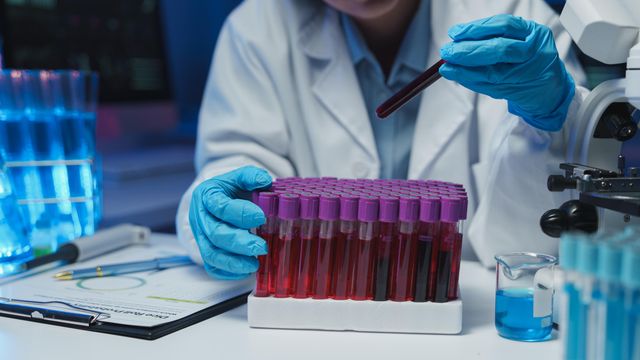
AI Combines Multiple DNA Clues to Improve Cancer Detection from Blood
Researchers have developed a new artificial intelligence framework capable of detecting multiple cancer types from a single blood draw by integrating diverse DNA-based signals. This approach, which improves upon previous liquid biopsy methods, identifies cancer-associated molecular changes with higher sensitivity by analyzing fragmented DNA patterns across the genome, according to recent findings in Nature Biomedical Engineering.
Key Clinical Takeaways:
- The AI model, known as DELFI (DNA Evaluation of Fragments for early Interception), analyzes cell-free DNA (cfDNA) fragmentation patterns to identify structural signatures of malignancy.
- By combining genomic, epigenomic, and fragmentomic data, the technology achieves higher diagnostic accuracy than single-modality blood tests.
- This diagnostic tool is currently undergoing clinical validation to determine its utility in population-level screening for asymptomatic individuals.
The Mechanics of Fragmentomic Detection
Traditional liquid biopsy approaches have largely relied on detecting specific mutations or DNA methylation patterns. However, these markers are often absent or present in low concentrations during the early stages of oncogenesis. The recent research, supported by funding from the National Institutes of Health (NIH) and various philanthropic research grants, shifts focus to the physical structure of cell-free DNA.
When cells undergo apoptosis, DNA is cleaved by enzymes into fragments. In healthy individuals, this process follows a predictable, non-random pattern. In cancer patients, the dysregulated gene expression and abnormal chromatin architecture lead to distinct, chaotic fragmentation profiles. The AI algorithm effectively acts as a pattern-recognition engine, mapping these deviations to specific tissue-of-origin signatures. According to researchers at Johns Hopkins University, this method allows for the identification of tumor-derived DNA even when mutational loads are below the limit of detection for standard next-generation sequencing assays.
Comparative Diagnostic Performance
The transition from single-signal detection to multi-omic integration represents a significant shift in the standard of care for early-stage oncology. While previous methods often suffered from high false-positive rates due to clonal hematopoiesis of indeterminate potential (CHIP)—where blood cells acquire mutations that mimic cancer—the integration of fragmentomic data provides a necessary layer of verification.
| Diagnostic Modality | Primary Biological Target | Clinical Sensitivity (Early Stage) |
|---|---|---|
| Mutation-based Liquid Biopsy | Single Nucleotide Variants (SNVs) | Moderate |
| Methylation-based Biopsy | CpG Island Hypermethylation | High (High Cost) |
| DELFI (Fragmentomics + AI) | Chromatin Architecture / Cleavage Patterns | High (Broad Spectrum) |
The clinical utility of this technology depends on its ability to distinguish between benign inflammatory conditions and malignant tumors. Patients currently undergoing surveillance for high-risk lesions or those with a strong family history of malignancy should consult with board-certified oncologists or medical geneticists to discuss the potential for enrolling in emerging diagnostic clinical trials. As these tests move closer to commercial deployment, ensuring that diagnostic pathways are managed through accredited molecular pathology laboratories will be essential for maintaining clinical data integrity.
Clinical Integration and Regulatory Hurdles
The integration of AI-driven diagnostics into routine clinical practice requires rigorous validation across diverse patient demographics. The current research highlights the necessity of large-scale, prospective, double-blind trials to establish standardized thresholds for clinical decision-making. Researchers emphasize that while the preliminary data is robust, the algorithm must account for non-malignant variables such as age, smoking status, and underlying autoimmune conditions.
For healthcare systems looking to implement these high-throughput diagnostic workflows, the primary challenge remains the standardization of sample processing. Variations in blood collection tubes, storage temperature, and transport time can alter cfDNA integrity, potentially introducing bias into the AI model. Clinical diagnostic centers and hospital systems are currently evaluating the logistical requirements for maintaining sample stability to ensure that the sensitivity reported in controlled studies is reproducible in real-world clinical settings.
Future Trajectory in Oncology
The trajectory of fragmentomic analysis suggests a future where cancer screening is integrated into the annual wellness exam. By lowering the threshold for detection, the medical community aims to shift the diagnosis of aggressive malignancies from symptomatic stages to treatable, localized stages. Continued investment in longitudinal studies will be required to determine whether this increased detection leads to a measurable decrease in morbidity and mortality across diverse populations.
As the field of multi-omic liquid biopsy matures, the collaboration between data scientists, oncologists, and regulatory bodies remains the cornerstone of patient safety. Clinicians are advised to monitor updates from the FDA regarding the clearance of multi-cancer early detection (MCED) platforms, as these developments will dictate the future landscape of patient screening and diagnostic triage.
Disclaimer: The information provided in this article is for educational and scientific communication purposes only and does not constitute medical advice. Always consult with a qualified healthcare provider regarding any medical condition, diagnosis, or treatment plan.
Keep reading
- Positive Experiences Trump Crises in Shaping Young People’s Lives
- Obesity Fuels Leukemia, but a Dual Therapy Including GLP-1s May Stop It
- Clams for Vitamin B12: Who Needs Them and When High Levels Signal Cancer (archyde.com)
- New Guidelines Issued for Alzheimer’s Disease Diagnosis and Detection (newsdirectory3.com)