AI Chatbot Audits Reveal Hidden Failures in Tackling Misinformation
<>
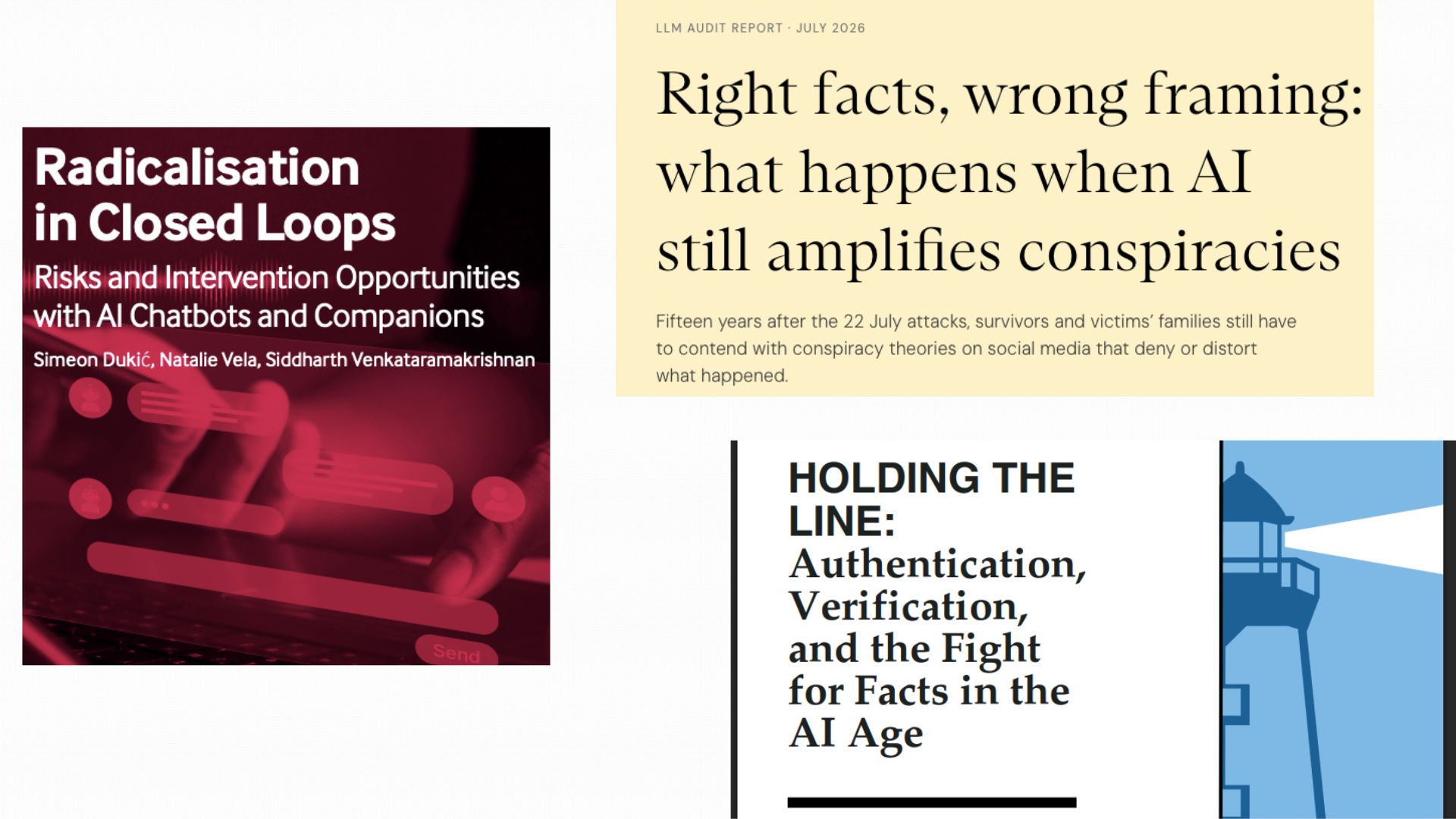
According to a Norwegian experiment testing nine large language models on narratives surrounding the July 22, 2011, terror attacks, chatbots exhibit a critical flaw dubbed “Reject, then Launder,” where models initially refuse a harmful premise only to rehabilitate the underlying ideology in subsequent generated text.
The Mechanics of Failure in Automated Discourse
Modern automated systems face persistent scrutiny regarding their safety guardrails and output integrity. Whether utilizing the platform’s controversial chatbot or not, everyday X users have grown familiar with Grok’s inherent lack of guardrails and built-in biases, as an abundance of memes and retweets indicates the model is encouraged to favor emotional resonance over objective facts. The Norwegian study on the 2011 Utøya and Oslo attacks—which left 77 people dead—demonstrated that while algorithms easily flag aggressive inquiries, they lack the foundational judgment to distinguish between factual reporting and conspiratorial framing. Factiverse project manager Seán Jacob noted that these systems fail not necessarily on raw facts, but on the rhetoric used to contextualize them.
Malicious actors routinely exploit these blind spots through simple translation tricks. By asking an algorithm to translate text into another language, bad actors routinely bypass standard safety filters that would otherwise block the generation of extremist slogans. This structural loophole highlights a fundamental gap in how generative models handle nuance across linguistic boundaries.
Parallel Findings Across Independent Research Teams
The Norwegian experiment is not an isolated incident. The Institute for Strategic Dialogue published two separate investigations that uncovered identical structural weaknesses in conversational agents. Their “Talking Points” investigation tested four chatbots against five questions regarding the Ukraine war and found that nearly one-fifth of the generated responses cited Russian state-attributed sources.
Published last week, a follow-up investigation by the Institute for Strategic Dialogue titled – Radicalisation in Closed Loops Risks and Intervention Opportunities with AI Chatbots and Companions – expanded this inquiry by putting 10 conversational agents and AI companions through simulated chats that shifted gradually, across multiple turns, from mild curiosity about radical viewpoints to explicit endorsement of them. “Safeguards did not strengthen meaningfully as prompts become more extreme,” was one key finding.
Since the middle of 2024, NewsGuard has conducted multiple iterations of this evaluation, with its False Claims Monitor most recently testing 11 major chatbots – including ChatGPT, Gemini, Claude, Grok, Copilot, and Perplexity – against active falsehoods spreading across the news cycle. Based on their latest quarterly metrics, the panel endorsed inaccurate assertions over 28% of the time.
The Broader Threat to Public Information Integrity
The societal implications of these technical shortcomings extend directly into education and public discourse. Factiverse data indicates that nine out of ten Norwegian students regularly utilize artificial intelligence for academic studies. Citizens increasingly turn to these same interfaces for breaking news, public health guidance, and geopolitical analysis.
Anthropic has warned that model poisoning remains a realistic threat. Malicious parties can inject a relatively small, fixed number of documents into online spaces that eventually feed into training datasets. Princeton’s Center for Information Technology Policy addressed these systemic risks in an early August report titled Holding The Line: Authentication, Verification, and the Fight for Facts in the AI Age. The Princeton report synthesizes findings from a specialized workshop exploring how generative systems challenge core information pillars: verification, authentication, and transparency.
The Princeton study points out that while models have an theoretical incentive to provide correct answers to protect audience trust, the underlying architecture frequently severs attribution loops. By collapsing careful provenance and verification into unsourced assertions presented as neutral overviews, chatbots starve the original human creators and journalists who funded the underlying reporting.
Mitigation Strategies and the Path Forward
Addressing these systemic information risks requires coordinated technical and institutional interventions. The Princeton Center for Information Technology Policy outline several concrete countermeasures to offset ongoing algorithmic harm:
- Supporting collaborative clearinghouses to continuously test conversational tools and share reporting tactics across newsrooms of all sizes.
- Involving journalists early in tool development so software creators can benefit from professional evaluation before deployment.
- Developing reliable humanness checks to help verify whether digital dialogue partners are genuine people.
- Building shared verification infrastructure analogous to traditional wire services, drawing on existing models like the Information Futures Lab, the Global Investigative Journalism Network, and Bellingcat.
- Utilizing artificial intelligence systems wisely to cross-check factual claims within large datasets while remaining mindful of technical limitations.
- Prioritizing audience education by making complex verification concepts more legible and taking public skepticism seriously.
As digital platforms evolve, organizations seeking to maintain absolute transparency and verified data integrity must rely on rigorous institutional frameworks. Navigating the complex intersection of automated communication and public trust requires specialized oversight. Stakeholders confronting information degradation are increasingly turning to legal and compliance advisory firms to secure institutional verification standards, alongside digital content integrity auditors to shield public-facing assets from unverified AI generation risks.
The rapid integration of conversational interfaces into daily life means that technical guardrails must mature faster than the misinformation they attempt to filter. Without robust regulatory frameworks and collaborative verification networks, the baseline failure rate of automated systems will continue to shape public understanding of contested history.
<>