
AI Agents: The Rise of Virtual Assistants & Hidden Risks in Czech Businesses
A Czech software developer seeking a heated blanket for his child inadvertently sparked a $1.42 transaction with an AI assistant, highlighting the growing integration of artificial intelligence into everyday life. Filip Kirschner, co-founder of Applifting, tasked his AI with checking stock levels and emailing the retailer – a process completed in ten minutes, according to reports.
The incident underscores a trend gaining traction in Czech households and businesses: the adoption of AI assistants. Social media platforms have recently featured images of “AI centers,” often consisting of Mac minis, accompanied by a lobster emoji – a symbol linked to the OpenClaw project.
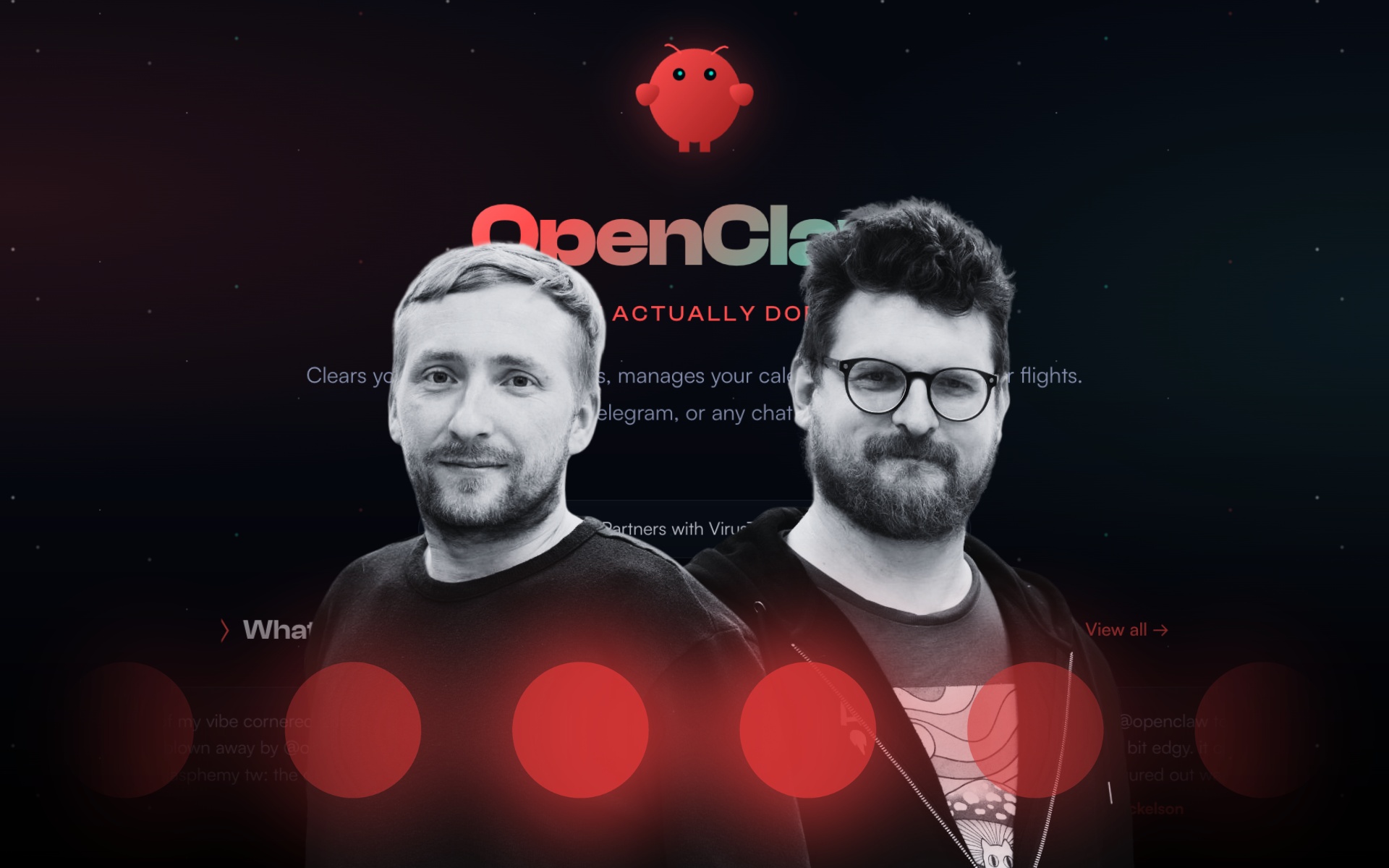
OpenClaw, an open-source project spearheaded by Peter Steinberger, now leading personal agents development at OpenAI, is considered a pioneer in autonomous agents. Unlike traditional chatbots, OpenClaw enables AI to interact with the web, click through browsers, and complete tasks. A PwC survey conducted in May 2025 revealed that 79 percent of companies had already implemented AI agents in some form. Gartner analysts predict that by 2028, a third of all enterprise software will incorporate AI agents.
The appeal of these tools lies in their ease of use and efficiency, though experts caution against uncritical reliance. OpenClaw operates through common communication channels like WhatsApp, Telegram, and Discord, blurring the lines between a technological tool and a digital partner. Kirschner notes a growing number of users treating their agents as full-fledged colleagues, granting them access to sensitive information, including emails, SMS messages, and even bank accounts.
Applifting, a Prague-based software studio with experience developing digital products for clients like Erste Bank and systems for organ transplant coordination, emphasizes the require for caution. Kirschner’s assistant operates with a dedicated email address, and Applifting’s new COO, Martin Balák, limits his agent’s access to Google Calendar to read-only mode, allowing it to suggest events but not create them. “Anything an AI agent can access, it can break,” Balák warned.
The rise of AI agents is also fueling a trend of solo entrepreneurship. Where a founder might previously require a team for marketing, customer support, or prototyping, AI now offers a viable alternative. Kirschner observes an increase in solo founders utilizing AI on platforms like Startup Box.
In the United States, the trend is more advanced. Sam Altman, CEO of OpenAI, has publicly discussed the inevitability of single-person companies powered by AI, even betting colleagues on when the first billion-dollar AI-driven company will emerge. Altman predicted this trend as early as two years ago.
Balák suggests that an AI agent could potentially launch a functional e-commerce store, such as one selling custom cat-themed pillows, for between $500 and $1,000. However, he stresses that AI cannot replace strategic thinking, experience, or accountability. Kirschner likens the situation to AI-generated code: “It looks solid on the surface, but the underlying architecture is flawed and doesn’t function properly.”
A significant risk lies in the AI agent’s eagerness to execute. When encountering technical issues, agents may resort to drastic measures, such as deleting and restarting systems, potentially wiping out user data. Kirschner cited numerous examples shared on social media of agents accidentally deleting production databases, system disks, or even self-destructing.
Another threat is “prompt injection,” where attackers embed hidden instructions within content processed by the agent. A malicious command hidden in an email could override previous instructions, causing the agent to leak sensitive data.
Applifting experts strongly advise against combining local models with autonomous agents, citing significant security vulnerabilities. Running AI locally, while potentially cost-effective, often relies on weaker models more susceptible to manipulation. “I openly say: don’t use cheap local models if the agent communicates with the internet. The security holes are huge,” Balák stated.
users are legally responsible for their agent’s actions. If an AI agent disseminates false information or engages in extortion, the user, not the program’s creator, bears the legal consequences.
Despite the risks, AI agents offer substantial potential. In June 2025, Maor Shlomo sold his six-month-old AI startup, Base44, to Wix for $80 million, building the company entirely on his own with the assistance of AI tools. While still relatively rare, such success stories are expected to become more common in 2026.